AllWays Traveller Features
10 Reasons Why You Should Tour Krakow

Oozing a distinct storybook charisma, Krakow is often named the most beautiful city in Poland. It's a picturesque city with an Old Town brimming with historic architecture and Gothic spires, and a massive, eclectic castle, all centered around the Vistula River.
Brief History of Krakow
After enduring a Mongol ransacking in the 13th century, Krakow's rebuilt itself back up and enjoyed its golden years under the reign of Casimir III the Great, in the 14th century. Casimir founded Krakow University, best known as the school where Copernicus studied. He also established the Kazimierz, one of Europe's largest Jewish neighborhoods and one of the hippest communities in Krakow today.
Although much of Poland was destroyed during World War II, Krakow was spared and the well-preserved medieval structures give it a charming look, even today.
Krakow Tours
I visited Krakow with JayWay Travel, a boutique tour organizer who provides a unique, custom experience for its clients. They specialize in Central and Eastern Europe and can provide iconic as well as off-the-beaten-path experiences.ext of your feature here...
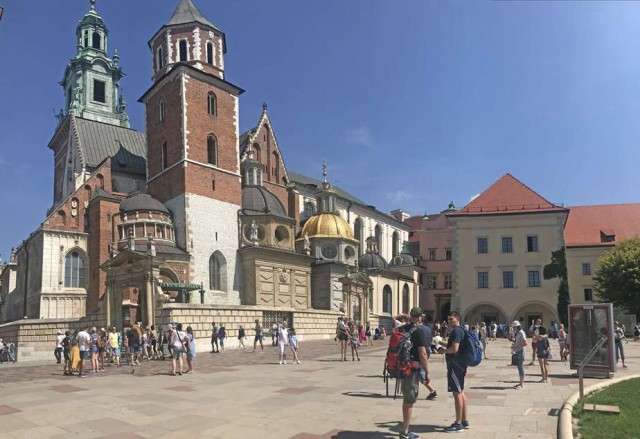
1. Castle Hill
Standing sentry over Old Town and the Vistula River, the Wawel Hill area is one of Poland's most important sites. Wawel Royal Castle was built in the 14th century under the command of King Casimir III the Great and was home to Polish kings and queens from the 13th to the 17th-century.
It was and still is one of the largest castles in Poland. Europe has a lot of castles, but Wawel Castle is different. The architecture is an eclectic combination of different historical periods, mixing Medieval, Renaissance, Romanesque, Rococo, and Baroque in a way that fascinating and visually stimulating. The Castle was established as a national museum in the 1940s. Visitors can view ancient suits of armor and weapons, along with, rich tapestries, and Renaissance paintings. Climbing the ramparts for a birds-eye-view of the old town is a must.
Wawel Cathedral is the most important places of worship in Poland. Saint Stanislaus lived here and is buried in the churches burial chambers.
What good is a medieval castle without a dragon? At the base of the castle, close to the Vistula River, is the Wawel Dragon Den, the legendary lair of the fierce Smok Wawelski dragon. A large statue of the dragon stands
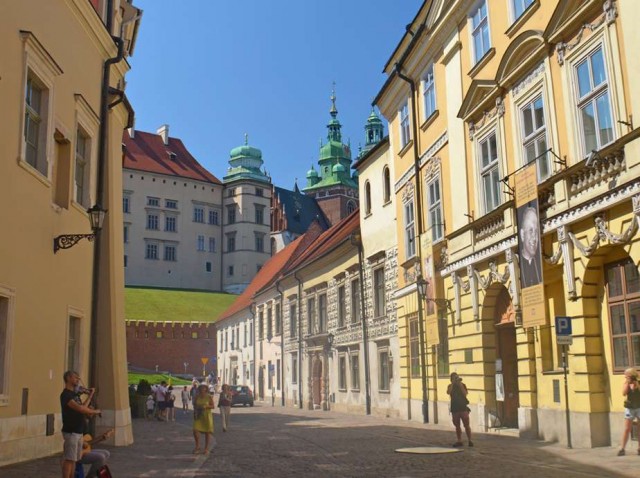
2. Stare
In 1257, subsequent to the Mongol invasion, Krakow's old quarter was established within protective medieval walls. Brightly-painted
In the middle of old town, tourists flock to the public cranium sculpture, to climb into for their "headshot."
Krakow's historic center was one of the original 12 places inaugurated as the UNESCO World Heritage Sites in 1978. Walking through the grid of streets in old town, I couldn't help but imagine what it would have been like living in this fairytale city centuries ago.
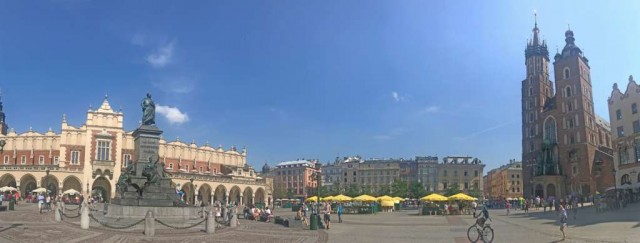
3. Rynek Glowny (Main Market Square)
Krakow's 13-
In the middle of the Main Market Square, you'll find the Sukiennice, an attractive Renaissance-period building with fancy arches. Originally used as a cloth hall the Sukiennice claims to be Europe's oldest shopping and trade centers. Currently, it's the best place to find antiques, trinkets, souvenirs and other merchandise.
4. St. Mary's Basilica
Krakow's famous lofty 14th-century Gothic church stands out because of its unusual unsymmetrical spires juxtaposed against the red brick façade. You can't help but be drawn to it, at the edge of Market Square, across from the Sukiennice. Two attributes attract visitors to the basilica. One is a
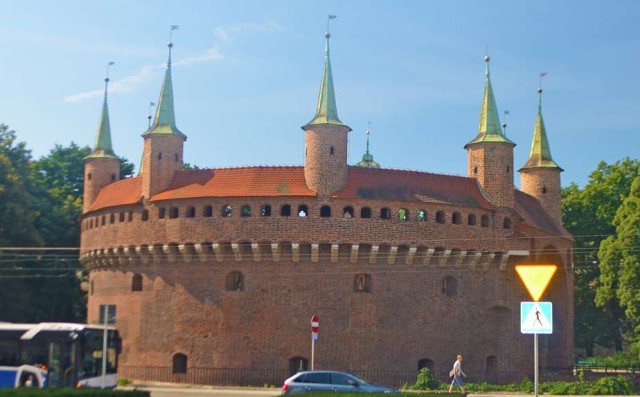
5. Barbican
Impenetrable, the 15th-century red brick Barbican was Krakow's main entry point. The gatehouse has seven turrets and 130 slots used by archers and riflemen to defend the city
The Barbican is the only remaining defensive rampart of what was once a walled fortress surrounding the city to protect against the invading Mongol hordes. Nowadays the Barbican is used for special events such as jousting contests and medieval theater.
6. Kazimierz
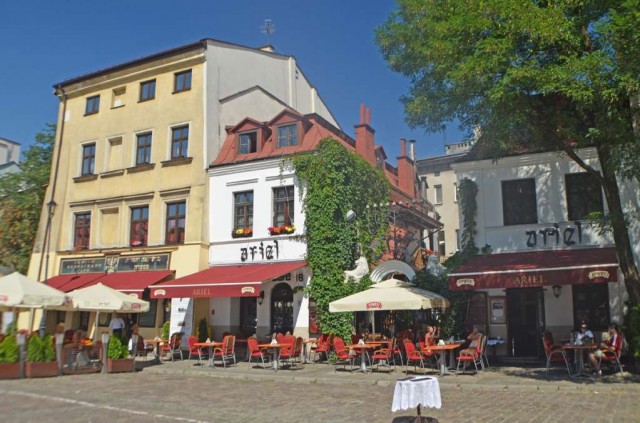
Just south of Old Town, the Kazimierz neighborhood has become the place to go in Krakow. Founded by and named for
Other Jews from around Europe migrated to Kazimierz, expanding the community
In Kazimierz, you'll find the 15th century Old Synagogue, the oldest synagogue still standing in Poland
64,000 Kazimierz Jews were deported to Auschwitz during World War II; only 6,000 returned after the war ended.
Today, the bohemian Kazimierz is a UNESCO World Heritage Site and Krakow's most hip and exciting neighborhood, buzzing with culture, street art, cafés, and trendy bars and nightlife
7. Vistula
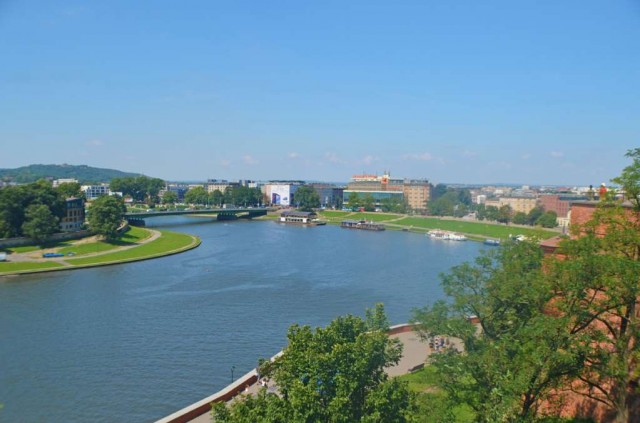
For strolling, jogging, and biking, the boulevards along banks of the Vistula area provides a plethora of green spaces and inspiration for photography. Snaking around Krakow, the Vistula River also provides opportunities for water-based activities.
8. Milk Bars
For a retro, home-cooked dining experience, head to a
9. Auschwitz
I've heard people ask, "How can I visit Auschwitz?" Getting to the Auschwitz-Birkenau concentration camp from Krakow is easy; visiting, it, not so much.
Easily classified as "dark tourism," visiting Auschwitz is emotional and moving. It has the unfortunate distinction of being the largest and most notorious Nazi concentration camp. Visitors get a peek into the repulsive horrors of the Holocaust and unimaginable atrocities brought upon millions of Jews when the Nazis invaded Poland during World War II.
The first Jews arrived in the territory of modern Poland in the 10th century and for over a thousand years, Poland held the largest number of Jews in the world and center of Jewish culture. The result of World War II was a nearly complete genocidal destruction of the Polish Jewish community.
While Auschwitz is the place of unthinkable atrocities from World War II, it's also a place to pay respects to the millions of undeserving victims of the Nazis. Over half of the six million Jews killed during the Holocaust were Polish.
10. Wieliczka Salt Mine
Wieliczka Salt Mine is just on the outskirts of Krakow. The mines are another UNESCO World Heritage Site and one of the most prominent tourist attractions in Poland.
Deep below the surface, there are nine levels of subterranean passages and tunnels. There's an underground lake, and a cathedral made entirely of salt, including statues and an intricate chandelier
The mine produced table salt from the 13th-century until 2007.
Disclosure: The author was honored to be the guest of JayWay Travel during her stay in Poland, but as always, the opinions, reviews, and experiences are her own.
For more information about Krakow:
Best Places to Visit in Poland: Travel Guide to Krakow, Warsaw, and Gdansk
Location (Map)
About the author
Contact info

ISSN 2634-7032
London, United Kingdom
+44 0 7764 198 286