AllWays Traveller Features
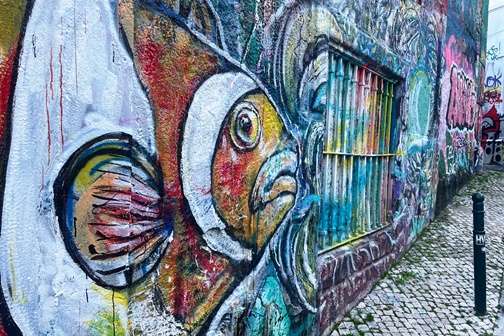
A little ragged around the edges is Lisbon’s charm


One of the world's oldest cities, Portugal's coastal capital is one of the most attractive while offering visitors a genuine mix of experience.
Running through Lisbon's core, the Ave da Liberdade is a majestic boulevard that is leads from the Parque Eduardo VII, and on to the Praca do Comercio, the city's grand, harbour-facing plaza.
This part of Lisbon offers the historic splendour, arts and culture and fine dining and retail one can expect from any European capital city.
Head either side of this and one is immediately meandering and Bairro Alto and Alfama old town areas.
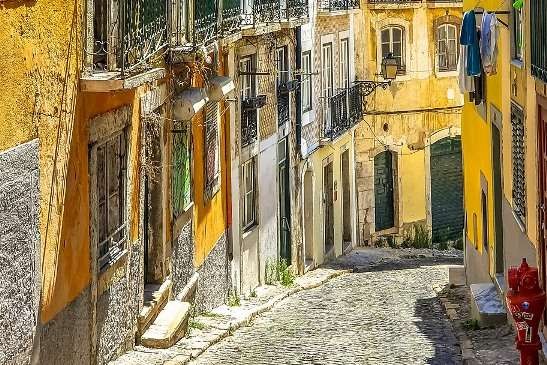
These are a winding maze of very hilly, cobblestoned streets and alleyways, strewn with small, traditional bars and restaurants.
Lisbon is very much a city for those who live here and, while welcoming visitors, it has not had the desires or wherewithal for large scale gentrification.
It may be ragged around the edges but that gives Lisbon an originality that is very much its attraction.
Being a small, easily walkable city (in comfortable shoes), Lisbon offers all one could wish for on a first short break.
One that will almost certainly sow the seeds for a return.
Lisbon is just the real deal
While there is much to see in and around the wider Lisbon area, a first short break here will be best spent in the city's old town area, writes Ashley Gibbins..
The first thing to say about Lisbon is, before we went, I could find no one with a bad word to say about the city.
It was all about the character of this European capital, and what a good time I would have.
Having now enjoyed a short break there, Ann and I can confirm that Lisbon has character and, indeed, charisma in absolute spades.
So, the second thing to say about Lisbon?
Go beyond the low-lying and level main city thoroughfares and it is very hilly.
The person who helped organise our trip, summed it up when he advised 'packing comfortable walking shoes or trainers'.
Lisbon visitors is indeed a small city and easily walkable, but not in high heels (unless you need to pop them on at the door of a venue).
This is because this original part of Lisbon, the cidade das sete colinas, was built over the seven hills that run down to the River Tagus.
The historic old town
Cities are often best enjoyed on foot, and this is certainly the case with Lisbon.
It is a city, particularly in the old town, is an area of great architectural contrast.
The broad, tree-lined boulevard that is the Ave da Liberdade leads onto to the Baixa district and the pedestrian Rua Augusta with its old shops and alfresco wining and dining.
Carry on down towards the river and one reaches the majestic, waterfront plaza that is the Praca do Commercio.
Either side of this route one goes up into Lisbon's old town districts, and the chance to get some tremendous views over Lisbon.
This is particularly the case from the Castelo de São Jorge in the Alfama district of the city, and from the landscaped terrace that is the Jardim de Sao Pedro de Alcantra in the Bairro Alto area.
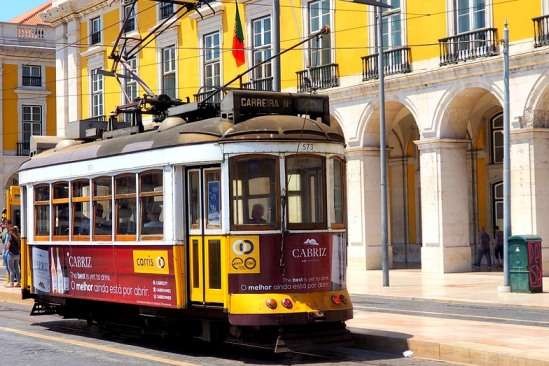
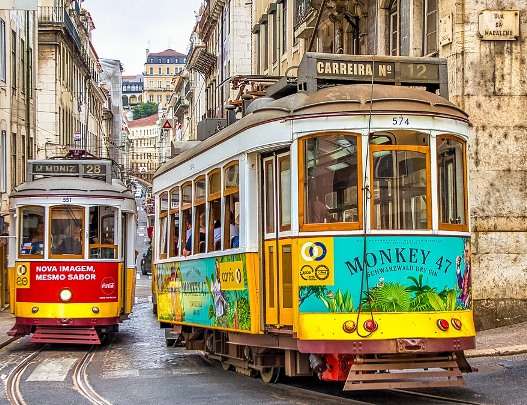
For those less willing or able to get up the hills on foot, the famous Lisbon trams will get you up to strategic points.
For a first short city break in Lisbon, this is what I recommend concentrating on.
Marta gets under the skin of multi-layered Lisbon
Visiting a place for the first time, we always look to get a guided tour at the earliest opportunity.
This is important in formulating a feel for a place, getting bearings for the rest of the stay, and sourcing recommendations that go beyond those listed in the guidebook
In looking to arrange a guided walking tour of Lisbon, we went to ToursByLocals, which connects travellers with local tour guides.
We were in luck and, at 9am on our first full day in Lisbon, we met Marta Côrte-Real at our hotel. By 9.15 we were friends.
Marta is a Lisbon citizen and has been a certified tour guide since 2003. She is passionate about her city and so knowledgeable about it.
We then enjoyed a really fascinating, four-hour stroll through old town Alfama, Costa do Castelo and Baixa.
We took in the city's XII century Cathedral, enjoyed some wonderful views of the city and stopped for a coffee and the first of what would be many pastel de natas, Lisbon's own delicious custard tarts.
As well as getting acquainted with Lisbon, the half-day with Marta provided the chance to learn so much about the Portuguese culture, political history, and everyday life in the city.
As a journalist, I kept asking questions and Marta answered each and every one clearly and in a genuinely interesting way.
Our time with her really brought the city to life and greatly enhanced the rest of our stay.
I always stress its people make places and our time with Marta was the perfect example of this.
Getting up down and along Lisbon's old town area
Following our time with Marta we are ready to spend the next three and a half days exploring Lisbon with confidence.
While most of this was o foot, there are less strenuous forms of transport available.
The Lisbon Trams
As I have said, this is an eminently walkable city but if you wish to take things a little easier there is the city's tram network.
A tram service has been operating here since 1873 and they are an integral part of everyday life in the city, and a great tourist attraction.
There are five different routes and 58 trams, of which 40 are vintage streetcars, including the three funiculars which get you up the hilly districts more easily.
The most popular route is tram 28.
This wooden tram has a horn that sounds constantly to warn absent-minded to move out of the way when it runs past the city's long and narrow streets.
The tram links Castelo de São Jorge and Bairro Alto, crossing several neighbourhoods and is invariably packed full during peak hours.
A 6 Euro, 24-hour, rail card allows you to travel on all the city's trams along with its metro and bus services.
The tuk tuk's
Lisbon's tuk tuk's provide another way for couples and small groups to tour the city.
Uber
Finally, to get to and from the airport and when visiting places beyond walking distances there's Uber.
We used the cab booking service for the first time in Lisbon and were very impressed.
Our driver arrived within minutes of the booking with the price, which was very reasonable, accepted in advance and then paid via the app.
Three districts for a first visit to Lisbon
For this first visit to Lisbon, we decided to confine ourselves to the old city area with a focus on Baixa, Alfama and Bairro Alto districts.
Baixa
Baixa is Lisbon's historic heart and its commercial centre.
It offers a resplendent array of Neoclassical architecture, built following a devastating 1755 earthquake that destroyed much of this part of the old city centre.
It is here you will also find Rossio Square which, in addition to the baroque fountains and monument to King Pedro IV, has distinctive, and slightly disorientating, wave-patterned paving.
From the square there are pedestrianised streets lined with traditional stores and thronging with alfresco dining restaurants.
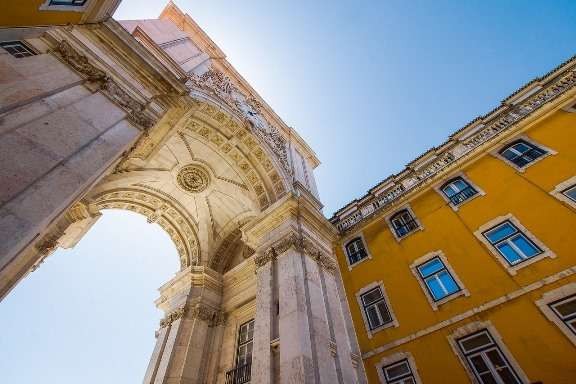
These take you to and through the Rua Augusta Arch and into the Praça do Comércio on the waterfront.
One of Europe's grand piazza's, the square was designed by Portuguese architect, Eugénio dos Santos, following the earthquake.
The buildings on three sides, which were once occupied by the Portuguese ministries of state, now offers bars and restaurants with alfresco dining.
The fourth side is open to the Tagus and it was here that visiting royalty would dock when on state visits.
The central piazza has a mounted bronze statue of King José I and was unveiled with much pomp and circumstance in 1775.
The square also saw the assassination of King Carlos I took place in 1908.
Alfama
Alfama, Lisbon's oldest district, is a labyrinth of narrow streets and small squares winding up from the River Tagus to the Castelo de São Jorge.
At one time Lisbon's affluent district it was gradually left to become the domain of the fishermen and the city's poorer residents.
Alfama survived the earthquake with very little damage and now offers an historical, 'lived-in' quarter of Fado bars, restaurants and homes with small shops downstairs.
Castelo de São Jorge
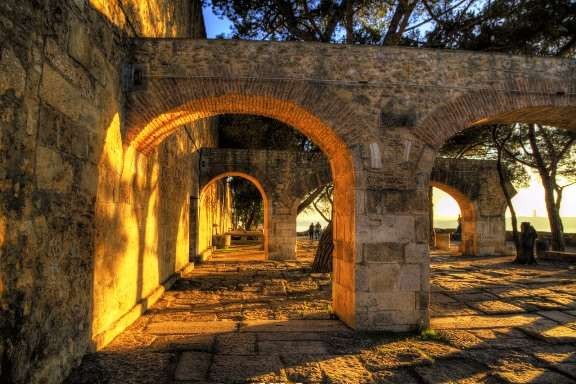
The Castelo de São Jorge, a focus of Lisbon's skyline, is one of the most interesting of the many castles we have been lucky enough to visit.
A small fortress was first built by the Visigoths during the fifth century and was became a castle as we would know the term in the mid-eleventh century.
Its heyday, between the thirteenth and sixteenth centuries when it was occupied by both the Kings of Portugal and the Bishop.
Visiting the castle today, one gets a real sense of what life must have been like living within its walls.
And there are any number of great views from its ramparts.
One will also come across one or more of its resident peacocks.
Lisbon Cathedral can also be found on São Jorge Hill.
Bairro Alto
Bairro Alto (the upper quarter in Portuguese) is Lisbon's residential, shopping and night-time entertainment district.
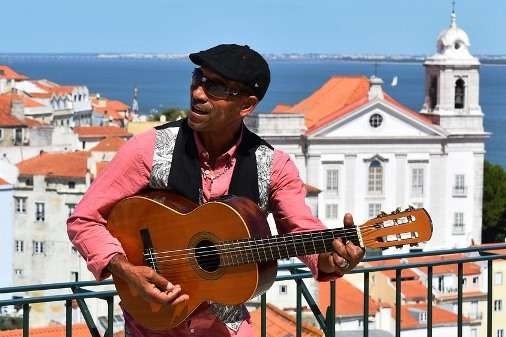
The Miradouro de São Pedro de Alcantara is the gathering point with artists, street entertainers and an alternative, thought equally impressive, view over the city to the cast and the city below.
Come sundown the streets here throng with a multicultural mix of people eating, drinking and enjoying the Fado and other live music.
And while there are a number of more upmarket bars and restaurants in the Braixa district, we preferred to wine and dine in Bairro Alto.
Local, no frills, bars and restaurants offering genuine character, wonderful local dishes, beers, wines and cocktails at very reasonable prices.
www.lisbonlisboaportugal.com/Baixa-Lisbon/baixa-district-lisbon.html
www.lisbonlisboaportugal.com/Alfama-Lisbon/Alfama-district-lisbon.html
www.lisbon.net/sao-jorge-castle
www.lisbonportugaltourism.com/guide/bairro-alto.html
A memorable musical evening of Fado
If there was one thing that initially attracted me to Lisbon it was the chance to get to hear Fado performed in the city that has made it its own, writes Ashley Gibbins.
There really is something special about this performance genre unique to Lisbon, which can be formally traced back to the immigrants and their street music of the 1820s.
It has made UNESCO's 'Representative List of the Intangible Cultural Heritage of Humanity'.
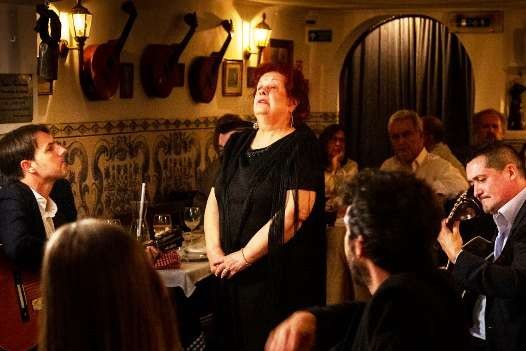
Fado songs are usually performed by a male or female solo singer, accompanied by a wire-strung acoustic guitar and the Portuguese guitarra.
The guitarra is a pear-shaped cittern with twelve wire strings, unique to Portugal.
Visitors to Lisbon can catch performances in the city's small 'Fado houses'.
Parreirinha de Alfama
We were lucky enough to get to the Parreirinha de Alfama for a wonderful evening that will live long in the memory.
Founded in the 1950s by popular singer, Argentina Santos, it is one of the oldest and finest Fado house and restaurants in Lisbon.
It offers a dinner show format, with the Fado singers performing between courses and as a finale to the evening.
That said, the Fado is a cherished tradition and is taken seriously.
Serving stops when each performance starts, and we guests are expected to give each performer the attention and respect their special vocal art deserves.
Background chatter is frowned upon. And quite rightly so.
Although Fado is sung in Portuguese, this takes nothing from the pleasure of being part of an evening of passionate musical performances.
Download videos of the performers at the Parreirinha de Alfama at : www.parreirinhadealfama.com.
The dining
The Parreirinha de Alfama is cosy, quaint place full of character it had a stone floor and a low ceiling, like a cellar, writes Ann Mealor.
It was part tiled in the familiar blue and white porcelain and painted water jugs, wine bottles, and guitars hung from wooden beams.
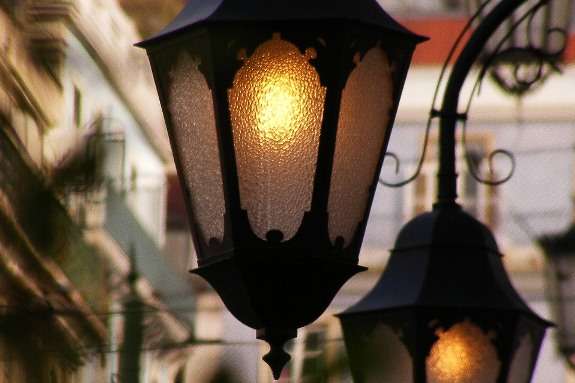
Black and white photos from times past hung on the walls along with Victorian style lanterns and other interesting objects d'art.
Waitresses in traditional black dresses with white frilly, pinafores flitted nimbly between the candlelit tables and there was an excited hum about the room.
Firstly, whilst perusing the menu, we enjoyed the rustic bread (which arrived in a pretty red and white chintz bag), truffled butter and olive tapenade.
After much deliberation, we finally made our choice.
For starters, I went for the baked Mourao cheese with herbs and a reduction of Moscatel wine.
The Portuguese wine we chose was excellent.
It was delicious.
Presented in a black skillet, the cheese, warm and creamy yet firm, was beautifully complimented by the sweet white wine.
Ashley chose the cod fishcakes – five tasty morsels, crispy on the outside and smooth and tasty on the inside.
For the main course, I decided on the grilled sea bass which was served on the bone.
It was very sweet and came with a light, piquant lemon sauce, new potatoes and a selection of vegetables.
Ashley picked grouper with baby potatoes and prawns presented in a rustic loaf.It was a hearty meal, but Ashley manged to scrape his plate!
Portuguese dessert can't be missed so we shared two, Mother Argentina's rice pudding and hot Chestnut pudding with coconut milk and fennel.
Both were delicious, but the chestnut pudding was our favourite as it was such an interesting mix of flavours and textures.
This certainly is the place to come for a traditional evening of great food and an evening of passionate musical entertainment.
Tom and Jilly help you make your mark in Lisbon
Walking around Lisbon, one cannot help but notice and be impressed by the Azulejos.
This is the painted tin-glazed ceramic tilework found on the interior and exterior walls of churches, palaces, houses, schools, and now at restaurants, bars and railway stations.
Azuejos were first introduced by the Moors in the 13th Century and then adapted and influenced by the Dutch in the 17th Century.
Once you see the first one, it is a challenge making a collection of Azulejos while strolling around.
Another way to appreciate the Azulejos, and get a memento into the bargain, is on a relief printing workshop by British artists Tom Maryniak and Jilly Roberts.
When Ann and I did so, the cynic in me was not expecting this three-hour session to be as much fun or rewarding as it was.
Tom and Jilly run have studied the Portuguese craft, and now offer guests the chance to design and create geometric patterns in a way similar to how the Azulejos have been produced for centuries.
Their workshops are great for couples and families and they are also popular as a team building exercise.
And believe me. While it may be "I can't do this" at the outset, everyone comes away having created a lino etch and used this to print the design onto a selection of cards and postcards.
www.youtube.com/watch?v=QVKIYEvppGI&t=187s
A place to stay : the Heritage Avenida Liberdade Hotel
Character, charm and history in equal measure
By Ann Mealor
After a long wait to get through passport control, the Heritage Hotel on the grand Avenida Liberdade was a very welcome sight as we pulled up outside in our Uber (taxi).
The doorman was there, ready to help with our cases and welcome us into the elegant foyer and lounge area.
Wooden floors, incredibly high ceilings, comfortable armchairs and chic décor made for a very good first impression and I knew we were going to enjoy our four-night stay in this former 18th century apothecary.
What is now the hotel was the one-time home of herbalist, Eduardo Fraga Domingues.
During the hotel's refurbishment as much as possible from Domingues original Hermetica Herb Shop was kept includingthe wooden counter with its art deco top and countless little zinc lined herb storage drawers.
This now forms part of the reception area. Hermetica's old wooden front door has also been restored as have the herbalist's Pombaline azulejo tiles.
The sympathetic and stunning interior design is by the internationally renowned Portuguese designer Miguel Cancio Martins.
Elements of the hotel's history have been woven into the fabric of the building including the former owner's love of travel.
Eduardo Fraga Domingues travelled the world searching for various species of flowers and plants to make remedies to sell in his shop.
Globes of the world are dotted around the cosy mezzanine library and a mural depicting an explorer's map is in the lounge area, along with antique suitcases, a telescope and compass above one of the entrances doors.
There is also a fun and colourful mural depicting a 1930s beach scene along the wall of the jet pool in the small, but well-equipped fitness and relaxation area.
On checking-in, we were told we could help ourselves throughout the day to a complimentary selection of tea (and there was a kettle!), coffee, home-baked biscuits, Port, sweet Moscatel wine and, best of all, bite sized Pasteis de Nata, the Portuguese speciality custard tarts.
They were so delicious, I ate many and therefore made myself walk up and down the seven hills of Lisbon, rather than take the trams so I could burn off the calories.It was worth it!
This generous, relaxed, old-style hospitality really did make us feel welcome and much at home here.
Our room
We were in the Heritage Room on the third floor, with views stretching out over the leafy Avenida Liberdade.
Floor to ceiling French windows opened out on to the Avenue allowing us to soak up the local atmosphere whilst sipping a glass of port.
Our room was grand and a chic mix of the modern and traditional with painted wood panelling and blue and white tiling.
Dressing gowns and slippers were provided, as well as generous amounts of Molton Brown toiletries.
Breakfast
Breakfast, another highlight, was available each day until 12 noon.
This meant there was never a rush, it was never too crowded and there was plenty of time to try a bit of everything!
On offer each morning was fresh fruit salad, yoghurt, cereal, a super selection of artisan breads, croissants, cheese, cold meats, olives, onions, tomatoes, smoked salmon with wedges of fresh lemon and plump sardines.
There was also a hot choice of streaky bacon, scrambled eggs, baked beans and mini sausages.
A toaster was on-hand if needed along with hot milk for the coffee and chocolate and plenty of fruit juices.
And of course, there was always those Pasteis de Nata and a freshly made cake.
Everything was well presented, and the area kept neat, tidy and well stocked.
It was a pleasure to sit and relax over a leisurely breakfast and take in the surroundings.
The Heritage Avenida Liberdade is a hotel full of character, charm and history, and ideally located for exploring the quaint and cobbled streets of old town Lisbon.
All the staff at the hotel were very helpful, friendly and knowledgeable.
Rubens, our concierge was particularly helpful and always happy to recommend good local restaurants and bars and offer advice and information on tram timetables, directions and places to visit.
Lisbon Heritage Hotels
The Heritage Avenida Liberdade Hotel is one of five historic boutique properties in the Lisbon Heritage Hotels portfolio.
Each of these are found in meticulously refurbished old town houses and small buildings in the Lisbon's historic centre.
The other four hotels are :
Useful links

Location (Map)
About the author

Contact info

ISSN 2634-7032
London, United Kingdom
+44 0 7764 198 286