AllWays Traveller Features
Bagore Ki Haveli – A window to folk dances of Rajasthan

Bagore ki Haveli (a heritage mansion) in Udaipur is the venue for colourful, traditional dances from various regions of Rajasthan. Dances are choreographed exquisitely and performed by folk dancers from villages. Come evening, and the haveli reverberates to the beats with music and dances....
Next time you are in Udaipur, make this the first thing in your itinerary.
Bagore Ki Haveli – A window to folk dances of Rajasthan
Write up n photos
- -S S Sharma
- While visiting Udaipur, the most enchanting cultural presentation that one should have on the itinerary, preferably on the first evening itself, is the program of folk dances of Rajasthan on the terrace of the famed Bagore Ki Haveli. Located a few minutes' walk down the lane from right flank of majestic Jagdish temple, any passer-by will guide you towards it. The lanes lined with artefacts, paintings, silk scarves, trinkets, hand printed dresses, curios, silver and metal jewellery shops, inviting you for a closer look, take you to the Haveli after a couple of diversions. The Haveli has a fabulous location with Lake Pichola in the background.
As we entered its imposing gate, we were in a spacious compound of majestic 138 room complex. Walked across the compound and as we entered another gate, on our right were the ticket counter and a basic tea/coffee stall. After buying the tickets, modestly priced at Rs. 200, we made into the doorway welcoming us with well laid antique look with an oil lamp lighted and flowers offered before the God, and then taking a few comfortable steps up the staircase, we reached the first floor terrace. There was tastefully done display of antiques and artistic pieces and the place had its old look intact.
As we entered in the terrace, a charming unmissable middle age man in kurta-pyjama, having flowing long dark hair and spark of glint in his eyes, leisurely sitting near the entrance to the terrace caught my attention. As I walked up to him and briefly introduced myself, he warmly greeted me. It was Deepak Dikshit, the man behind the show as its curator and organiser for the last eighteen years.
On my inquisitiveness, he affably described that the haveli was built by Amar Chand Bawda, who was the Prime Minister to the then Maharaja in the eighteenth century. It saw many ups & downs and change of fortunes and also served as a guest house. In 1986, during the times of Rajiv Gandhi as the Prime Minister of India, Bagore ki Haveli received the distinction of the Central Office of the West Zone Cultural Centre with Rajasthan, Maharashtra, Goa, Daman and Diu in its jurisdiction.
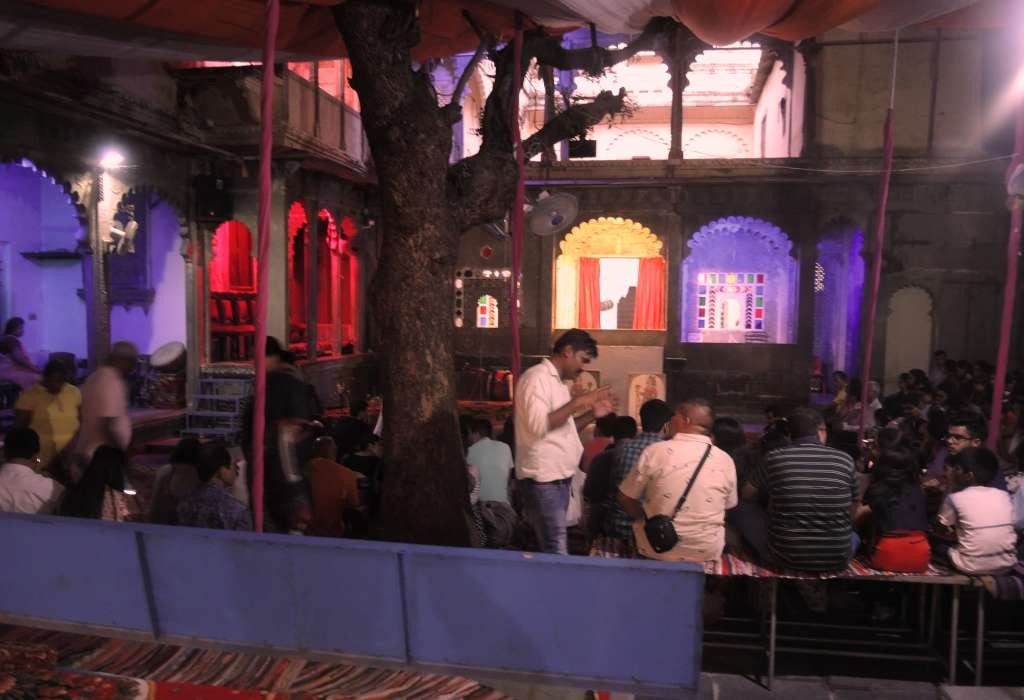
It was free seating plan for the audience with two or three terraced rows of benches at the back and seating on floor with comfortable mattresses on the front side. So, better reach at least 15 minutes before the show time of 6 PM and secure your seat of choice.
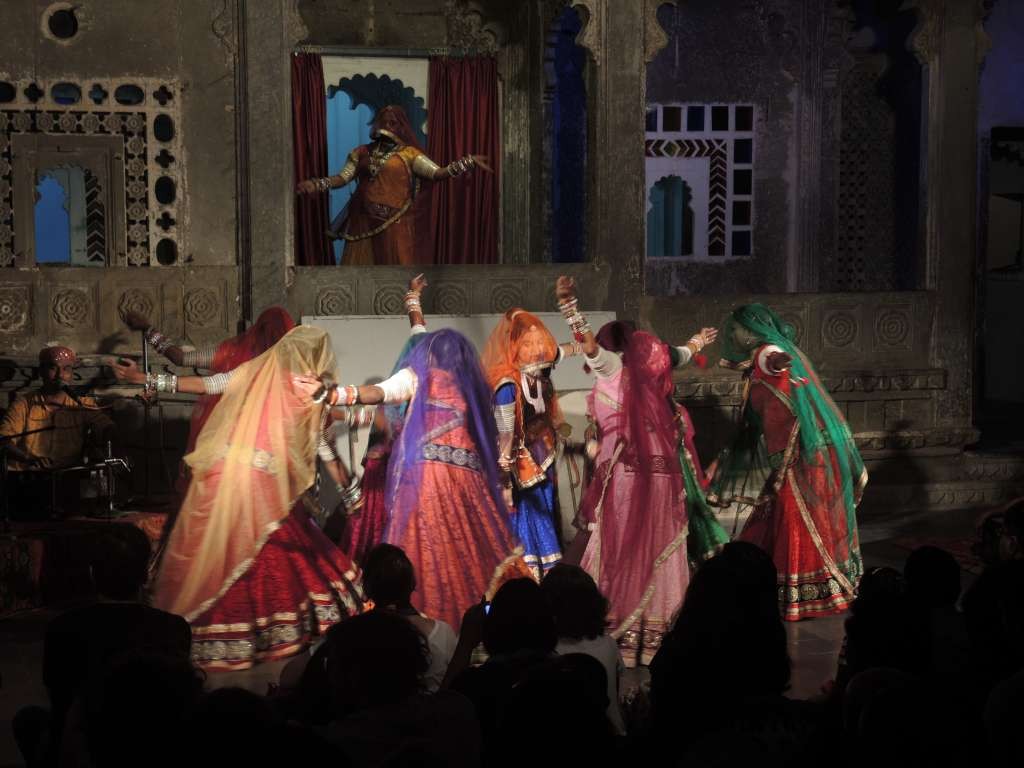
Right in front of the spectators there was open space for performances with slightly raised platform for the musicians on the left corner. The next higher level is separated by an ethnically decorated wall with big ornamented windows opening in it. While the main group of dancers perform on the level right before the audience, we can watch in the window a single dancer striking different poses and movements in tandem with the main dancers. This plan of presentation heightens the overall impact.
Once the audience was settled, the program commenced with blowing of conch, beating of drum and invocations. Then the performances commenced, by women dancers mostly, in glittering and authentic regional costumes.
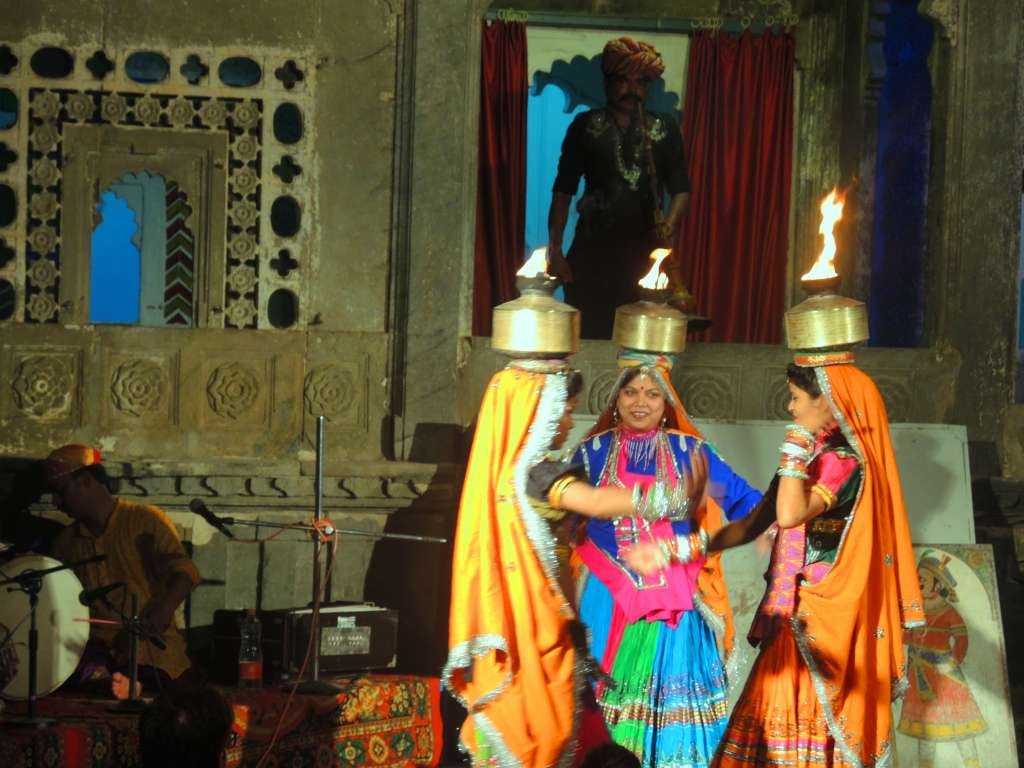
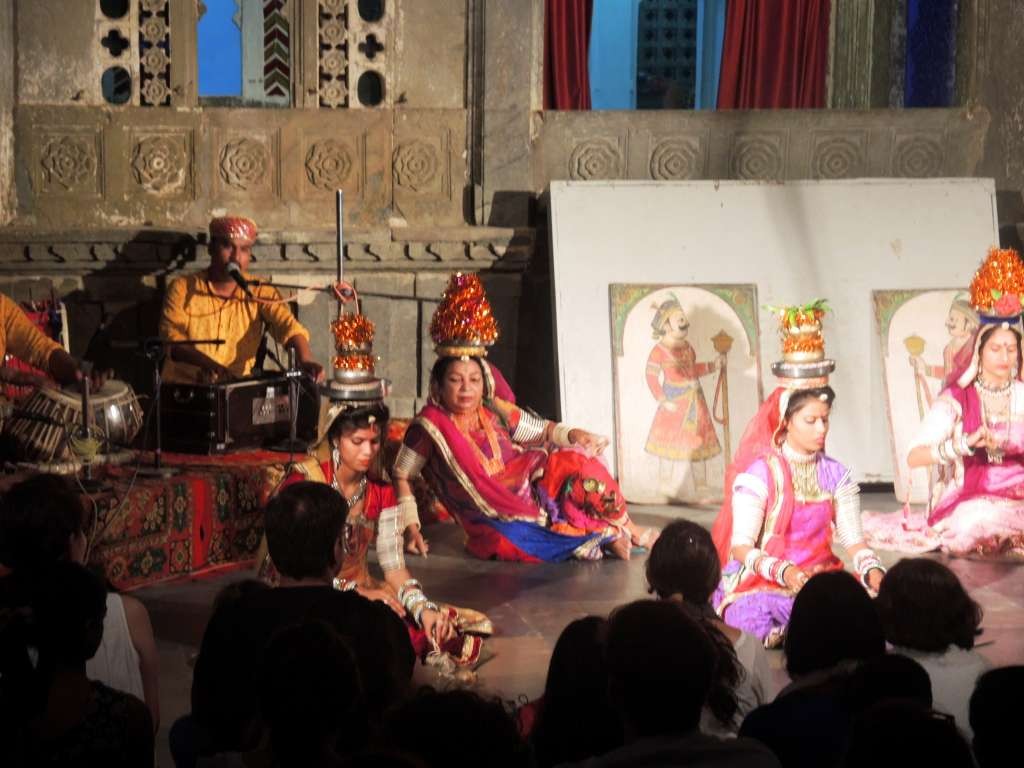
First came the Chari dance, a popular dance form performed by Gurjar women from northern Rajasthan. The dancers carry Chari i.e. brass pots on their heads used by rural women for carrying water from wells and ponds miles away. They bring in joy to this tiring daily chore by dancing in a group with each one having a lighted oil lamp balanced on her Chari.
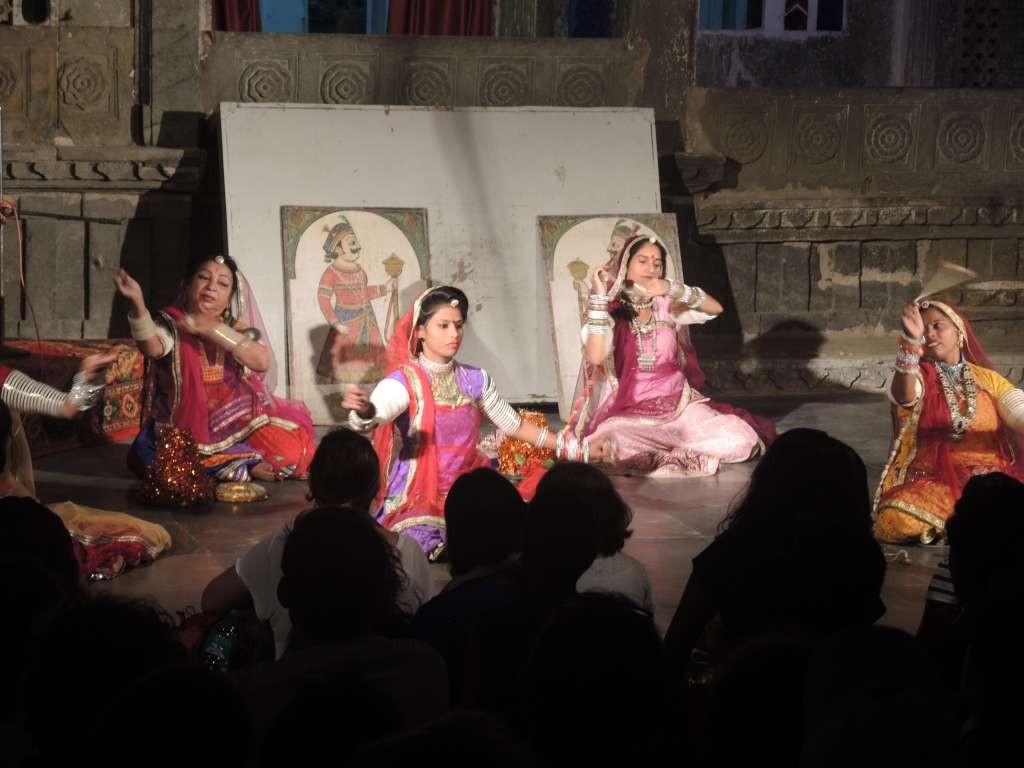
Chari dance was followed by colourful Terah Tali dance from central Rajasthan. The group of women in colourful costumes had Terah (thirteen) small brass discs (Talis) tied on different body parts and when they strike these discs with the ones in their hands in a rhythmic manner, a magic of clinking sounds is created. The impact was heightened by their dance movements in sitting position and accompanying folk tunes played by the musicians.
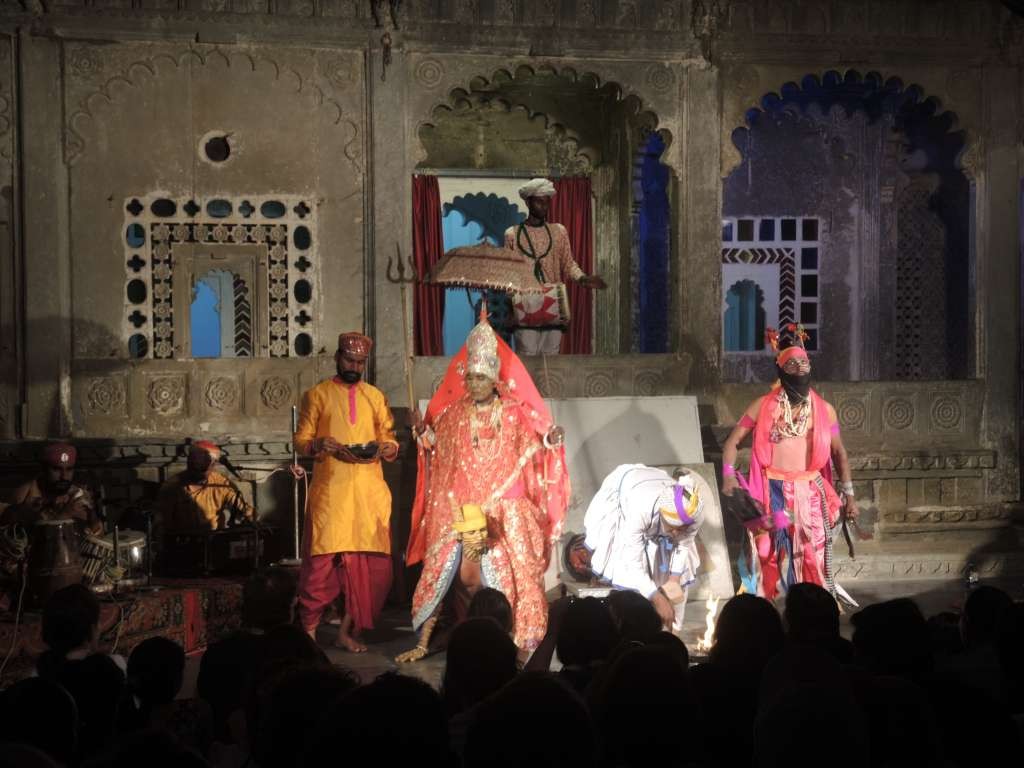
Also presented was the musical episode of Goddess Durga mounted on the tiger annihilating the demon. It showed how the tribal and rural area people locally improvise and enact these performances keeping their cultural heritage alive from generation to generation.
There was a puppet show performed in open showing all the movements of fingers and hands inducing the puppets to perform dances and other actions depicting a story, mood, dance and other antics. This enthralled all and mainly the children.
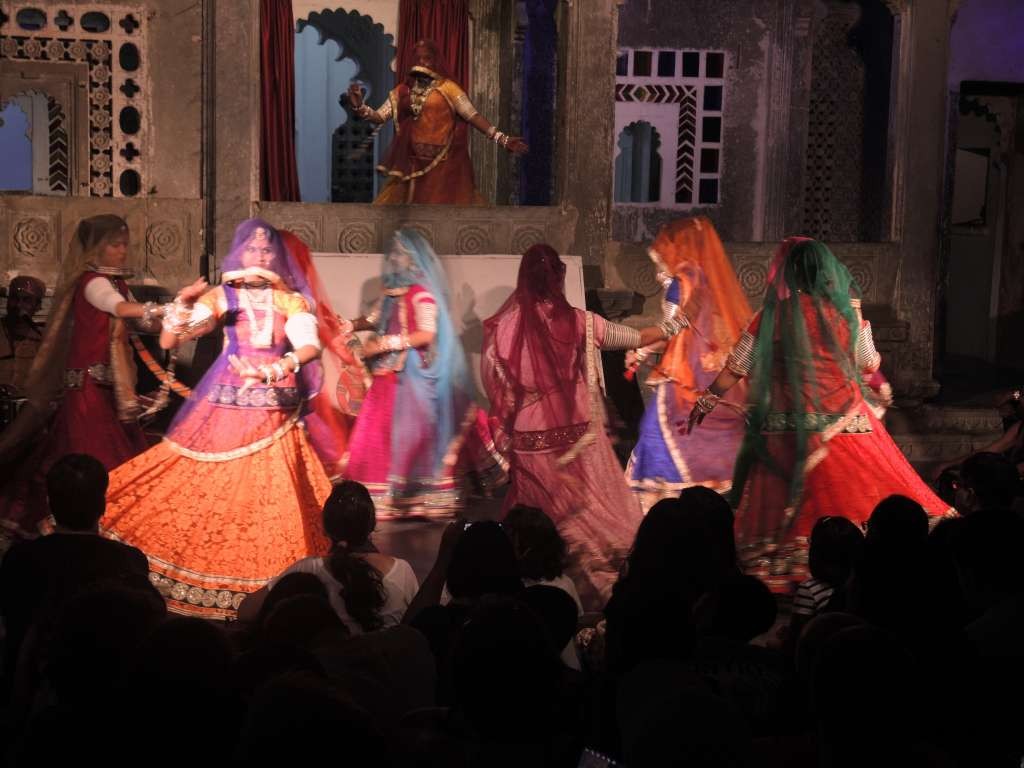
Also came the group dance Ghoomar from Mewar and Marwar areas of Rajasthan. The dancers had their faces covered by thin veils giving quick glances. The dancers attired in bright swirling long skirts, colourful upper dress and traditional jewellery, gave dazzling performance moving in a circle with very graceful body movements.
Last came the group dance Bhavai in which women carry water pitchers. The group dance was followed by a solo performance depicting the main dancer with pitchers balanced on her head depicting the fetching of water from far away water wells and ponds. The dance communicated how the women used to overcome the drudgery of this daily routine by engaging in some dance and singing while returning home. The dance performance reached its epitome when the dancer aged 70 years won the hearts of the spectators balancing two, four and then seven earthen pitchers delicately on her head; continuously carrying on the dance movements with ease, charm and elan.
All the performers were women, except the one on Durga annihilating the demon; and of course, puppeteer and musicians were all men. It was further interesting to learn that all the dancers and artists were traditional performers drawn from the respective tribal or rural areas; the genuine ones from the grass roots.
So, on your visit to Udaipur include program of dances at Bagore Ki Haveli as a must in your list and also do not miss the museum in it, giving ample glimpses of our rich cultural heritage.
Useful links
When you subscribe to the AllWays Traveller, we will send you an e-mail when there are new updates on the site so you wouldn't miss them.
About the author
Contact info

ISSN 2634-7032
London, United Kingdom
+44 0 7764 198 286