AllWays Traveller Features
Historic heydays to the fore in York

York, the county town of Yorkshire, is an historic walled city found where the Ouse and Foss rivers converge.
The colliding of these waterways have, for centuries, seen York stand proud as a prosperous and highly influential centre of trade and commerce.
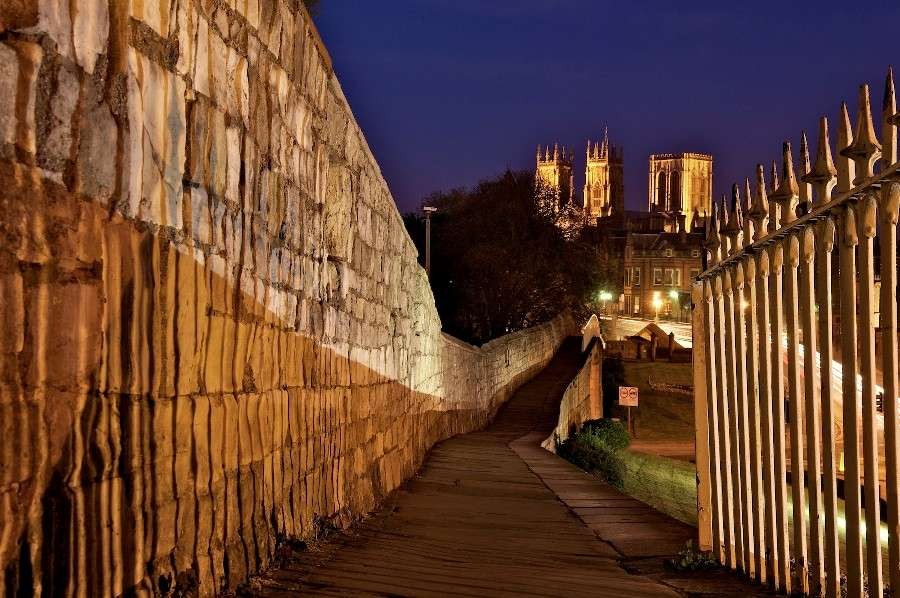
Moreover, much of the city's historic pedigree has been preserved, including its medieval city walls and a wealth of historic artefacts in its museums.
And majestically dominant among its attractions is York Minster, the city's most stunning landmark.
Eboracum, Eoforwick, Jorvik, then York
It was the Romans who first discovered, and quickly realised, the strategic potential of the area that is now York.
They founded a thriving trading settlement here in AD 71, called Eboracum.
When its empire collapsed, and the Romans left, the Saxons moved into the area and named their settlement Eoforwick.
Then came the marauding, conquering Vikings who opted for the name Jorvik.
It is from this Norse naming of the area that York gradually emerged, becoming first Yerk in the 14th century, then Yourke in the 16th century before losing the 'u' and 'e' to become York.
Whatever peoples were in charge here, and however they referred to the place, York's regional status continued and it prospered throughout the Middle Ages and into recent centuries.
Appreciating and exploiting the city's longevity is a fine basis for a short break.
Ghostly tales and trails
Given its history it should come as no surprise that York claims more ghosts and ghostly sightings than any other European city.
Every night there are guided city walks with highly enthusiastic hosts drawing on a stock of supernatural stories.
This is an entertaining way to take a guided stroll after dark, particularly as many of the haunted establishments are the city's old ale houses.
The Minster's awe inspiring magnificence
During the Middle Ages, York was a flourishing centre of the wool trade and, in 1220 works started on the gothic cathedral or Minster.
There has been a strong Christian presence in York since the 4th Century, with churches of increasing importance built here.
But it is York Minster that is the physical and spiritual embodiment of the city's Christian relevance.
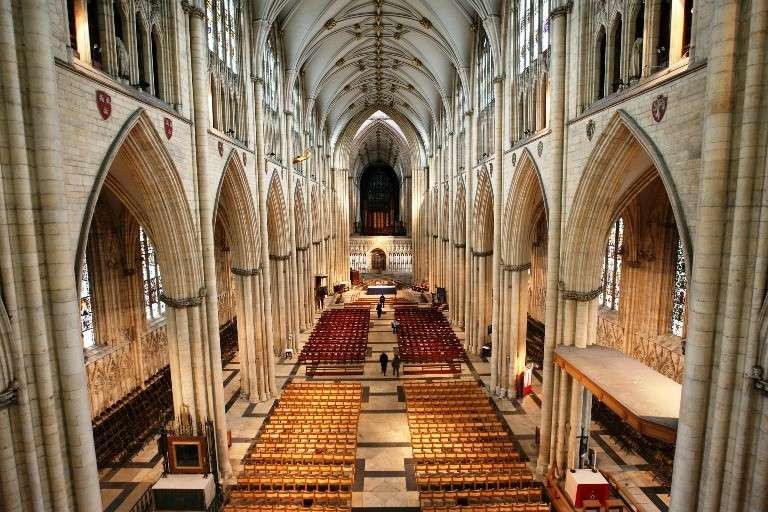
Taking 250 years to complete, and consecrated in 1472, York Minster dominates the heart of the city in majestic fashion.
The term minster originally referred to a settlement established on strict religious observance, and from where its inhabitants embarked on evangelical missions.
That said, the Cathedral and Metropolitan Church of St Peter, to give its proper name, inevitably became known as York Minster.
Visitors to the Minster today can admire England's greatest concentration of medieval stained glass, including the Great East Window, which is 'the largest area of stained glass in the world.'
Climb up the tower and one gets a fine view of the city below.
I am a genuine advocate of joining a guided tour, whenever one is available, and the free tours of the Minster, by a string of excellent guides, comes highly recommended.
Enclosing the city from Medieval times
A traveller to York in Medieval times would have found the city enclosed within imposing city walls.
These were a physical embodiment of the city's standing and protection for the wealthy merchants and citizens within.
The walls also enabled the effective collection of taxes that York imposed on those who wished to sell their goods and services within the city.
King John had granted the city's first charter in 1212, confirming trading rights in England and Europe.
During the later Middle Ages York merchants were importing wine and range of other goods from throughout Europe.
As with much of its historic heritage, the York City Walls have been carefully preserved.
And, at 3.4 kilometres, offer the longest stretch of preserved and easily walked walls of any UK town.Even on the rain swept day we took the walk it was an invigorating experience.
Unanswered questions galore when gazing at Viking Hoard
Travelling historically back and forth, 'attraction-wise', another much recommended visit is to the Yorkshire Museum and the Vale of York Viking Hoard.
This 10th century treasure hoard comprises 617 coins and 67 precious metal objects, including complete ornaments, ingots and chopped-up fragments known as hack-silver.
Cultural contacts
It reveals the Viking's cultural contacts at that time, with objects coming from Ireland, Russia, Scandinavia and continental Europe, and as far as Afghanistan.
The most spectacular single object is the gilt silver vessel, made in what is now France or western Germany around the middle of the ninth century.
It was likely intended for use in church services, and was probably looted from a monastery by Vikings, or given to them in tribute.
Most of the smaller objects were hidden inside this vessel.
Gazing at the hoard, which takes pride of place in the museum, one cannot help asking those obvious, through ultimately frustrating, questions.
Who buried this hoard and why?
What happened to them that prevented a return to collect the hidden fortune?
Also at the museum
Visitors to the Yorkshire Museum can also see the Cawood Sword.
This is only the fifth Viking sword of its type ever to be found and is by far the best preserved.
It carries a mysterious inscription that has never been solved.
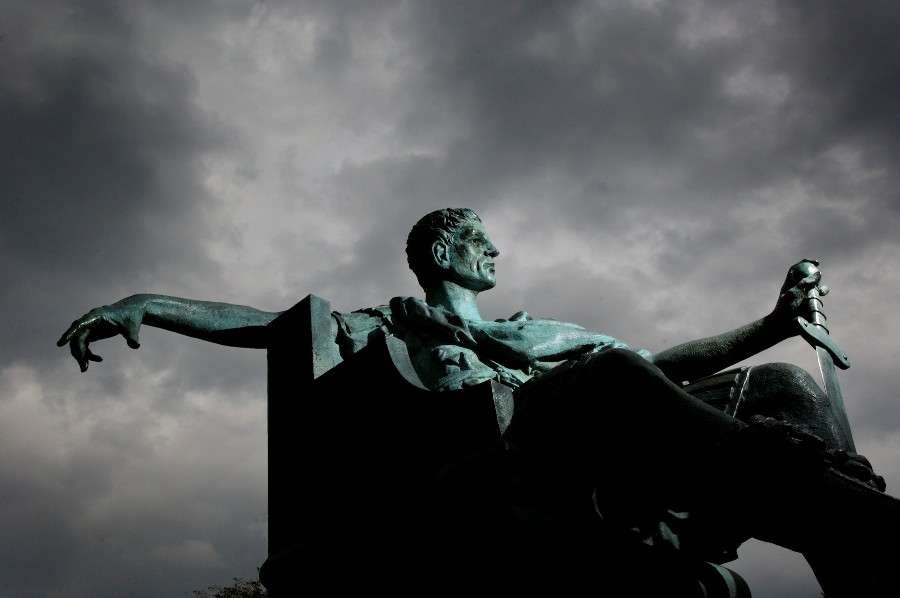
Also on display, among many other interesting exhibits, is the head of the earliest portrait statue of Roman Emperor Constantine the Great.
The JORVIK Viking Centre
The JORVIK Viking Centre offers an entertaining vision of York in the 10th century, with visitors 'travelling back in time' to experience the sounds, smells and images of Jorvik in AD975.
The 15,000 objects on display here came from a Viking village found on the site, complete with workshops, rubbish pits, latrines and wells.
The most spectacular find was an exquisitely-preserved Anglo-Saxon helmet, now on view in the Centre.
www.jorvik-viking-centre.co.uk
York Dungeon
The city's darker past is presented to visitors at the York Dungeon.
In a succession of 'grisly' tableaux, a cast of 'sinister' characters from York's gruesome past 'come to life' on a tour that features traitorous plotter Guy Fawkes, the highwayman Dick Turpin and the Dungeon's resident plague doctor.
A great deal to do and see with the York pass
If you want to pack in as much as possible during stay in the city, the York Pass offers free entry to 30 York attractions and tours with restaurant and shopping discounts.
One, two and three day pass are available from York Visitor Information Centre or online
Attractions include those already mentioned and :
York Castle Museum
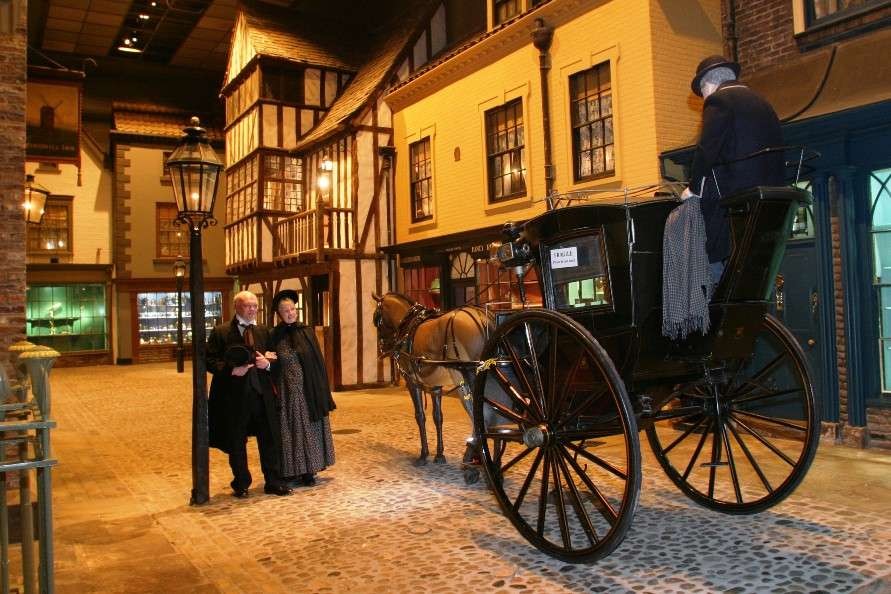
York Castle Museum houses the unique collection of John Kirk, a country doctor and antiquarian, who between 1890 and 1920 gathered a variety of everyday items he realised were part of a 'vanishing' way of life.
Visitors can stroll through reconstructions of rooms from the Jacobean, Georgian and Victorian periods and from the mid-20th Century.A particular highlight is a reconstruction of a Victorian 'street' with stables, workshops for saddlers, weavers and candle-makers and a range of shops of the time.
The museum's newest exhibition takes visitors through the cells of the former prison building, with hologram characters telling moving 'true-life' tales of those who were once imprisoned there.
The Treasurer's House
This elegant town house, dating from Medieval times, sits close to York Minster and was the first house given to the National Trust complete with a collection.
It has 13 period rooms furnished from a collection of antique furniture, ceramics, textiles and paintings covering a 300-year period.
www.nationaltrust.org.uk/treasurers-house-york
Fairfax House
Once the winter home of Lord Fairfax, this is one of the most distinguished 18th century town houses in Britain.
Completely restored in recent times, it now displays the Noel Terry collection of 18th Century furniture.
A visit is all the more enjoyable by the warm and knowledgeable welcome offered by the volunteer guides in each room.
Bar Convent
The Bar Convent was founded in total secrecy in 1686, when anti-Catholic laws meant the sisters lived in fear of punishment, imprisonment - or death.
It has a neo-classical chapel dating from 1769, which has a priest's hiding hole and eight separate exits to facilitate the escape of the congregation in the event of a raid.
Over the centuries their house on Blossom Street became tadept at disguise, with winding corridors, a concealed priest hole and even an entire hidden chapel.
England's oldest living convent is open to the public, inviting all faiths and none to explore three-hundred-years of history.
You can visit the Bar Convent Living Heritage Centre or stay here at the BnB.
One of the world's best preserved medieval streets
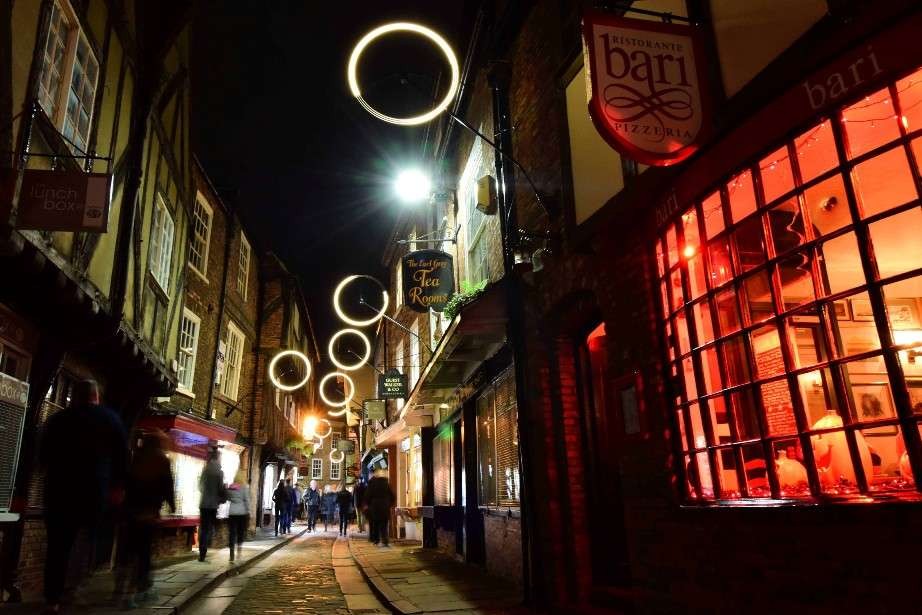
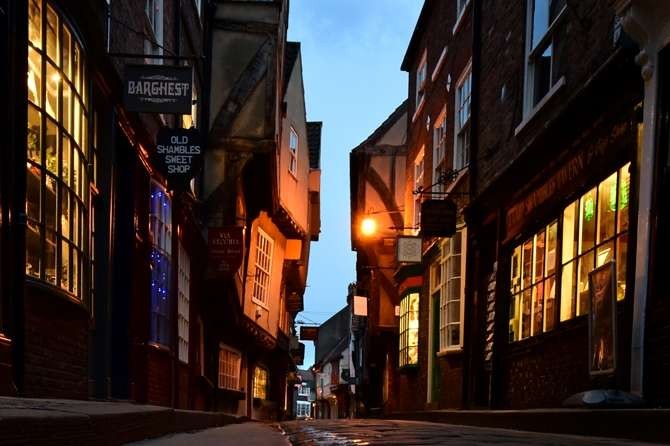
The Shambles is one of the best preserved medieval streets in the world.
It was mentioned in the Doomsday Book of William the Conqueror in 1086, although many of the buildings on the street today date back to the late 14th early 15th centuries.
It was known then as the Great Flesh Shambles, probably from the Anglo-Saxon Fleshammels (literally 'flesh-shelves'), because of the shelves that butchers used to display their meat.
Many of these butchers had their own slaughterhouse for a supply of fresh meat.
Saint Margaret Clitherow was married to a butcher who owned and lived in a shop No. 10 Shambles. Her home, now a shop, features the priest hole fireplace that, when discovered.
Barley Hall
Barley Hall is a medieval house, once home to the Priors of Nostell.
It was hidden under the facade of a derelict office block until the 1980s.
Barley Hall has now been restored to its original spa state and decorated to replicate what it would have looked like as the Snawsell home around 1483.
The National Railway Museum
The city's railway museum displays 300 years of displays and memorabilia with over 100 engines including the Duchess of Hamilton, Japanese Bullet Train and the Royal Trains.
Castle Tower
Clifford's Tower is almost all that remains of York Castle built by William the Conqueror.
In its time it has also served as a prison and a royal mint in its time.
Originally built to subdue the rebels of the north, the Tower was twice burned to the ground, before being rebuilt by Henry III in the 13th century.
Fine views over Old York are offered from the top of the Tower.
www.english-heritage.org.uk/cliffordstower
What's on in York
Viking: Rediscover the Legend
The Yorkshire Museum and the British Museum
(to 5 November 2017)
Featuring some of the most exciting Anglo-Saxon and Viking discoveries ever made, this exhibition will explore how the Vikings transformed life in Britain.
Star objects from the British Museum will feature alongside the Yorkshire Museum's collections and new Viking discoveries by metal-detectorists.
Annual events in York include :
- The Jorvik Viking Festival (February)
- its Literature Festival (March)
- York Races (May to October)
- the Early Music Festival (July)
- the Great Yorkshire Fringe (July)
- the JORVIK Medieval Summer (August)
- York Book Fair (September)
- theYork Food and Drink (September)
- a Short Film Festival (November)
- St Nicholas Christmas Festival (November and December), and
- the York Early Music Christmas Festival (December)
Useful links
Location (Map)
When you subscribe to the AllWays Traveller, we will send you an e-mail when there are new updates on the site so you wouldn't miss them.
About the author

Contact info

ISSN 2634-7032
London, United Kingdom
+44 0 7764 198 286