AllWays Traveller Features
Life in Times of Corona

The first phrase any visitor to Cuba learns is "Quien es el último?" or "Who is the last?"
Walk down any street in Havana and you will see crowds of people lined up outside of shops. Queuing is a norm in Cuban life, a necessity propagated by shortages of food, household goods, and other items all affected by decades of American blockades and sanctions, the collapse of the Soviet Union, and perhaps just a continued penchant for being both Socialist and social. While on first impression it might not appear all too enjoyable, I learned on a recent visit just how much this might be a part of all of our future world travel, and how the Cubans have succeeded in making "patience is a virtue," a whole lot of fun as well.
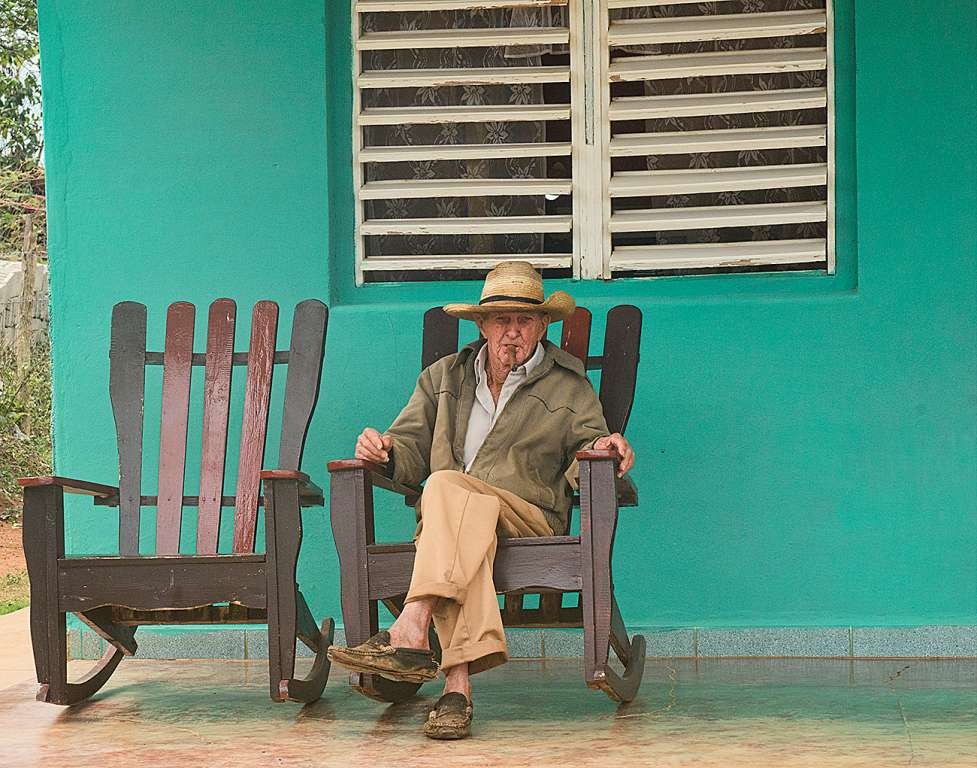
While lines around the world tend to have order and form to them, often accompanied by expressions like "You cruise you lose," or "Go to the back of the queue," in Cuba there is no such thing. Arriving at a fruit juice stand on my first morning in Havana, I ask "Quien es el último?" as I've been instructed. An old man smoking a cigar looks at me wistfully and raises his hand. From this point on, I'm good to go, I just have to remember the old man with the cigar. Once people get their place in line, they leave, going off to do other errands, perhaps getting places in other queues, and if they stay, socialising with their neighbours, regardless of where they might be in line.
As my Cuban friend Ramon explained, "If you see a line, there must be something good going on, so you might as well just get in it." People line up for quick to sellout goods, they line up for sugar or meat or things that they can use their ration books to obtain, and they also line up for anything that is worth a wait. Take Copellia, Cuba's iconic state-run ice cream parlour dating from 1966, which sells over 16,000 litres of ice cream per day, and sees several three-four hour long queues at all times of day, snaking around the aptly named Copellia Park, the creamery's main branch in Havana.
My first reaction to Copellia was that no ice cream could possibly be worth a three-plus hour wait, and my wife begged me to leave, as our sightseeing time in Havana was finite. But a sudden cloudburst convinced us to seek shelter under the park's trees, and we decided to wait it out. During this time, countless locals asked us how we liked Havana, gave us a phone number of a relative with a vintage Chevy should we wish for a city tour, and started a vigorous debate as to where we could find the best Cuban cigars at the fairest price. In the end, it wasn't about the ice cream, much like travel not being about the destination, but about the journey itself.
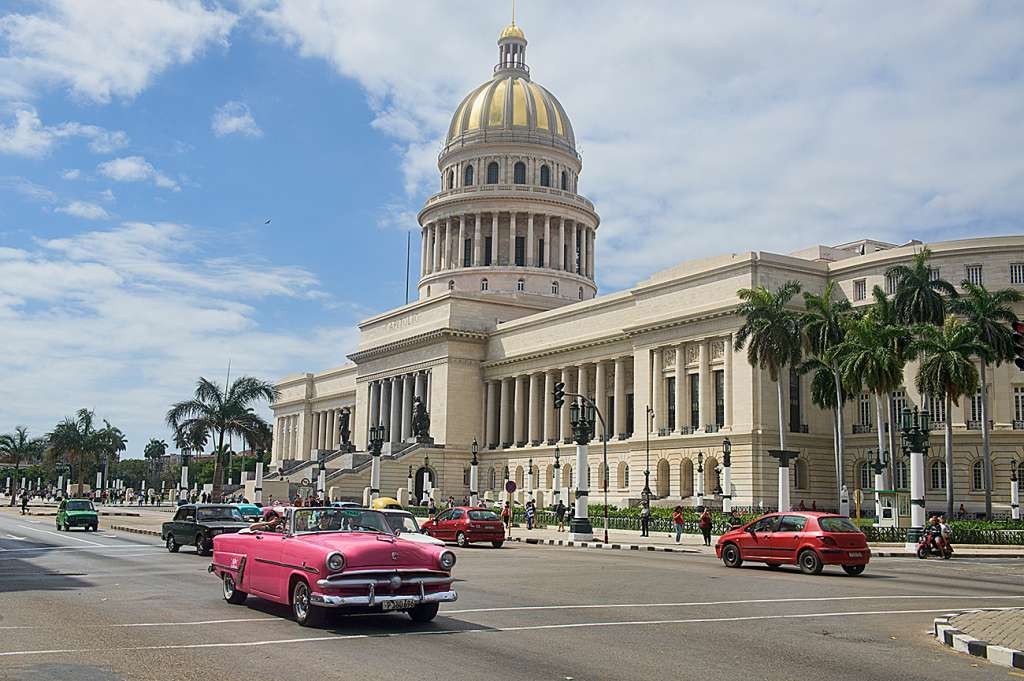
At the time, Cuba offered us a glimpse at the world of the past. For travellers, the island is a place of nostalgia, full of crumbling colonial architecture and a place where there is almost no private traffic on the roads, other than the legions of vintage Chevrolets, Plymouths, and Studebakers, or other classic cars from the 1940s and 1950s. After the Cuban Revolution and subsequent American embargo, Castro banned imported automobiles, and thus the ones on the island at that time are mostly the ones still here today, albeit full of replacement Russian engines or other oddities.
In the countryside, transport is often by horse cart, yet another example of a country that seems permanently in the slow lane. Casa particulares, private homestays which have been allowed by the government and let travellers sleep in local homes, all seem to be outfitted with a couple of rockers on the front porch or balcony, which seems to force visitors to slow down even more, probably a healthy thing in the island's tropical heat.
Even the internet runs at crawl speed in Cuba. Private WiFi is uncommon, and most people access the web by going to public parks which have WiFi signals, and then logging in with an internet card sold by the national phone and communication company ETECSA. Needless to say, buying a one or two hour time card involves standing in line outside the ETECSA office for another hour.
With its lack of traffic, goods, and services, Cuba is a country in slow motion, and there is plenty of time available to stand in line, which at times seems almost like a national pastime. Yet as I was soon to find out, this wasn't just a world of yesteryear. Without loads of internet time, the stories my wife and I were reading about Coronavirus around the world seemed like some sort of surreal long distant reality, and we thought it rather romantic that we could wait out the disaster sipping mojitos and puffing cigars in rocking chairs.
This all came crashing to a rapid halt one afternoon, when upon returning to our casa particular in colonial Trinidad, our host informed us that foreigners had been given three days to leave the country and that everything was going to shut down. We cancelled plans, packed our suitcases, and then joined thousands of tourists in the longest queues to be found anywhere in Cuba, at the Jose Marti International Airport in Havana, where stranded travellers waited hours to try to get on the few flights left out.
We were lucky to escape to Miami, where in the next few weeks the world as we had known it drastically was altered. And yet as I lined up for groceries, the lines doubled in waiting time by social distancing, I knew I'd be equipped for a future in which the world slowed down. Bicycling around Miami's Little Havana, where there was no traffic, and where Cubans decades removed from the island lined up outside of supermarkets and shops, telling their children that this is what life had been like for them growing up, I thought to myself that Cuba had been practicing for this new world, as well as teaching us lessons for it for years, and that everything was going to be okay..
Useful links
About the author
Contact info

ISSN 2634-7032
London, United Kingdom
+44 0 7764 198 286