AllWays Traveller Features
One hundred hours through Old Havana

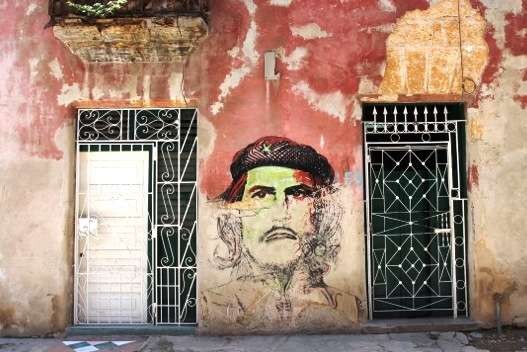
The area of the Old Havana houses counts about a thousand of historic buildings with an architecture ranging from Baroque to Art Deco.
Museums:
Revolution Museum, Museum Model, City Museum, Museum of Navigation, Rum Museum, Museum of Colonial Art, Museum and Birth- house of José Martí
Highlights places:
Havana Cathedral, La Merced Church and Convent, Church and convent of St. Francois d' Asis, Castle of "la Real Fuerza" and also the Planetarium, the "Bodeguita del Medio", Mercaderes Street, the Bacardi Building and bars of Obispo street.
Guesthouse Humberto Acosta
This charming guesthouse in the centre of the Old Havana was built around 1930. There you will appreciate the granite floors and the French carpentry.
It was recently improved. On the floor is a little terrace with nice tags of client and views to the cloister "Nuestra Señora de Belen".
Rooms have an exit to an open terrace. There is also right down a popular market. Clean and with a good ambiance it is nice tip for travellers. Try there the delicious chicken of Milady.
Hotel Nacional
Eighty-five years of history give prestige to the classic for distinction Gran Caribe hotel chain.
The Hotel Nacional de Cuba is considered a symbol of history, culture and Cuban identity.
The guns that made up the old Santa Clara Battery are on exhibition at the garden, they were declared part of the World Heritage Site. The Hotel Nacional de Cuba was declared a National Monument and it was inscribed in the World Memory Register.
With its privileged location in the middle of Vedado, the centre of Havana, it stands on a hill just a few meters from the sea, and offers a great view of the Havana Harbour; the seawall and the city.
The Hotel stands out due to its refined elegance and its ancient splendour, which since 1930 has attracted a large number of personalities from the arts, science and politics, such as British Prime Minister Winston Churchill, artists Frank Sinatra, Ava Gardner, Johnny Weissmuller, Maria Félix, Jorge Negrete, and scientist Alexander Fleming. The gallery located at the bar of the hotel shows picture of that time
Inglaterra Hotel
At the beginning there was El Café.
In 1844 Havana was a walled city to protect the citizens from Pirates and other invaders; Outside the walls a new two-story building was being raised. Later it was known as "El Café" or "the Escauriza Saloon" This marks the history beginning of the future Inglaterra Hotel.
Just across San Rafael Street rising from "El Café" was the "Tacon Theatre". This theatre was the most magnificent structure to be seen at this time in Havana.
It would be the stage of the world's greatest art companies and the pride of the citizens of Havana. At the corner of Prado and San Rafael, a major centre was developing.
The roots of Cuban aspiration for freedom, a lust for life and national identity also had his birth here.
Dances at "The Escauriza Saloon" were prohibited by Spanish authorities in order to protect the exclusivity of the ones at Tacon Theatre.
The theatre's owner was a slave trader named Pancho and due to his strong relationship with Governor Tacon, the Theatre was named after the governor.
This situation exceedingly bothered the superficial an rioter young people that frequented "The Escauriza Saloon.
Thei answer was very original; they threw their glasses of punch to the uniformed soldiers of the colonialists.
As a result there was bloodshed and deportations.
This event marked a turning point in the lives of young people in Havana at this time. The extraordinary success was named The battle of the Glasses of Punch .
The Louvre sidewalk
In 1863 "El Café" was sold to Joaquin Payret, who named it "Le Louvre, a French name originally. Later on the article "Le" was changed for the Spanish one "El". Eventually the whole sidewalk area extending towards San Miguel Street took the name "El Louvre".
More and more the surrounding block took an historical feeling.
In 1866 Spanish merchants living in Havana clashed with a group of Creoles (first generation Cubans). The Spanish merchants returned their purchased tickets when they discovered it was to support the window of the experienced Cuban scientist Ramon Zambrana.
Close to "El Café" there was a gymnasium, bought by an high ranking representative of the Creole bourgeoisie, Domingo del Monte.
This place was used by the Cubans for strengthening their bodies, practicing shooting, handling the sword and the sable.
These sports were activities at high society used by many attendants to practice real fighting, that is why those Creoles arrived into the battlefield during the liberation war in 1868.
In 1875 Don Joaquin Payret sold out the Café El Louvre to begin the construction of a new theatre, this time to be named after him.
It was to be located almost diagonal to El Café, in the intersection of Prado and San Jose streets.
The Payret Theatre's doors opened in 1877. Right after the selling of the Café, a new construction appeared in the place (named: Inglaterra Hotel and Restaurant).
At the moment "El Café" was put on sale, a contiguous construction that lodged the small Hotel Le Grand and The Inglaterra Restaurant, which already existed.
In 1875 these three establishments were unified to take the next step to the Gran Hotel de Inglaterra as initially it was called, being inaugurated on December 23rd 1875.
At the end of the battle for independence from Spain, the so called "Ten Years War" and a peaceful era referred by Jose Marti as the veteran heroes, young people returned to the Louvre sidewalk with their newly awarded military grades.
Then The National Hero, Jose Marti mentioned the necessity of a fight at his speech, honouring journalist Adolfo Marquez Sterling. At the same time, this speech resulted in a cutting allegation against Autonomies.
In 1886 the Spanish Army Captain Don Francisco Villamil bought El Café and the Hotel, rebuilt the magnificent place joining both buildings in one sole area, adding a third floor and naming the construction as The Inglaterra Hotel.
The result was so beautiful that visitors took photographs in order to display them in their countries. In this way was born one of the best hotels of all over the world.
Just in 1890, during the hotel reconstruction which used golden decorations and illustrious mosaics, made exclusively in Seville plus special railings which can be appreciated as a whole exhibition of an harmonic mixture, the structure was enjoyed as a work of art, General Antonio Maceo was lodged here for six months, that indulged the growing violent passion of the young people of the Louvre sidewalk who took part in the big war.
In December 1890 arrived to the hotel a young correspondent of The Daily Graphic, Sir Winston Churchill, who reported the details of the war describing the Cuban insurgents combats.
His attention was attracted powerfully by the national weapon used in the war "El machete" (cane-knife) which was a short and heavy sword with wide blades for cutting sugar cane.
The war finished with Marti's program frustration, two North American intervention leading Cuba to a neo-colonial Republic with an entirely dependent economy of United States.
Daily cannon salute from the fortress of San Carlos de la Cabaña
Since the end of the construction of « la Cabaña » cannon shots have been fired from this fortress - according to the documents of the General Archives f the Indies.
Cannon salutes continued until 1863, during the presidency of Governor Domingo Dulce Garay when the walls were taken down to the best interest of residents and merchants responding to need for the extra-mural growth (outside the fortress) and the development of the commercial activity.
As of the US intervention, from 1898 to 1902, a unique cannon shoot rang at nine o'clock at night instead of the two previous salutes (one at half past four in the morning and then again at 8 in the evening). Since the end of the war the cannonade can be heard every day at nine thirty in the evening.
The restoration of the fortress of 'Tres Reyes del Moro" y "San Carlos" was carried out with the help of the Revolutionary Armed Forces and the technical assistance of the Office of the Historian and it was then decided to dramatize this tradition.
As there was no specific information on the subject they had to resort to various military records and references up to the current ceremony in queeping with the rules of the Spanish infantry of the nineteenth century.
According to ordinances, these muzzle loading cannon of smooth bore were manufactured in different sizes from 4 to 24 pounds, some able to throw iron balls up to eight hundred meters.
Solano, Ruperto, La Parca, Ganimedes and Capitolino were those used in past days but have been replaced by simple jute bags landing at a few meters.
Shortly before nine o'clock, the ceremony begins.
The beacon holder enters the dark and silent esplanade to announce the closing of the doors of the walls and the grouping of habanenses and visitors.
Then the gunners enter the scene walking to the sound of drums according to ordinances of 1850, preceded by the banner holder showing the old Spanish flag with the red cross of St. Andrew.
The station chief oversees and directs the faithful enactement of the ceremony leading to the firing of the cannon at nine pm: "Load! shouts the officer.
Gunners catch the loading bucket, put the necessary powder in the mouth of the cannon, compress the powder and the jute bags with a stick; another striker, behind the cannon, lights up the firing stick that will provoque the explosion of the powder.
Then comes the order: "Maximum lift" and "at my command: "Fire!" Accompanied by the drum roll ... A soldier lights the fuse to the lux of the canon and" Boom !!!
"It takes 6 seconds from the moment of ignition to detonation; the sound propagates at 330 meters per second and the nine o'clock salute reaches the habanenses with various delays depending on the area of the city but habanenes are particularly attached to this tradition.
The fortress of San Carlos de la Cabaña
The fort has been restored for the visitors who can spend the half-day there (bars, restaurants, souvenir shops etc...)
The works of the church of La Merced
The construction of this church and convent began in 1755 and ended a century later.
As curiosities, the gardens of the former convent, the crypt and the sanctuary where lies a St. Sepulchre from the eighteenth century, frescoes of the dome, the magnificent arches et ancient paintings that are clearly inspired by the churches of Rome. The cloister is right next to the church.
La GUARIDA, an International palate
La Guarida has opened its doors on July 14th 1996, in an elegant palace of the early twentieth century It is the most famous restaurant of la Havana.
The owner, Enrique Nunez del Valle took advantage of the success of the Oscar nominated movie - Strawberry and Chocolate - by Tomas Gutierrez Alea, on a subject previously taboo in Cuba: The sexual diversity.
The movie has attracted numerous tourists who wanted to see the scene of the film; for this reason, Enrique Nunez has decided to open here his own restaurant.
He was afraid to see his house collapsed on his head and end up on the street. He wanted to give his family a decent life.
This exceptional, intelligent and selfless man gave an opportunity to young Cuban architects. They made of La Guarida what it became today. They worked under a 'self employed account' (a kind of autonomous regime) a Cuban term. This is a kind of parallel economy.
Due to the still existing embargo it was very difficult to import building materials; they have then learned to recycle, to work with what they had and create new from the old; this gives La Guarida this special charm preserving its soul and history.
La Guarida is located in a very poor neighbourhood where houses in bad condition are mixed with these typical dollhouses. Paradoxically, it is a luxury restaurant, mainly visited by tourists since most Cubans cannot afford it.
The restaurant employs a dozen of the thirty families living there and tourists like to delve into these typical places of the Cuban life, with the cries of children, the barbers and domino players. Today the restoration of La Guarida is continuing, keeping the restaurant open; it should end up by late November.
They are serving a traditional, rich, fresh and natural cuisine inspired by the old Cuban cuisine; the difference is in the dressing and the new cooking techniques.
The Queen of Spain, Sofia, has visited La Guarida on the occasion of the Summit of Latin America and the chair she has used, is now hanging on the wall, as a trophy.
The queen was greatly appreciated by her simplicity and her interest for the movie. She made numerous questions to Enrique Nunez who tried to answer as best as possible.
The royal visit contributed greatly to the international recognition of La Guarida. Some travellers are even booking a table before leaving their country.
The restaurant is mentioned in all touristic guides that define it as a compulsory passage by La Havana.
The facts
Enter your text here ...
Useful links
Location (Map)
About the author

Contact info

ISSN 2634-7032
London, United Kingdom
+44 0 7764 198 286