AllWays Traveller Features
Overnight in Utopia

Gathering material for his next travel book in Mid Wales, Vitali Vitaliev happened to stay at the hotels and campsites that have all but over-shadowed the main topic of his research
"A map of the world that does not include Utopia is not worth even glancing at..."
/Oscar Wilde/
One of the joys of researching a travel book is that – irrespective of what you are looking for – you never know what you are going to find!
I am now gathering material for a travelogue on Britain's Utopias which involves locating and visiting some of the numerous (by some estimates, over 4000) UK's Utopian communities – past and present: Garden Cities and Villages, New Towns, artists' and nudists' colonies, religious settlements etc. With the latest bit of my research conducted in Wales, the part of the UK which I know less well than England, Scotland and Ireland, in all of which I had lived and worked, it felt more like travelling in an almost entirely 'foreign' environment – the feeling, largely triggered by the sheer impossibility of foreign travel proper due to the ongoing Covid 19 pandemic. That 'outlandish' sensation was considerably enhanced by the European-, almost Mediterranean (in all except for the weather)-looking towns and the ubiquitous road signs in Welsh: "Araf "– Slow; "Allan" – Exit etc. From behind the wheel, I even joked to my photographer wife Christine (who alongside our Tibetan Terrier Tashi, was part of our family travel team), that Araf and Allan were two Welsh youngsters, possibly even brothers, who were there to welcome us to their country as we were driving across the irregular and erratic, like a hank of wool thread chased by a playful kitten, border between Wales and Shropshire.
With a handful of Utopian settlements to visit, we had to stay overnight at B&Bs and – since we were travelling by a converted 'grey-import' Toyota Alphard campervan, alias 'Alphie', the fourth, and by far the largest, member of our team – at campsites too. Tuned to spotting Utopian (i.e. near-ideal, near-perfect, dreamlike) features in the cities, towns and villages, we couldn't help ticking off similar signs of near-perfection (for, as we all know, complete perfection is but a myth!) in the places we were put up at.
The first one was Caer Beris Manor Hotel in Builth Wells. We fell in love with it even before we actually arrived at its doors – as we approached the Manor House along a gravel path snaking through the old park and running parallel to the bubbly and chirpy Irfon river. The Grade II listed Manor House, set in 18 acres of parkland, was recently taken over by the Southwick family.
We were put up at "Her Ladyship's Suite", with a 4-poster bed – the size of a medieval town square (so large that sleeping on it alone could be safely classified as a minor offence) and the view of the river.
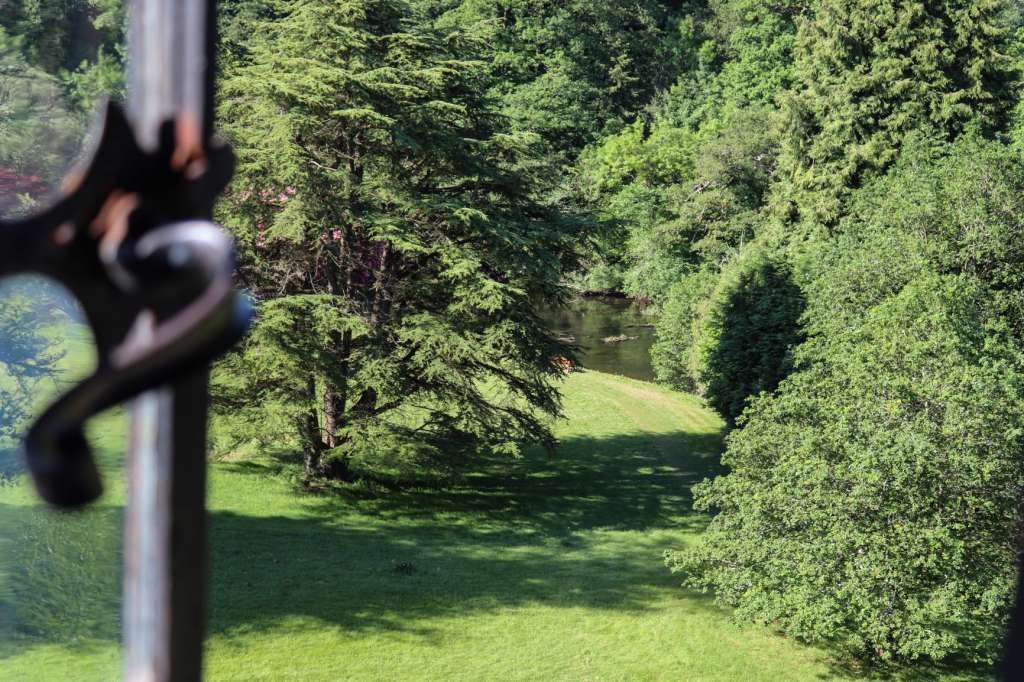
Views are important. One can change the wallpaper and rearrange furniture in the room, but the view from the window remains the same. I have always believed that views from hotel windows should be protected and possibly even graded – in the same way Karl Baedeker, the great guide-book writer of yesteryear, used to grade nature walks and vantage points. Touching the old black wrought-iron handle to open the leaded window at Cear Beris was like travelling through time: it was difficult not to ponder on who were those who had opened these windows previously.
Next morning, we took time to explore the grounds of Caer Beris – walking through trees to the river and marvelling at the rhododendron bushes planted by Lord Swansea who bought the house in 1923. We then had an unhurried breakfast in the conservatory, with Tashi loving his sausage and looking totally adapted to the country manor life-style.
Utopia is the place to where you are always tempted to return, and we did return to Caer Beris for lunch on another day, despite having to make a detour from our 'Utopian route', the next stop on which was Hay-on-Wye, the world's first Book Town on the English-Welsh border.
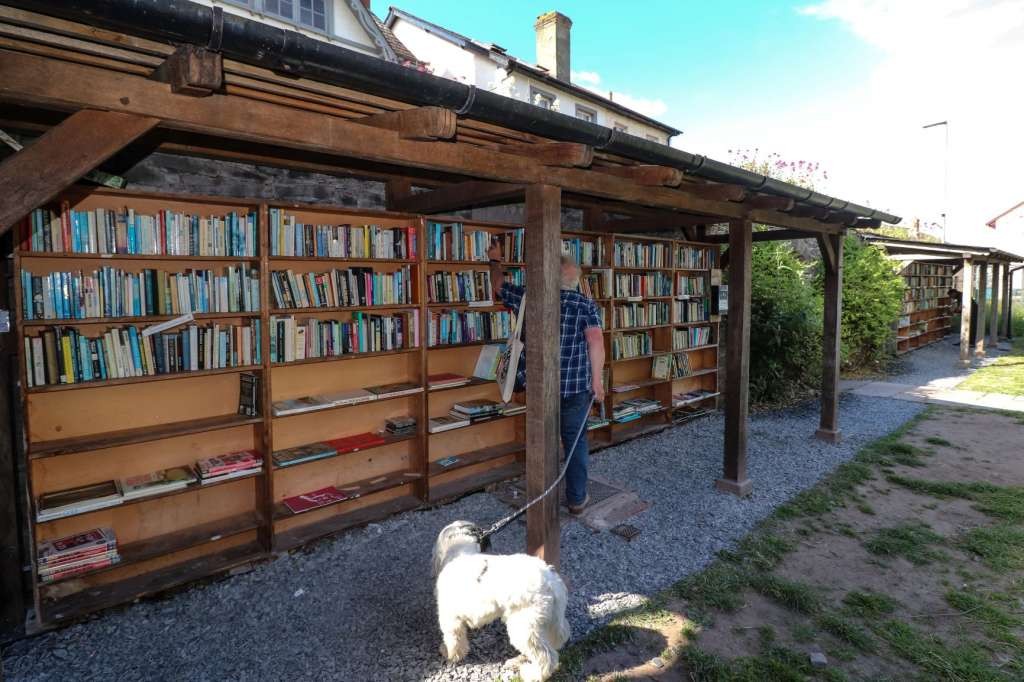
To be honest, it was I – a book worm and collector of many years standing - who single-handedly declared Hay-on-Wye a Utopia, because for me it was. I used to visit the town often and knew Richard Booth, alias King Richard the Book-hearted, the book town's founder and its self-proclaimed monarch quite well. Sadly, the King passed away a couple of years ago, but the town's countless book-selling outlets, including the country's only "Honesty Bookshop" – Richard's favourite "child" – an open-air store, with no booksellers in sight, where the customers were invited to pay as much as they wanted for a book by putting the money in the "honesty box". To me it was Utopia – pure and simple!
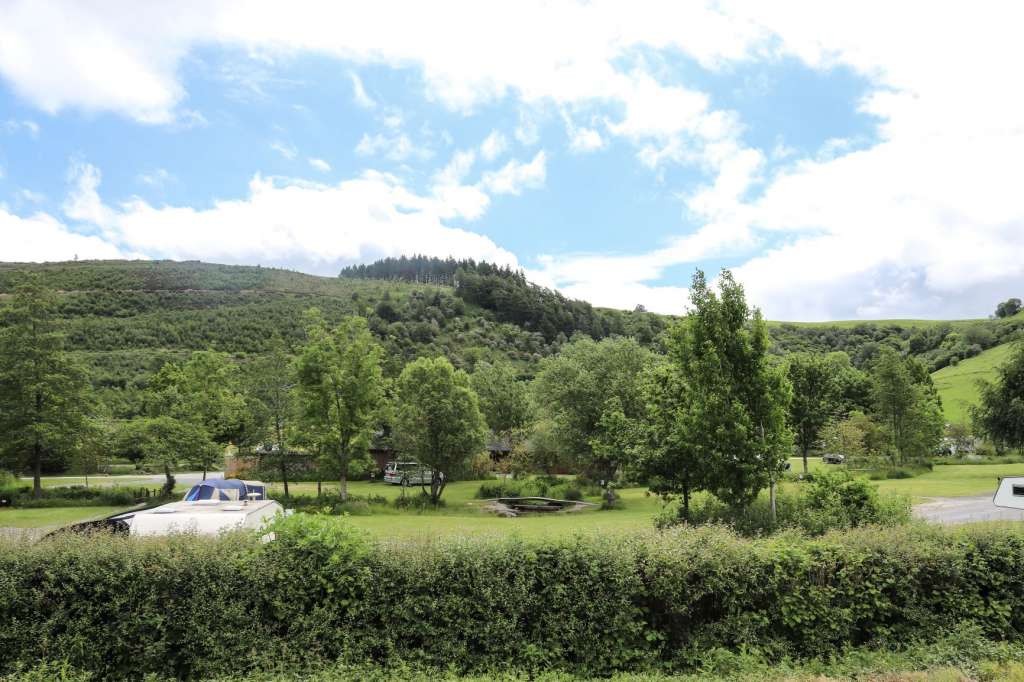
Significantly, it was not the last "honesty shop", with regulation "honesty box", no doubt, we saw on that very day. That clearly 'Utopian' establishment (for complete honesty has one of the main principles of all Utopias, starting with the very first one created in 1516 by Sir Thomas Moore) was also present on the grounds of the Fforest Fields Camping Site, a 15-minute drive from Hay-on-Wye, where we stayed that night. Fforest Fields has been called the Shangri La (a synonym of 'Utopia') of campsites by previous visitors and it was hard not to agree with that. It was not just the "Honesty shop"- a small general store with all the basics needed for an enjoyable camping night (alas, campers often forget to bring such staples as salt, matches, bread etc.) one could acquire any time of day or night, but the general level of camping comforts (forgive me for the oxymoron) that were not much different from Caer Beris. Except, perhaps for the four-poster beds conspicuous by their absence…
Our next camping night was at Daisy Bank Caravan Park, not far from Newtown, the birthplace of one of the world's greatest Utopian thinkers, Robert Owen, whose museum was closed to the public due to the pandemic, but was briefly re-opened specially for us!
Our pitch which had a breathtaking view of the Camlad Valley to enjoy while we unpacked and prepared our campervan for the evening – another near-'Utopian' scenario. Christine then immersed herself in grooming Tashi (a much-needed daily procedure of combing our pet's long and fluffy fur coat that he has to wear all year round) on the lawn in front of the campervan. It was, in all sincerity, a perfect groom with a view (sorry, could not resist the pun)!
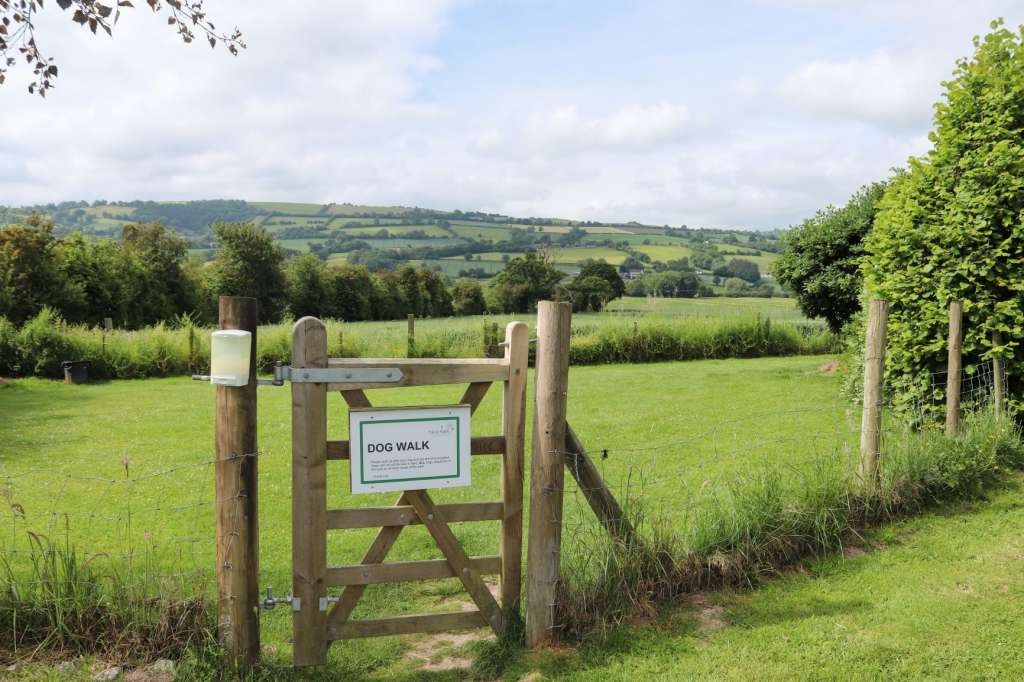
It was there that Tashi, who remained pretty unperturbed by four-poster beds and other luxuries of Caer Beris (except perhaps for his own personal water bowl at the reception) experienced a touch of his own canine Utopia when walked along the campsite's special Dog Walk where he could be safely let off the lead and thus made to feel completely free. Alas, complete freedom, just like complete Utopia, are themselves Utopias in their own right, and Tashi's bliss had to be terminated after about ten minutes.
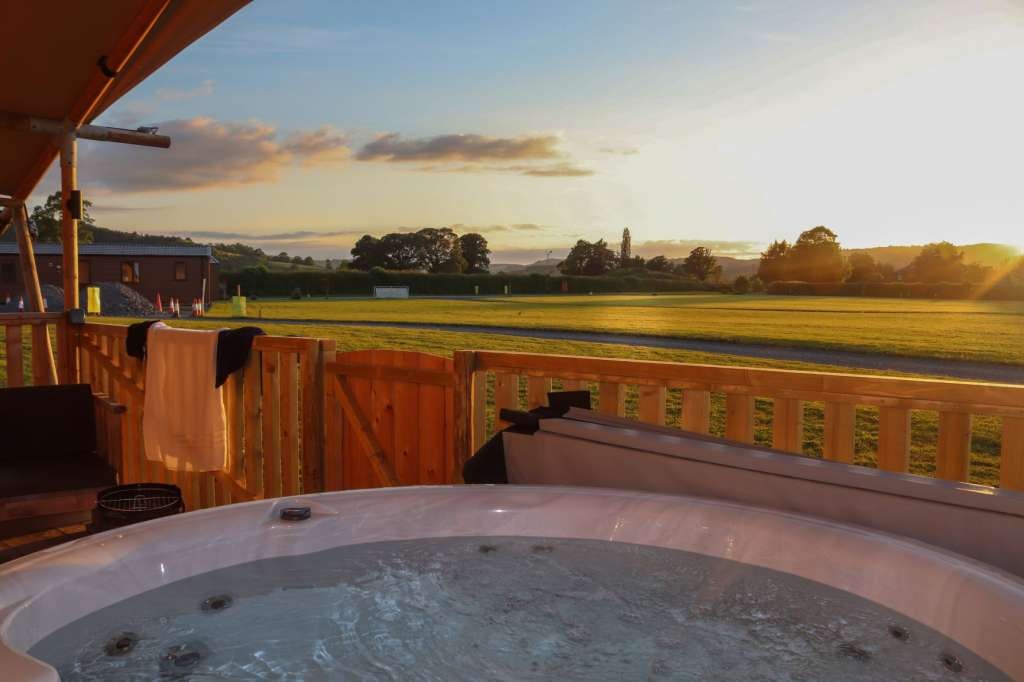
He made up for that interrupted dog's delight, however, the following day, during our one-night stay at Maesmawr Farm Resort, Caersws in the Black Hills area of Mid Wales. Our luxurious 'Safari Tent' included a capacious, small-swimming-pool-sized Jacuzzi, that ultimate epitome of luxury (in Britain, if not in Australia) on the porch, and - you've guessed it right: a four- poster bed!
Tashi had his own little bedroom, with a bespoke custom-made (and not at all four-poster) cradle, and a choice of two special dog-walking fields!
Reclining in the warm and bubbly Jacuzzi until late at night, I was lucky to get a couple of glimpses of the evasive and normally invisible because of the clouds pale Welsh stars…
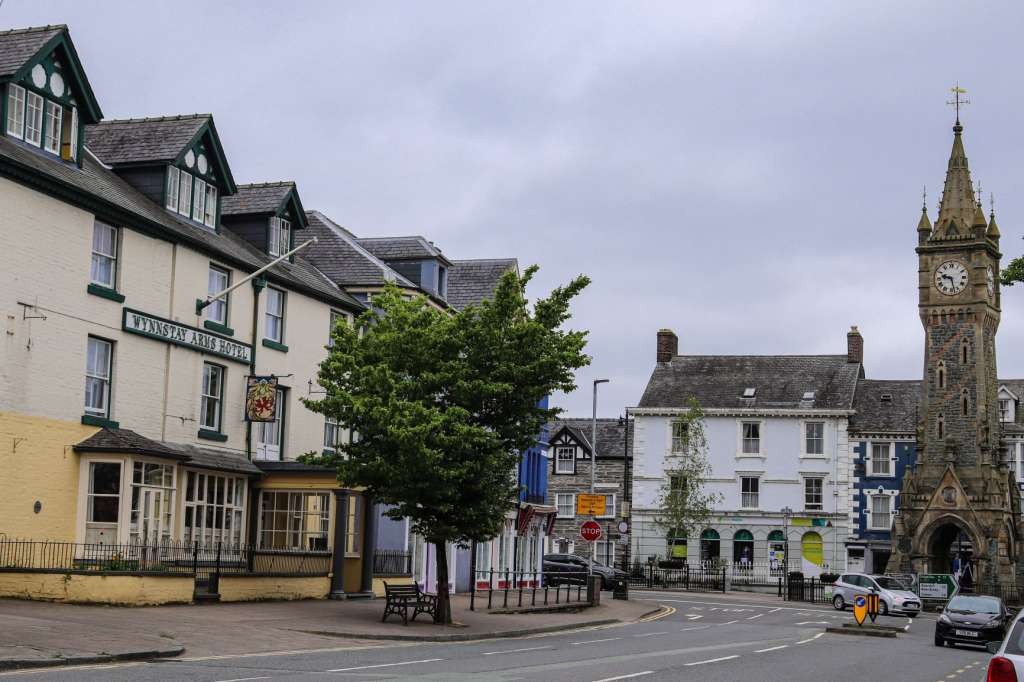
In Machynlleth, a historic market town and the one-time capital of Wales, we stayed at the The Wynnstay - a traditional coaching Inn bang in the town centre, or, as they say in America, smack downtown!
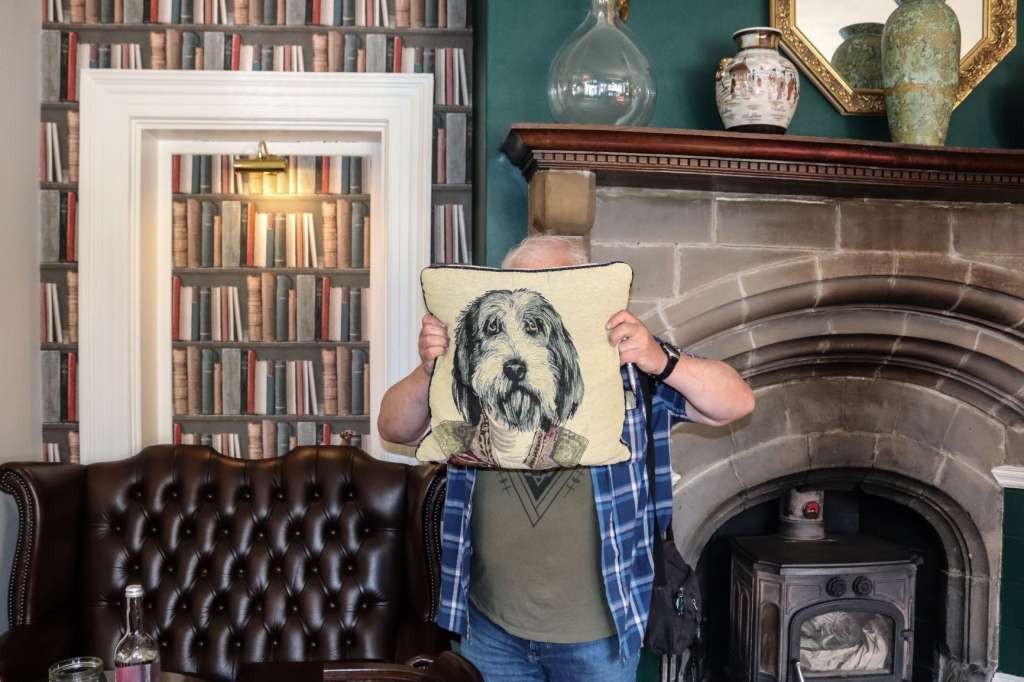
Charles Dark, owner of the Wynnstay, was passionate about presenting his hotel as a traditional inn for people to meet, have good food, hospitality and wine. The latter at Wynnstay was – unexpectedly - not just good but truly outstanding. Charles, my fellow 'Italomaniac', who had lived in Italy for a number of years, has arranged for regular supplies of Italian wines to his hotel's restaurant and the bar, where one could also drink them by the glass– straight from a barrel! – something I had never experienced anywhere else in Britain. And at dinner, we all (except for Tashi) had a chance to try a superb Italian Frizzante, a cooled sparkling red wine – a true treat in the uncharacteristically for Wales spell of hot weather. The delicious and aromatic Frizzante reminded me of the Crimean wines of my Ukrainian youth, Not even in my wildest dreams could I imagine then that 40 odd years on I would be able to taste a similar 'vino' in an old inn in the centre of an ancient Welsh market town, and that it would make me – if only momentarily - feel young again.
If that wasn't a Utopia, then nothing is!
In the course of that journey, we came to understand the full meaning of Oscar Wilde's expression that a map without Utopias on it was not even worth looking at (see the epigraph). Our map of Mid Wales was now dotted not just with a number of truly Utopian settlements (Portmeirion, Tremadog, Newtown and many more), but also – with the uniquely remarkable, read near-Utopian, places to stay.
Additional reporting and photography by Christine Bohling
Useful links
While in Mid Wales, Vitali and family stayed at:
Caer Beris Manor Hotel, Buith Wells, Powys, Wales, LD23NP
Telephone:01982 552601
Fforest Fields Caravan and Camping site, Llandrindod Wells Powys, LD1 5RT
Telephone:01982 570406
https://www.fforestfields.co.uk
Daisy Bank Touring Caravan Park, Snead, Montgomery, Powys, SY15 6EB
Telephone: 01588 620471
Maesmawr Farm Resort, Moat Lane, Caersws Newtown, Powys, SY17 5SE
Telephone:01686 688011
https://www.maesmawrfarm.co.uk
The Wynnstay,Hotel Maengywn, Machynlleth, Powys SY208AE
Telephone: 01654 702941
Vitali's trip was organised by MWT Cymru , which represents more than 600 tourism and hospitality businesses across Mid Wales – in Powys, Ceredigion and Meirionnydd region of Gwynedd: https://www.visitmidwales.co.uk/
Location (Map)
About the author
Contact info

ISSN 2634-7032
London, United Kingdom
+44 0 7764 198 286