AllWays Traveller Features
Pas-de-Calais, France

The Pas-de-Calais region of northern France is located to the north of Paris.
With a coastline running along the English Channel it forms the closest point to the UK and offers the traveller the resort of Le-Touquet-Paris-Plage.
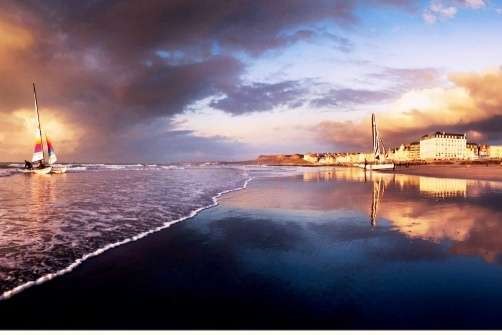
There is also a rugged coastline dotted with small sea side towns and villages and sandy beaches.
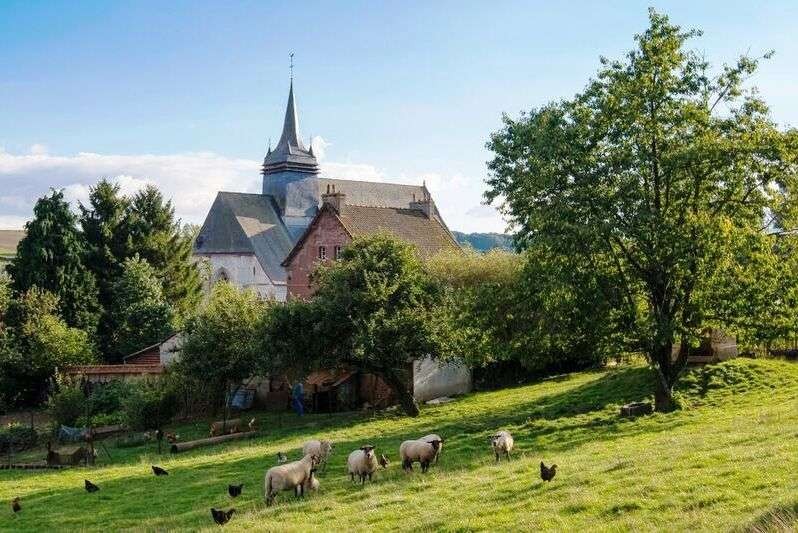
In its rural heartland, the region has medieval towns and sleepy villages sitting in verdant countryside.
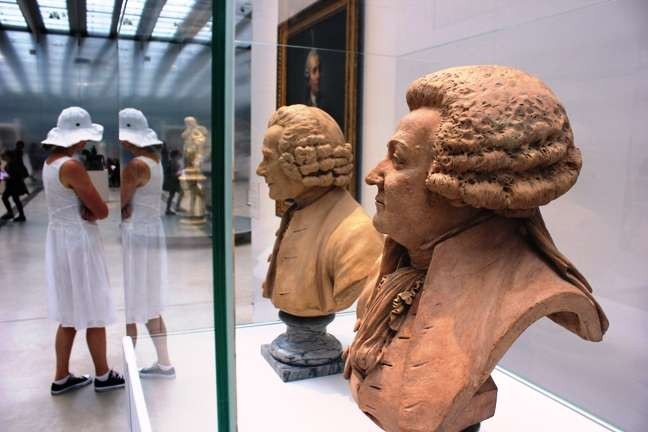
The Louvre Lens Musuem is a stunning example of how art, culture and heritage can come together in a truly inspiring experience.
Finally the area around Arras saw some of the bloodiest fighting during the Great War of 1914 to 1918.
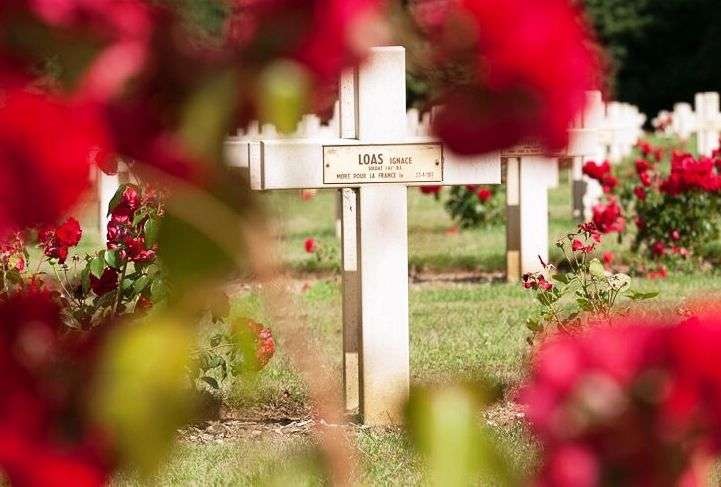
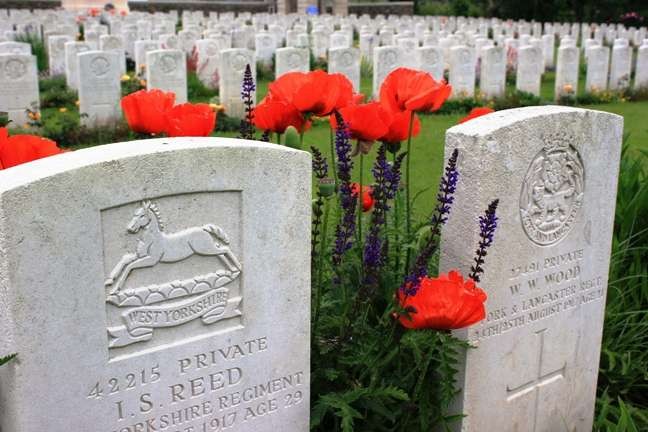
No trip to Pas-de-Calais will be complete without taking in a sombre and very moving tour of the war grave cemeteries and memorials.
This is the time to marvel at great bravery and comradeship and to reflect on the seemingly fruitless sacrifice many by so many - on all sides.
A fine first date for an enduring love affair
When thinking France, the Pas-de-Calais region is often overlooked in favour of more, supposedly, glamorous destinations.
Paris, undoubtedly a charismatic city of the highest order or Provence and the chic resorts of the South of France tend to overshadow this part of northern France.
It also does not help that the general perception of Calais is not a positive one, albeit undeserved.
For we Brits, Calais itself is, literally, our first port of call following the trip across the English Channel.
The ferries from Dover dock and disgorge and we make great haste in getting well away before considering our trip to France has really started.
My advice can be summed up in just two words. Big mistake.
Ann and I have just spent seven exhilarating days in Pas-de-Calais and the trip exceeded our expectations.
For a relatively small region there is coast, countryside, culture and history – and genuinely friendly welcome.
Je voudrais parler Francais sil-vous-plait
This is particularly pertinent when it comes to my rudimentary attempts to speak the language.
While Ann has 'A' level French (as she enjoys reminding me) I possess little more than a 'goodish' schoolboy grasp of the language.
But we both like to try to get through with as little English as possible.
And I do believe it is important to have at least a few basic words of the language of a country in readiness for a visit.
To expect everyone in other countries to speak English (even though many do) is arrogance in the extreme.
A proud nation
The problem with this is that the French are a proud nation whose people are particularly proud of their 'beautiful' language.
And in some parts of the country one detects a certain frustration at we 'mumbling, bumbling' Brits when we look to use it.
It is said if one wants to practice French it is best to do so in Luxembourg.
I can now genuinely add ... or Pas-de-Calais.
Everyone we met responded to our attempts at French and more than delighted to help us with it.
This, in turn, gave us the confidence to persist and added greatly to our experience.
Getting to Pas-de-Calais
Travelling from London, we had the choice of driving our own car to Dover and catching the ferry or Eurotunnel or opting for Eurostar.
We chose the latter, picking up the mid-morning Eurostar express from St Pancras International for a very smooth, enjoyable and surprisingly quick trip to Lille (see page 19).
Picking up our Avis rental car from Lille station we were, given the time difference, relaxing at our first hotel by mid-afternoon.
To see all that we wanted to, on this first trip to Pas-de-Calais, we decided to spend four nights on the outskirts of Saint Omer, followed by three nights at Arras, which is an hour's drive back to Lille.
Taking its hold on us
As travel writers, Ann and I tend to spend a short time in many different places.
And while each offers it's own delights we realise it is probably going to be a one off.
But we do try to identify destinations that deserve repeat visits, where there is ever more to discover when scratching the surface.
Where it just feels good get back to.
Florida fits this bill long haul and, in Pas-de-Calais, I think wave found just such a place close to home.
Our love affair with Pas-de-Calais has just begun.
Au revoir. A bientôt.
A triangle of rewarding experiences
There are three distinct areas in the Pas-de-Calais region and within an hour's drive of any given point.
Then there is the regions rural heartland that takes in Saint Omer, the UNESCO listed marshes and the medieval walled town of Montreuil-sur-Mer.
Then there is the Coastal region known as the Opal Coast, which takes in Le Touquet and the stretch of English Channel from Boulogne to Calais.
And finally, there is Arras and the Artois, which saw some of the most horrific fighting during World War One and where one needs to reflect on this terrible human sacrifice.
Saint-Omer and the Audomarois
Our first base was at Tilques, on the outskirts of Saint-Omer, and our first full day was spent touring the town and its surrounding marshes.
The historic town of Saint-Omer came to cultural, religious and economic prominence during the Middle Ages, when it was on a major pilgrimage route.
Abbeys and monasteries were established in the town and surrounding area, which added greatly to its strategic importance.
A genuine renaissance
Saint-Omer is now enjoying a genuine renaissance with a major redevelopment and enhancement programme centred around Place Foch, its main square.
The square has a string of inviting bars and restaurants, coffee shops with alfresco dining, on three sides that face the hugely impressive 17 Century Mairie (Town Hall).
A grand Italianate theatre, which is to reopen in the building in the autumn of 2018, will provide a world class venue for classical music and theatre.
There is a vibrant open air market here every Saturday morning.
Leading off from Place Foch one finds tranquil, meandering streets lined with pilastered town houses.
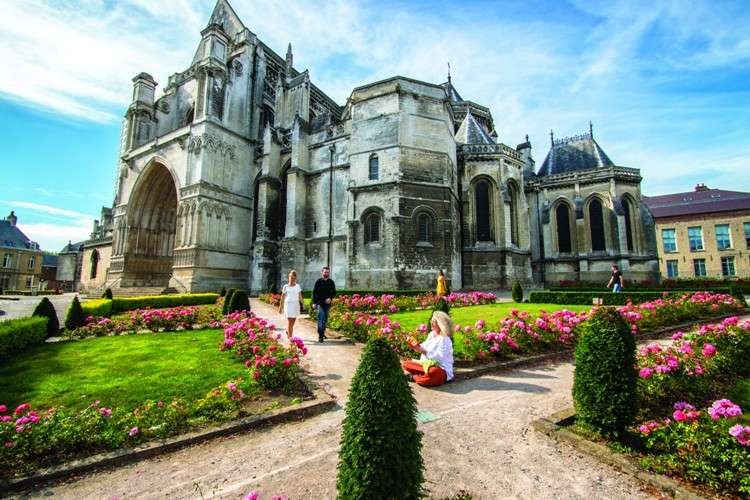
Notre Dame Cathedral
The magnificent Notre Dame Cathedral, which was begun in the 13th Century and took three hundred years to complete.
Inside is a Rubens painting of Christ being removed from the cross, an astrological clock dating from 1558, and one of the oldest in the country, and a massive organ which was built in 1717.
Jardin Public de Saint-Omer
Finally, the town's splendid public gardens have a layout that brings together formal landscaped gardens with more natural parkland.
Saint Omer also stages a number of events, throughout the year, and these can enhance a visit still further.
In April, there is the chance to explore the town's fortifications during the Euroregional Fortified Towns Days, while in May Saint-Omer takes part in the nationwide Night of Museums and Meet in the Gardens.
There is also the Cortège nautique du Haut-Pont parade in July; Heritage Days in September; the 'Patoisades' meals in November and the traditional Christmas Market in December.
Spending our first morning in Saint-Omer got the trip off to a great start and gave us the afternoon in which to take in the AudOmerois, or Marshlands of St Omer.
The Audomarois
The name Audomarois come from the latin Audomar - 'from around St Omer".
It comprises protected wetlands and a haven for wildlife while being home for 15 communities, with the whole area.
It is one of the last of places in France where the post is still delivered by boat.
The marshlands came about because, in the mid-7th Century, King Dagobert of the Gauls decided he wanted the north of France to become Christian.
To achieve this the king sent four monks including Audomer (Omer in Latin) to carry out the task.
While Audomar became a Bishop, and gave his name to the area, the other three monks settled in the forests and marshes around St Omer and began the gargantuan task of cultivating the area.
Their toil on this boggy land took them and almost successor devotees three hundred years to complete, and resulted in the waters of the River Aa being diverted to the sea and the area drained and cleared.
Cultivated wetlands
The Audomerois marshes are the only cultivated wetlands left in France and are worked by about forty market gardeners on 440 hectares of land.
Together the produce fifty types of vegetables including five million cauliflowers a year.
For the visitor it is an area is a area of outstanding natural beauty, listed by UNESCO.
Its ecosystem sustains more than 400 species of plants and 490 species of mushrooms and 220 different species of birds including a colony of great cormorants.
The way to get a true appreciation of the area is to visit the Romelaere nature reserve in Clairmarais, and by taking one of the flat bottom boat tours through the marshes.
The Romelaere Nature Reserve
The Romelaere Nature Reserve combines several large lakes originally dug for peat extraction, surrounded by reedbeds, wet grazing land and woodlands.
The area is important for waterfowl on passage and in winter and has a good range of breeding wetland birds in summer.
There are boardwalk footpaths throughout the reserve that offer easy access and rewarding access to the casual visitor.
Taking to the water
It is then possible to meander serenely through the marshes aboard a traditional bacove flat bottom boat with O Marais.
Stopping between the two for lunch we were lucky enough to come across the Baguernette tavern and enjoyed typical Flemish cooking ambits best.
Through hills, dales and historic ramparts
The middle part of the Pas-de-Calais region is predominately, and delightfully, rural.
Perhaps the bet way to appreciate this is to take a leisurely drive from Saint Omer to the truly historic, walled town of Montreuil-sur-Mer.
Opt for a meandering country road route (rather than the major roads your sat nav will want to go) and you will be able to appreciate the undulating, agriculture splendour of what is called ' Le 7 Vallees'.
And in Montreuil-sur-Mer one has a destination that is, oh so worthy of having made the effort.
Montreuil-sur-Mer
The affix 'sur mer' to Montreuil refers to it being 'on sea', which it most certainly is not.
The origin of its name stems from Roman times when the sea ran up the estuary of the Canche as far as Montreuil.
But do not let that disappoint you (there is much besides the sea to be discovered on this trip).
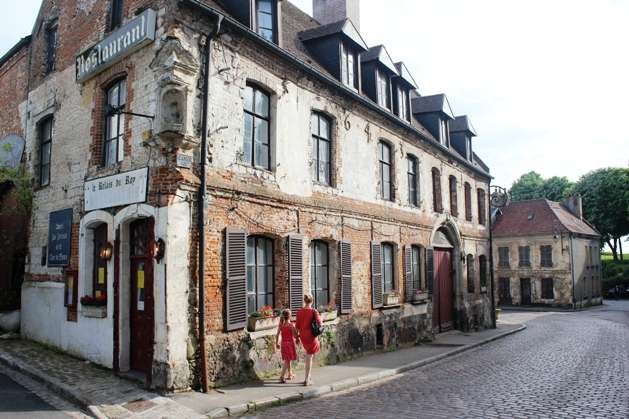
Arriving at this historic walled town one will park up, as we did, in its large town square, which is surrounded by charming shops and restaurants.
But it is as one walks way from the square that Montreuil's allure really takes hold aids one finds cobbled streets through grand old houses and churches.
And all of theses are encased in wonderfully preserved old city ramparts, which are provide a dominating physical presence and offer a fascinating insight into the town strategic importance during medieval times.
The first ramparts were built in the 9th Century by one Count of Ponthieu and by the 10th Century Montreuil had become the major sea port of the Capétiens.
Montreuil comes to prominence
During the next two centuries its cloth industry flourished and eight churches were built and house the relics of saints.
This saw the town become a true pilgrimage hotspot.
Over the centuries, the estuary silted up killing off the port the port and then the English took possession of the town during the Hundred Years' War, eventually leaving it in ruins.
The town continued to go through hard times, being plundered by English King Henry VIII, suffering from an outbreak of the plague in 1596 and tumbling into three centuries of decline
The historical charm well and truly preserved
And so while Montreuil has long since ceded its strategic importance, it has preserved much of its historical heritage to offer the visitor a unique charm.
And I do not use the word 'unique' lightly.
The first thing to do is to take an hour in a circular, car free, stroll of the city walls.
This offers tremendous views both inside of the town and of the miles of rural vistas beyond. Along the way there is the chance to walk down off the ways into parts of the town and to stop at small bars and restaurants for refreshments.
A delightful way to spend a half day, and being France, with its passion for wine, can I also recommend a tremendous wine shop called Vinophilie.
Pascal Vigneron, the owner, will be more than pleased to spend time talking through his wines.
The Agincourt Medieval Centre
If you have time, and unfortunately we did not, you might also take in the Agincourt Medieval Centre, which is located between Montreuil and Saint-Omer.
On 25 October 1415 an English army of some 9,000 men under the command of Henry V inflicted the heaviest defeat of the 100 Years War on the French, despite the French army being twice the size.
The skill of the English archers was a crucial factor in this victory.
The Medieval Historic Centre of Azincourt allows visitors to get an insight into the battle and a taste of life in France in the Middle Ages.
There are regular enactments of the battle, but, most sobering of all, it the perspective this 'great' battle places on the millions that would die in France during World War One.
The Opal Coast
The Pas-de-Calais's Opal Coast runs from Berck-sur-Mer, through Le Touquet and Boulogne-sur-Mer northwards to Calais.
The Opal Coast was first coined by painter, writer and botanist Edouard Lévêque, in 1911, to describe the quality of the natural light in the region.
Now used to identify the Pas-de-Calais coastal area, it takes in 120km of beaches, dunes and cliffs with resorts and smaller fishing communities along the way.
This provides the visitor with real contrast.
It offers the chance to explore the chic seaside town of Le Touquet and the working port and historical city of Boulogne before meandering up the coastline to Le Deux-Caps, which provide the nearest point from France to the UK.
Calais then lies a short drive beyond.
The elegant chic of Le Touquet
Le Touquet-Paris-Plage, or merely Le Touquet, is undoubtedly the most elegant holiday resort of northern France.
It has long been a 'playground' for rich Parisians and, during the 1920's, sawNoël Coward and the English "smart set" spending weekends here.
P.G. Wodehouse lived and worked in the resort, between 1934 and 1939, and the British continue to come to Le Touquet to be beside the seaside 'en France'.
The laid back charm and vibrant elegance that so attracted visitors to Le Touquet in previous era's remains very much in evidence today.
During the tourist season, a small town of some 5,500 souls swells to more like 250,000 and the town buzzes with youthful exuberance.
For those seeking traditional seaside activities Le Touquet offers a large expanse of flat sandy beach with a grand promenade complete with ferris wheel and carousel and indoor amusement arcades.
The town of Le Touquet, which begins immediately beyond the promenade, thrives on its influx of seasonal visitors with high end art, craft and designer stores.
Lined along rue Saint Jean and rue de Metz are a great range of bars and restaurants.
Boulogne-sur-Mer
In contrast to the refined lure of Le Touquet, Boulogne-sur-Mer (which does deserve its 'on sea' affix), is France's leading fishing port, particularly herring.
Stalls sell the fresh fish at the entrance to the port and the fish auction, held daily at dawn, can be a fascinating experience for early risers.
Although Boulogne is a working, seafaring city, it can trace a history to Roman times, has a heart that reflects its historic pedigree.
The 12th-century belfry, and a UNESCO as a World Heritage Site, was initially a dungeon now houses the collections of the Museum of Fine-Arts, and the basilica of Notre-Dame has an80 metre high dome.
Nausicaá
In a seafaring town lime Boulogne, it is apt to find the Nausicaá Centre National de la Mer here, which is Europe's largest aquarium.
The original attraction was home to 36,00 fish and aquatic animals.
And now, a sparkling new extension to Nausicaá showcases journey in the high seas, which is dominated by a giant interactive aquarium for a further 22.000 creatures, including sharks, manta rays and shoals of fish.
A transparent tunnel offers panoramic viewing of these inhabitants, and there is also a sea lion 'reserve', penguin beach and tactile pool.
Nausicaá is developing as a world leader in scientific and technical discovery of the marine environment.
In doing so it focuses primarily on the relationship between man and the sea and, as such, has earned a status as UNESCO "Centre of Excellence".
For the visitor it offers a delightful two or three hours that makes one appreciate the need to give due consideration to those creatures that live within our seas and oceans.
La Beurière
Also in Boulogne, and located in the former sailor's quarter, the La Beurière museum is preserved as an authentic fisherman's home from 1900.
The house displays objects, clothing and furniture gives a real flavour of the life, tomes and traditions of the sailors.
Along the coast
Heading out of Boulogne towards Calais one finds a ruggedly stunning coastline of rocky outcrops, sandy beaches and undulating sand dunes.
There is also the chance to stop along the way at smaller seaside communities and fishing villages.
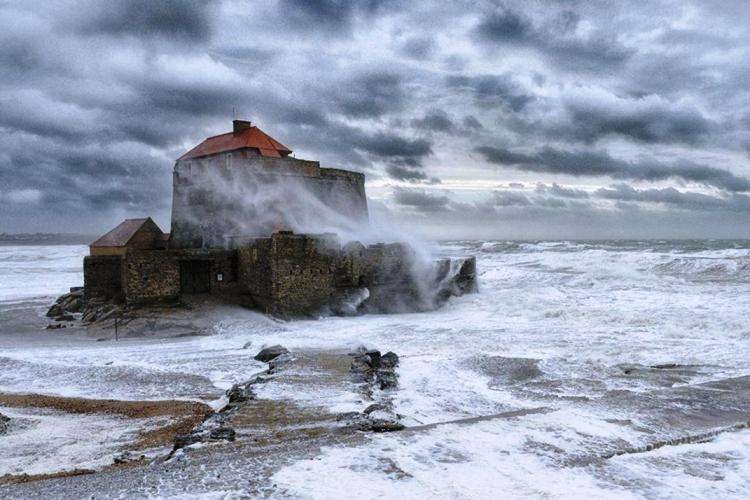
Wimereux a quiet own with a short seafront promenade and Ambleteuse has a coastal fort that offers stunning images for the photographer (see page 2).
The small fishing village of Audresselles has many options for lunch.
Le Deux-Caps
Le Deux-Caps nature reserve is located on the Côte d'Opale taking in Cap Gris Nez (grey nose) and Cap Blanc-Nez (white nose).
This area of outstanding natural beauty enjoys Grand Site de France status in recognition of the importance of this 23km stretch of coastline.
This is nearest French point to the UK and offers the same chalk cliffs as the aptly named White Clffs of Dover.
This is the place for bracing air, stunning views and cliff top walks, in an area rich with bird life and grey seals.
The English coastline is 21 miles across the Channel and one can view the many ferries, oil tankers and container ships, fishing trawlers and yachts ply these waters daily.
On a clear day (unfortunately not for us) one can see the white cliffs of Dover.
So little surprise that Napoleon stopped here, in 1803, to make an inspection of the coast and his troops stationed here in readiness for his intended, eventually aborted, invasion of England.
www.lesdeuxcaps.fr/uk
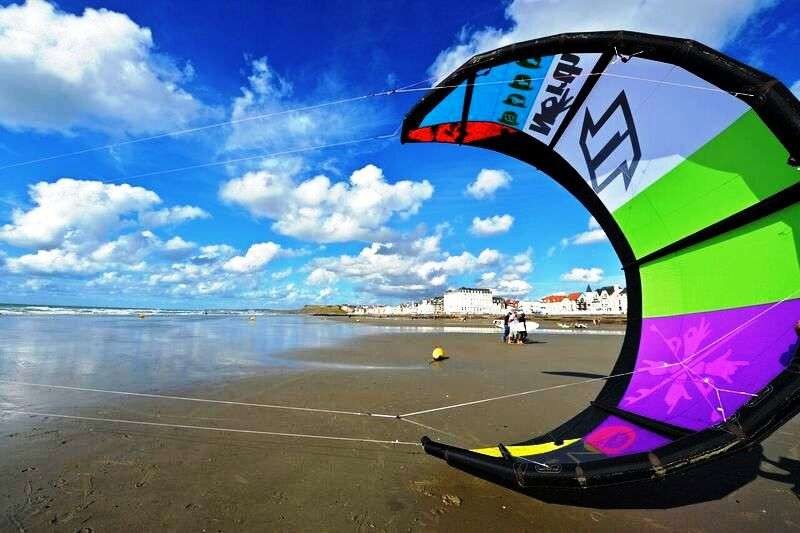
Land sailing and kite surfing
With its long stretches of fine sand and fine wind conditions, the beaches of the Opal Coast provide excellent conditions for land sailing and kite surfing.
Land sailing first became popular in the 1910's with Louis Blériot taking the lead.
The aviator, who of The Channel by airplane, Louis Blériot developed the "aeroplage", the ancestor of the current land yacht.
Today, some fifteen clubs can be found between Calais and Berck-sur-Mer.
Kite surfing, which combines the stunt kite and surf board allows participants to carry out spectacular moves and jumps above the water.
For the casual visitor to the Pas-de-Calais these make for excellent spectator sports.
Calais
Calais is a half-hour drive from Le Deux-Caps but we did not get there.
No, not because of a determination to avoid the place but because we had decided this would make a future trip (and feature) in its own right.
Second World War museums
During World War II, the Opal Coast was one a key sections of the Atlantic Wall of coastal fortifications from Norway to Spain.
For those interested in military history, a number of museums reflect on the conflict.
The Calais Museum of Remembrance
The Calais Museum of Remembrance, once the command bunker of the German Kriegsmarine, displays the uniforms of120 fully- equipped soldiers and thousands of original objects.
The Atlantic Wall Museum Audinghen
This museum is located in the Todt Battery, on Cap Gris-Nez.
Mimoyecques Fortress Landrethun-les-Nord
This secret base was designed to house the giant V-3 underground cannon, which was created to bomb London.
The Eperlecques Blockhaus
This gigantic bunker, which was built by the Germans in 1943 to launch V2 rockets, is retained in its original state.
The Louvre-Lens
Travelling from Saint Omer to our second stop at Arras, we were urged to make a stop at the Louvre-Lens.
Thank goodness, for the Louvre-Lens is a truly stunning art museum, located in Lens, which displays objects from the collections of the Musée du Louvre in Paris.
Built on a landscaped 49-acre old mine, the design of a central main building, flanked by two wings, mimics the Louvre in the French Capital.
Once inside, the Galerie du Temps, the main space within the museum, is one 360 metre hall with a chronological 'flow through' of exhibits.
These begin with a range of astonishing artefacts from 3,500 BC and take the visitor along to works of art from the mid-19th century, displayed regardless of style or country of origin.
The adjoining Pavillon de Verre exhibits works from neighbouring museums and there is also a gallery for temporary exhibits.
The joy of the Louvre-Lens is the breadth of its exhibits but the accessibility of its layout.
Moreover, by bringing it all together, regardless of time, region or genre, it showcases the creative longevity of the whole human race.
Arras and the WW1 sites of the Artois
The second leg of our trip to Pas-de-Calais saw us based in the historic city of Arras, which provides easy access to the Artois and, as an absolute imperative for us, the cemeteries and memorials of commemoration to those who fell during WW1.
Arras
Visitors to Arras will inevitable and, quite rightly, be drawn the city's Grand Place de Arras and Place des Héros.
These two squares with their grand facades, in the Flemish Baroque style, provide an astonishing and poignant architectural legacy.
Since the Middle Ages, these have been the throbbing hub of Arras, staging outdoor markets and many festivals, events and celebrations.
And while the Grand Place now provides car parking space for the city, the Place des Héros remains a cobbled, vehicle free, square surrounded, on three sides, by bar, restaurants and retail outlets.
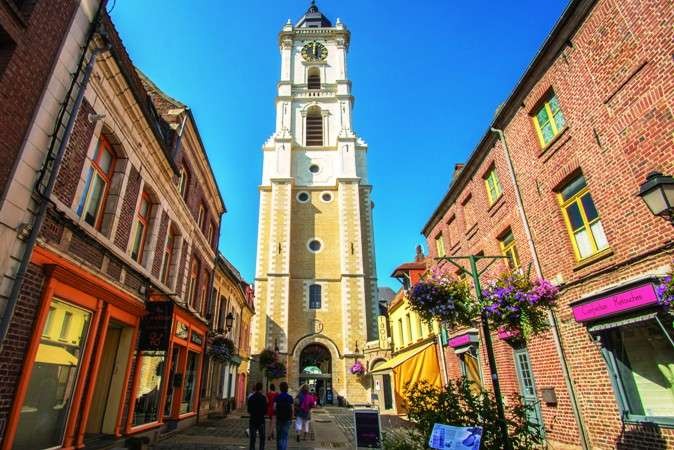
On the fourth is the magnificent Hôtel de Ville and belfry that was first built in the 15th Century.
During the warm days of spring, summer and early autumn the restaurateurs let their tables and chairs encroach onto the square with residents and us visitors flocking to sit and enjoy a beer or something to eat al fresco.
Looking beyond the more obviously popular places to dine around the squares, we discovered a delightful and truly authentic little restaurant called Le Petit Theatre.
A medieval reconstruction
But it was the Place des Héros that drew us back the have a beer and 'watch the world go by'.
In doing so I imagined how so little must have changed here for centuries - but not so.
For Arras was the only town in France to occupy a front-line position throughout the First World War.
As such it was under a constant bombardment that completely destroyed some 75% of the city, including the two squares.
When peace returned to Europe, albeit a temporary one, Arras had to be largely rebuilt and the authorities agreed, despite the considerable cost, to replicate the medieval designs when rebuilding the Grand Place and Place des Héros.
There is inevitably heated discussion on the rights and wrongs of this approach when rebuilding is required in cities elsewhere.
In Arras it is so very appropriate.
For here the determination to ensure the destruction of warfare would leave no lasting scar on the heart of city was an imperative that overrode every other consideration.
A provincial French city
Branching off these two squares, Arras today is a very attractive provincial French city with pleasant thoroughfares and winding cobbled alleyways.
There is obviously much to discover but, this trip, it was the city's role during the 1914-18 conflict, and it's proximity to the war grave cemeteries in the Artois that dominated this first trip to Arras.
A conflict with no conscience but such colossal consequences
Travelling through the southern states of America, one finds a certain reluctance to refer to the 'civil' war.
"There weren't not in civil about that war", is a common explanation.
With this in mind, and as someone who tends to us the word great quite frequently
("That's great", "Have a great day") I am equally loath to refer to World War One (WW1) as the 'Great War'.
Wanton destruction and waste of so many young lives
Except that it was colossal in terms of wanton destruction and waste of life.
So much has been written about WW1 but it seems, to me, to come down to fateful coincidence coercing decedent, decaying European empires to go to war without conscience.
And to adopt 18th Century battle strategies with the use of 20th Century weaponry.
How else does one explain command instructions for hundreds of thousands of young men to charge, bayonets drawn across 'no man's land', into a hail of machine gun and cannon fire -'to almost certain death.
The fuse for war was lit with the assassination of Archduke Franz Ferdinand of Austria, heir to the throne of Austria-Hungary, by a Yugoslav nationalist in Sarajevo on 28 June 1914.
The resulting diplomatic crisis between Austria-Hungary and the Kingdom of Serbia escalated as major power after major power supported either the so called Allied Nations or the Central Powers.
Killed, missing and wounded in action
After four years of fighting the casualty statistics were colossal.
The 'victorious' Allied Nations suffered 18,356,500 killed, missing or wounded in action with four million civilians killed.
The Central Powers suffered 12,774,000 killed, missing or wounded in action with three million seven hundred thousand civilians killed.
Within months of the end of the war, the German Empire, Russian Empire, Austro-Hungarian Empire and the Ottoman Empire ceased to exist and Germany's colonies were parcelled out among the 'victors'.
National borders were redrawn, with nine independent nations restored or created and the League of Nations was set up to ensure this was the 'war to end all wars'.
The aftermath of WW1 was, however, economic depression, an explosion of nationalism and the resentment of defeated Germany that led to World War II just 21 years later.
A poignant journey of appreciation and silent remembrance
The first fighting in WW1 began in August 1914 and, within two months, the front line settled in and around the Artois region.
Over the next four years it deviated no more than a few kilometres as both sides squandered many thousands of men and horses to maintain a bloody status quo.
I would urge you to visit at least some of the monuments, cemeteries, and memorials that commemorate those who made the ultimate sacrifice in the battles that took place here.
Lens 14 -18 History Centre
A fine place to start a tour of the battlefield sites of the Attois is the Lens 14 -18 History Centre.
Located at the foot of the hill of Notre-Dame de Lorette (see below), it provides a comprehensive overview of the war by highlighting the stages of the conflict in French Flanders and in the Artois.
Housed in a suitably austere building it comprises many hundreds of photographic images and film footage, maps and scale models and documents and artefacts.
French National Necropolis of Notre-Dame-de-Lorette
When the conflict ended the French State created the largest national necropolis on the plateau of Notre-Dame de Lorette.
This is the final resting place of those soldiers who fell on the Western Front in Artois, Flanders, Yser and on the Belgian Coast.
Twenty thousand bodies were identified and given an individual grave, with another twenty-two thousand unknown soldiers placed in eight ossuaries.
Since 1920 a Voluntary Guard of Honour welcomes visitors to the site and rekindles the Eternal Flame every Sunday.
A circular, walk around, international memorial named The Ring of Remembrance was inaugurated here in 2014.
It is inscribed with 580,000 names of those who died, in alphabetical order and without distinction by nationality.
Cabaret Rouge British Cemetery
Designed by architect Frank Higginson, the Cabaret-Rouge British Cemetery in Souchez contains 7,655 Commonwealth burials of the First World War, more than half unidentified.
La Maison Blanche German Military Cemetery
The largest German war cemetery in France, is the final resting place for 44,833 German soldiers of which 8,040 were never identified and buried in a common grave.
In this area you will also find Czech and Polish memorials.
Parc Mémorial Canadien, Chemin des Canadiens
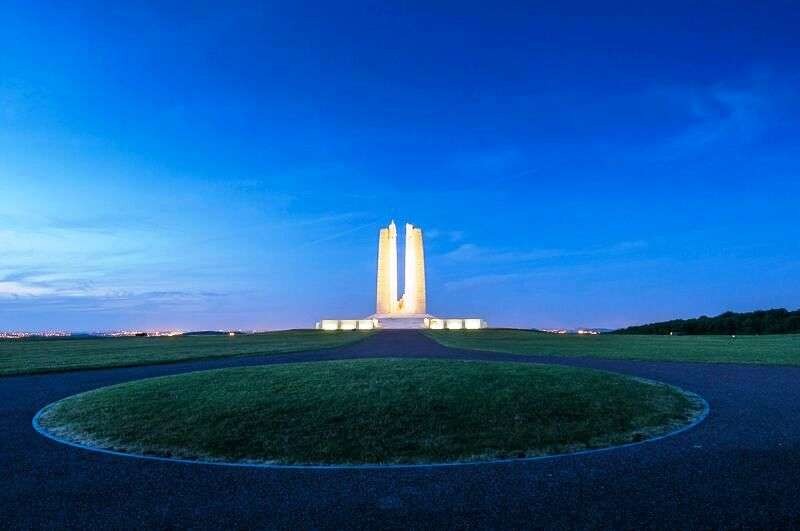
On 9 April 1917, Canadian soldiers, united for the first time in a single army corps, took part in the Battle of Arras and succeeded in taking Vimy Ridge in the face of desperate German Army resistance.
The Canadian Memorial of Vimy, stands as an impressive tribute that Canada paid to all those who served their country in fighting, and particularly the 11,285 Canadian soldiers killed or reported missing in action during the battle.
A new Interpretation Centre of the Canadian Memorial has photographic images and banners, along with artefacts, maps, graphic representations and an audiovisual multimedia presentation
A guided tour takes visitors through a tunnel and reconstructed trenches to get a real insight into the battle.
La Carrière Wellington
La Carrière Wellington (the Wellington Quarry) is a museum in a section of the many kilometres of tunnels and quarries that run underneath the city of Arras.
The tunnels, which date back to the middle ages, were adapted by the New Zealand Tunnelling Company to secretly house 20,000 Allied troops so they could spring a surprise attack on the German army during what became the Battle of Arras.
Over six months of adaptation the tunnels were fitted with running water and electricity supplies.
Accommodation in the underground city was available for the soldiers to live and sleep, and there was a large hospital for treating the wounded in a labyrinth of rooms with enough space to fit 700 beds and operating theatres.
The museum stands to the memory of the thousands of men of the British Army and Dominion Forces who lived under the city during the operation.
In doing so particular emphasis is rightly given to the tunnelling work by the men of the New Zealand Division, which was truly astounding.
A guided tour through the museum, which is 20 meters below ground, provides a vivid appreciation of the physical hardship of this war and the huge and often ultimate sacrifice made by its soldiers.
A video of the Battle of Arras, which began on 9 April 1917, ends the tour.
It depicts yet another breathtaking example of command incompetence leading to needless loss of young lives
It was an appropriate and very emotional culmination to our tour of the WW1 sites and memorials.
A place to stay
Hôtel Château de Tilques, St Omer
By Ann Mealor
The focal point of a tiny French village, Chateau Tilques sits resplendent, like a grande French dame, welcoming all visitors, expectingcompliments and graciously acknowledging them.
The Chateau, built in 1891, is an example of fine neo-Flemish architecture it oozes French charm and character.
The atmosphere here is relaxed. Colourful peacocks wander the grounds at will, displaying their magnificent plumage or calling plaintively to each other, their shrill 'caw' echoing around the parkland.
Guests stroll out at dusk and relax on the lawn, sipping chilled wine and catching up on events of the day.
The grass edged lily pond is full of marine life, and home to a frog choir, which was very vocal during our stay.
Dogs are welcome, and it is an ideal place for them as there is a pleasant walk around the four hectares of woods and gardens.
The secluded countryside location is one of the main draws of Chateau Tilques, but the mansion does have many other benefits.
There are a range of comfortable bedrooms with every visitor need, including tea, coffee, wi-fi and handmade toiletries.
We stayed in one of the seven deluxe rooms in the Chateau with large windows opening out on to glorious views.
We enjoyed unwinding with a glass of wine each evening, gazing out at the grounds and soaking up the ambience of rural France.
The bar is large, yet homely with a patio area leading onto the lawn and, for those more active, there is a large, indoor swimming pool and a tennis court.
An ideal place to enjoy coffee and buttery local biscuits, as well as the finest French wines and spirits.
The restaurant, Le Vert Mesnil, is well respected in the area and attracts local diners as well as guests.
Situated in what was once the old stable block, it is modern, light and airy with wall to ceiling windows offering stunning views of the Chateau.
The chef uses only fresh ingredients sourced as locally as possible.
The menu changes with the season and there is always something to suit everyone's palate and pocket – including barbecues in the summer months.
We enjoyed a delicious breakfast in the restaurant each morning, with pastries, cheese, cold meats, boiled eggs (you could cook to your liking), fresh breads, fruit, juices, yoghurts, tea, coffee and hot chocolate.
Staff here are very helpful and friendly, and let us practice our limited French on them and gave all the advice we needed.
Locally made biscuits on reception was a nice touch too, and I am looking forward to a return when there may be baby peacocks on the lawn.
Hôtel de L'univers, Arras
By Ann Mealor
Situated in the heart of Arras, the Hotel de l'Univers is ideally placed for eats, drinks, shopping and site seeing.
The two main town squares, with their selection of top quality bars and restaurants are close by, as is the historic town hall and belfry.
A former Jesuit monastery, the boutique Hotel de l'Univers has an old world charm that immediately makes the visitor feel at home.
With its quaint cobbled courtyard, open brickwork and arched entrances, the hotel is a mix of the old and new.
Our room was comfortable and nicely furnished with everything we neededfor a short stay; robes, slippers, tea, coffee and wi-fi.
We enjoyed a few drinks of an evening in the St. Vincent bar, which offered a good selection of fine wines and spirits, before heading out to explore the city.
Mornings were spent in the very pleasant, Le Clusius restaurant (named after the famous botanist born in Arras in 1526).
Here we enjoyed a buffet breakfast of fresh breads, cold meats, cheese, yoghurts, pastries, eggs, bacon, fruit juices, tea, coffee and hot chocolate.
This set us up for a full day of touring Arras.Le Clusius is also open for lunch and dinner, has an extensive wine list and a selection of seasonal menus to suit all tastes.
Staff are friendly, welcoming and helpful – even providing me with fresh milk for my earl grey tea!
Najeti Hotels also has properties in :
Pas-de-Calais
Hôtel Château de Cléry, Hesdin l'Abbé
Hôtel du Golf, St Omer
Hôtel Le Parc, Hardelot
Hôtel de L'univers, Arras
Côte d'Azur
Golf de Valescure, St Raphaël
Provence
Hôtel la Magnaneraie, Avignon
Burgundy
Hôtel de la Poste, Beaune
AllWays consider :Eurostar
Eurostar is the high-speed train service linking St Pancras International, Ebbsfleet International, Ashford International, Paris, Brussels, Lille, Calais, Disneyland Resort Paris, Lyon, Avignon, Marseille, the French Alps, Rotterdam and Amsterdam.
The service
For the Pas-de-Calais region, Eurostar operates up to 11 daily services from London St Pancras International with three to Calais-Fréthun and eight to Lille-Europe.
The trains run at up to 300 kilometres per hour (186 mph), on high-speed lines, which gets travellers to Calais in one hour and Lille just 20 minutes longer.
Luggage and check-in
Eurostar offers each passenger two suitcases and one piece hand luggage with no weight restrictions and at no extra charge.
There is also convenient check-in, with passengers asked to arrive just 30 minutes before departure (or 10 minutes if travelling Business Premier)
The design of the trains
The Italian design house, Pininfarina, known for its Ferrari car designs, has transformed the look and feel of the Eurostar trains with elegant colours and chic interiors selected to enhance each passenger's sense of personal space and comfort.
The coaches
Eurostar coaches have ergonomically designed reclining seats with an extendable seat cushion giving extra comfort to those with longer legs.
There are UK and Continental power sockets at every seat.
Extra storage and a slimline table enhances the passenger experience.
In train entertainment
Passengers can connect their mobile phone or tablet to the free on-board wifi and access 300 hours of fims and TV entertainment including Amazon Prime Video content.
The Eurostar App
The Eurostar App enables business and leisure travellers to store tickets on a smart phone for easy scanning and to book travel to connecting destinations.
The app also gives access to the Club Eurostar loyalty card discounts
Useful links
Location (Map)
About the author

Contact info

ISSN 2634-7032
London, United Kingdom
+44 0 7764 198 286