AllWays Traveller Features
The castles of Malta and Gozo

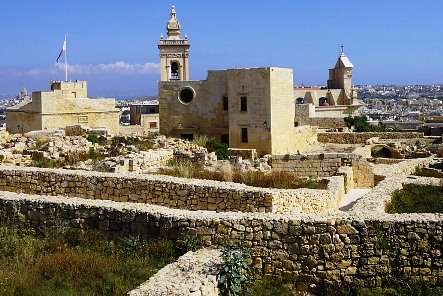
The Great Wall of China, the Berlin Wall, Hadrian's Wall, the US-Mexico Border Wall and the Aurelian Walls around Rome as well as fortifications and walls around the world's major cities – all have recognition.
Malta and Gozo, being humble and small, its forts, bastions and walls are largely internationally unknown, yet on a per kilometre scale, they are among the most intense and concentrated in the world!
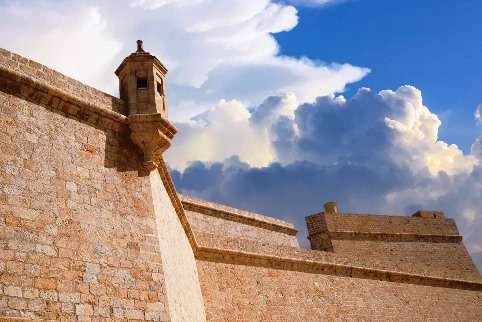
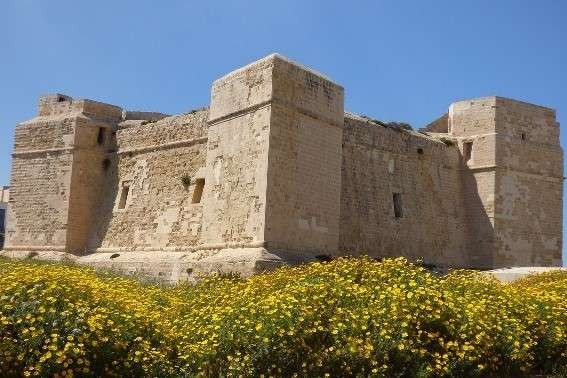
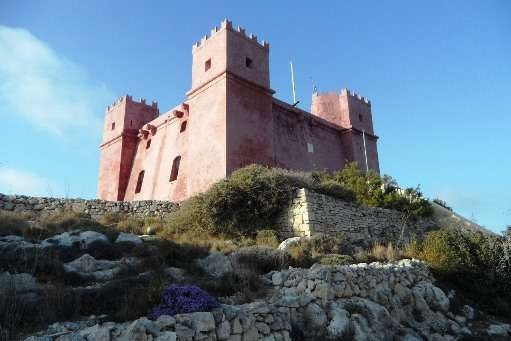
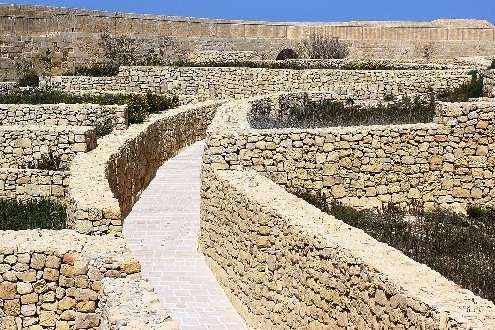
These reflect centuries (3,000 years in all) of domination by foreign powers and military forces.
Because of the highly important geophysical position of the Maltese Islands in the centre of the Mediterranean Sea and the role of military power in Europe and the then known world as well as throughout two world wars.
These today remain to reflect a large part of world history.
Amazing to know that in 313 square kilometres of territory in Malta and Gozo there is a kind of fortification per every 1.7 square kilometres and these cover the Prehistoric Bronze Age defences, walled cities, forts, towers, batteries, redoubts and entrenchments.
In addition, there are scores of well-to-do private residences with their own defences against the demanding poverty-stricken and thieving criminal invaders
This must surely be the most prolific number of fortifications in every square metre of territory in the whole world!
These are:
- 59 armed batteries
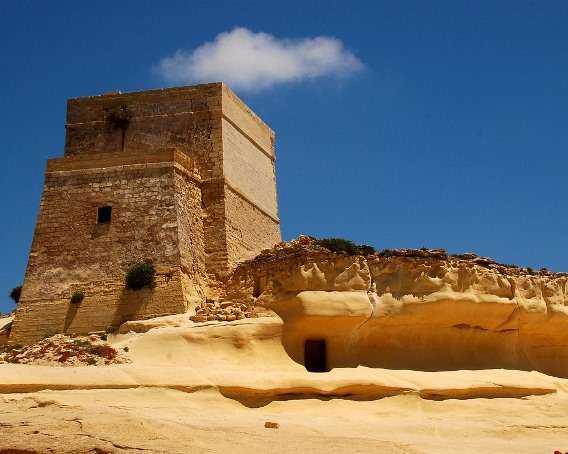
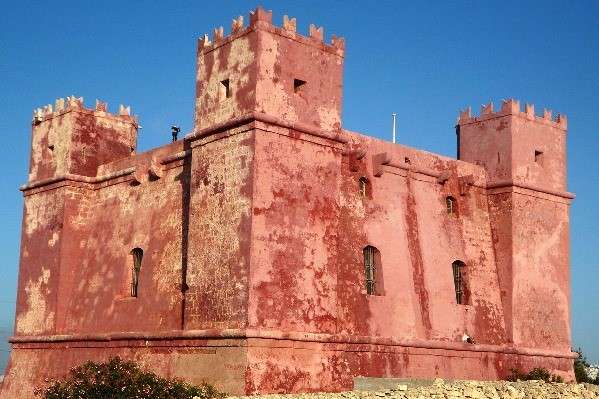
- 43 different guard towers
- 22 redoubts
- 21 forts
- 16 entrenchments
- 8 walled cities
- 6 prehistoric Bronze Age fortifications
Responsible for the majority of these, after the Bronze Age were:
- St John of Jerusalem Hospitaliers Order (1530-1798)
- French occupation of Malta and Gozo (1798-1800), and
- British fortifications (1800-1979)
Needless to say, the majority of these were installed by the Knights after their expulsion from Corfu and re-allocation to Malta in 1530.
The capital city at the time was Mdina, the silent and noble city in the hinterland but that was not good enough for the Knights still rankling over their expulsion by the Ottomans from Corfu.
Resisting Ottoman invasions
They reasoned to resist Ottoman invasions their presence was on the sea coast, particularly the large and impressive harbour area.
This had a very small coastal fort and on the northern harbour coast was a village known as Birgu and later designated as Vittoriosa and here they established their headquarters.
Great Siege of Malta
The expected massive Ottoman invasion took place in 1565 and was matched by enormous resilience by the Knights, a small Spanish contingent which had been designated to them and many hundreds of Maltese and Gozitans pledged to defend their Christian faith from the invading Moslems.
This was the fabled Great Siege of Malta and the Ottomans were final driven off on 8th September, a victory honoured by Christian Europe.
The victorious French Grandmaster, Jean Parisot de la Valette, very wisely contended the massive harbour – one of the largest in Europe – had to be defended at all cost.
The Ottomans had attempted various other coastal invasions but had been easily repelled and their main focus was the great harbour, and hence if lost would result in total defeat.
The fort on the coastline was greatly increased and fortified and became known as Fort St Elmo and in 1566 the building began of a large walled city, completed on 1568.
La Valette had passed away but the city was named Valletta in his honour.
The city was pronounced the Capital City and the Knights were reallocated there from Birgu which they named Vittoriosa to mark the great victory.
From then onward the building of fortifications was frantic and resulted in the building of defence forts and towers throughout the two islands, together with walls, entrenchments and redoubts.
The towers were not only for watch/lookout purposes but packed with military personnel to resist invasion.
Napoleon's Mediterranean Fleet
Yet, by 1798, the military strength of the Knights had greatly ebbed and offered little or no resistance to the entry of Napoleon's Mediterranean Fleet into the Grand Harbour. The Grandmaster of the Order was relocated to The Vatican, and the French ruled.
The inhabitants originally welcomed the French but became very disenchanted when French soldiers and sailors began looting churches, and although Napoleon ordered a number of needed legal reforms, the inhabitants busily set about a rebellion.
They drove the French out of Gozo and Mdina and the Maltese insurgents, helped by the British, hastily built various fortifications mainly intended to repel a possible French counter-attack, and at the same time also bombard French positions in the harbour area.
The insurgents had various camps, and men in these camps were responsible for a number of batteries, redoubts and entrenchments in the vicinity.
The most important batteries were the Corradino Batteries and Gharghur Battery.
Lord Horatio Nelson
The French were eventually forced to leave in 1800 and Lord Horatio Nelson triumphantly arrived to declare Malta and Gozo as a British colony.
As Nelson had correctly figured, Malta was supremely important to Britain's imperial and colonial position in the central/middle position in the Mediterranean Sea with its magnificent harbour.
Forts and towers were renovated and fortified; more redoubts and entrenchments added and the Victoria Lines wall was added in central Malta to divide north from south.
When the British finally departed in 1979 and Malta became a free and independent Republic the Government's work has continued unabated to ensure all these historic fortifications remain intact and renovated as an integral part of the history of the islands.
They are all there today for visiting and inspections, mainly free of payment, and a very complete list can be found on List of fortifications in Malta - Wikipedia
Without doubt, per square metre, Malta and Gozo must be the most fortified island countries in the world.
Useful links
About the author
Contact info

ISSN 2634-7032
London, United Kingdom
+44 0 7764 198 286