AllWays Traveller Features
Villages of the Ardèche

Love Paris but craving for somewhere a little more remote? Then look no further than the unspoilt countryside of the Ardèche. This area of rugged, untamed beauty in central-southern France is a panorama of green fields, rolling hills, crags and forests.
This is rural France at its best and where English is not widely understood, so the ability to speak at least a little French will make your experience even more rewarding.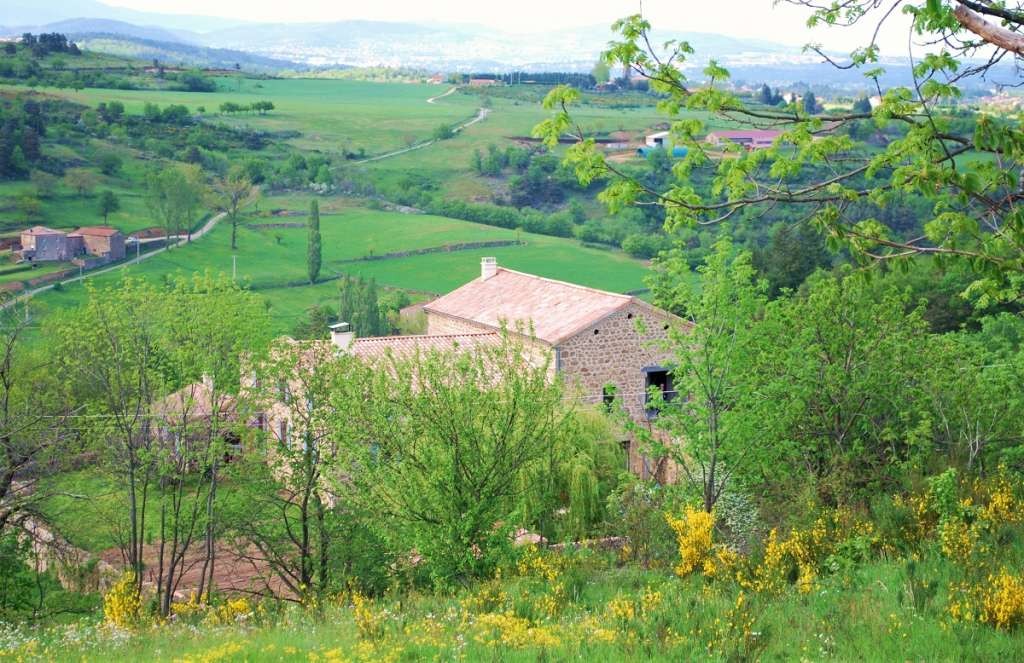
I once lived and worked in Paris for almost a year but rarely got out into the French countryside. Return trips as a visitor took in such places as Giverny to see Monet's Garden, but still no extensive rural rambling.
I finally rectified the situation more recently and travelled with my wife to the Ardèche, a département or second-level administrative division of the Auvergne-Rhônes-Alpes region, spending several weeks there on a small farm in a relatively remote area.
Arriving from Venice where we had spent the previous month, we expected a circuitous route to our destination but couldn't believe our luck when we found an easyJet flight that flew directly from Venice to Lyon, gateway to the Ardèche. From there it was an easy drive of little more than an hour south to our accommodation.
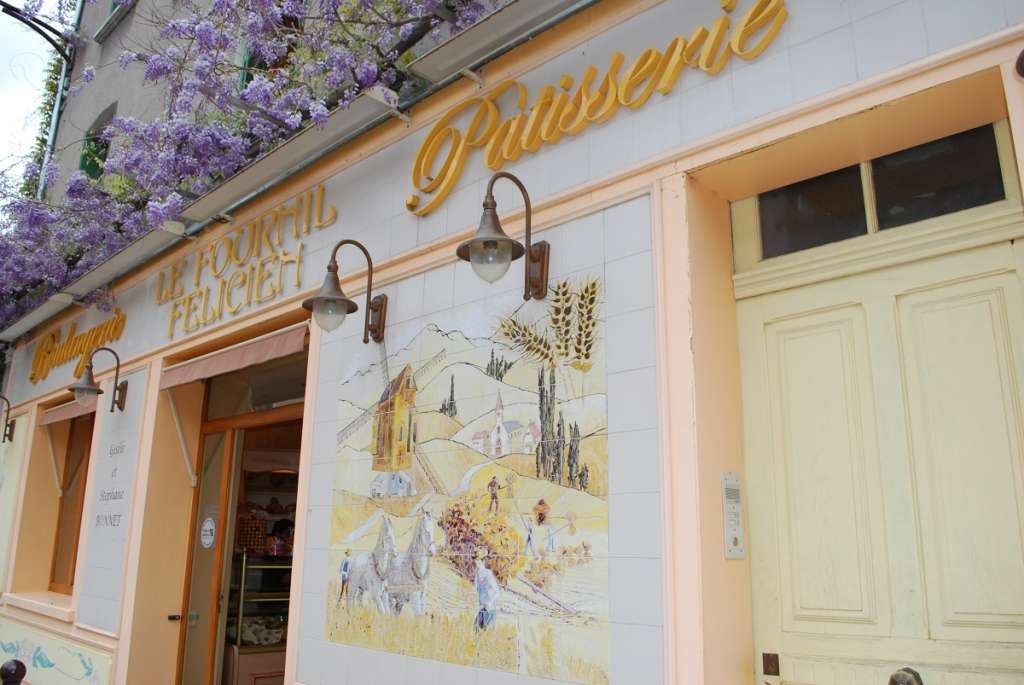
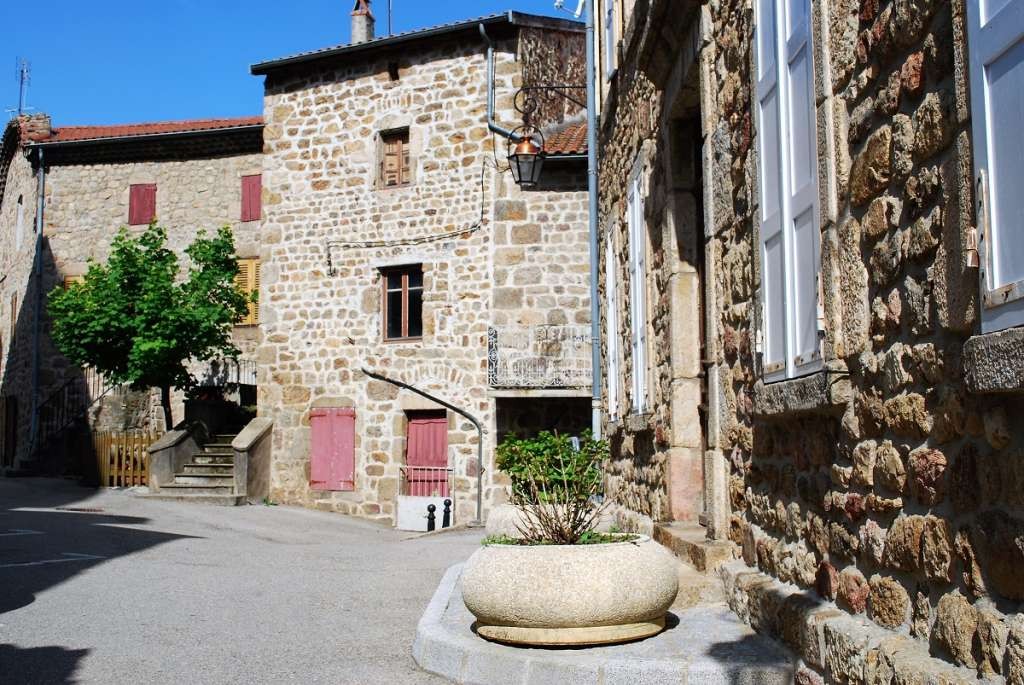
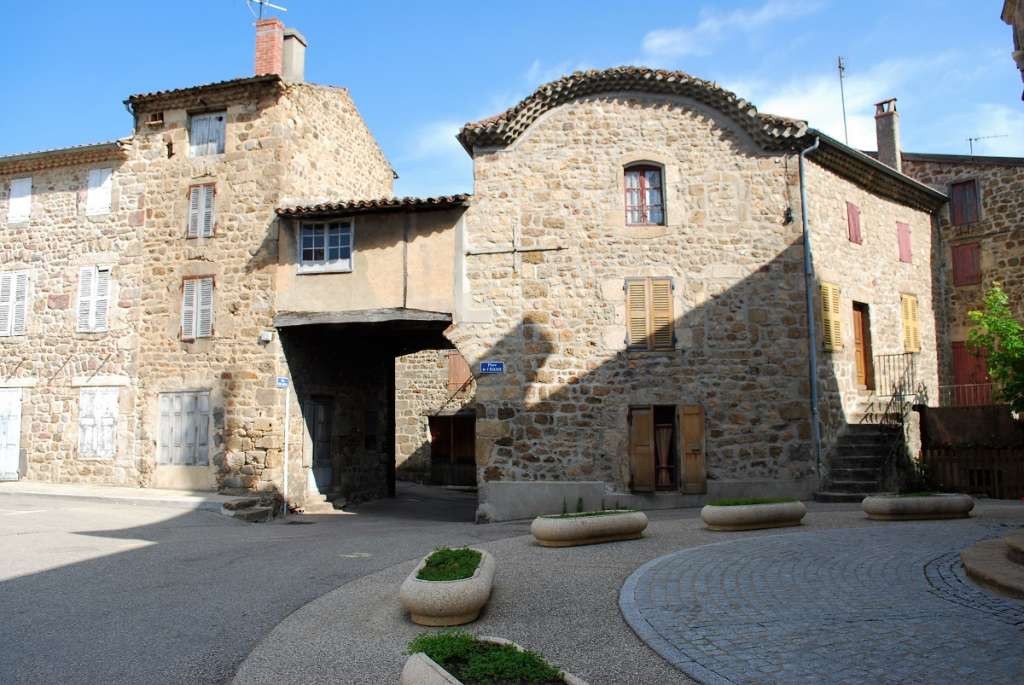
The closest village to the farm was Saint-Félicien, a charming commune where we quickly got to know the local shopkeepers, especially at Le Fournil, the bakery where we bought our flûte – a tubular-shaped loaf a bit like a Parisienne or baguette – two or three times a week.
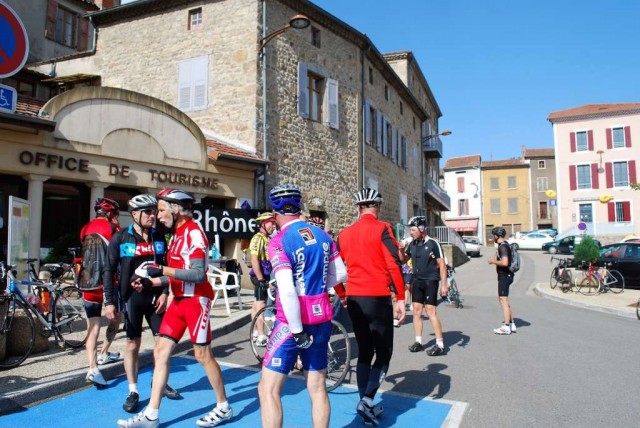
Surprisingly for such a small town – population about 1,500 – Saint-Félicien has its own tourist information office, which can be seen in the photo above and where the staff were exceptionally helpful. The same photo also illustrates the popularity of cycling in this area.
Saint-Félicien can boast a cheese of the same name – a soft, double-cream cow's milk cheese, matured for up to six weeks – although its origin lies in the farms of the Rhône-Alpes region generally, rather than the village itself; and the cheese was first produced in the Lyon area by the maker of Saint-Marcellin cheese.
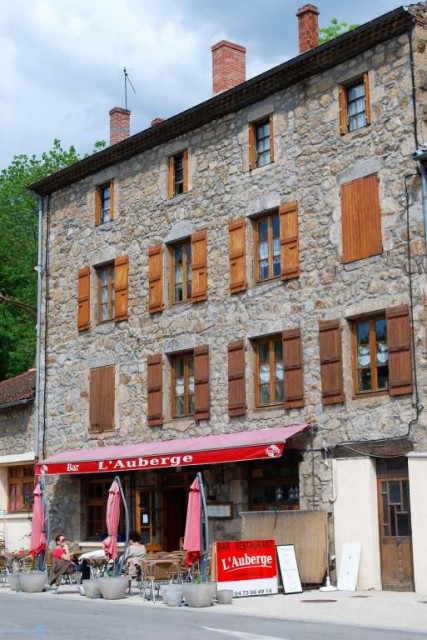
There are several other villages within a 10 km radius, one of which is Boucieu-le-Roi, promoted locally as a "Village of Character", of which there are several. Situated in the heart of the Doux Valley, it reflects the natural and cultural heritage of the villages of the Doux watershed and offers a number of hiking trails and other outdoor activities.
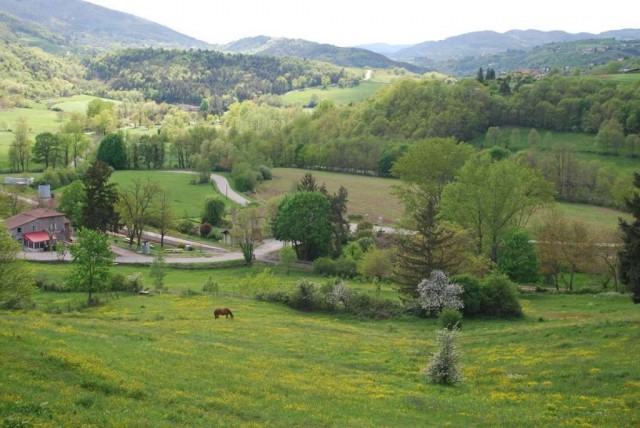
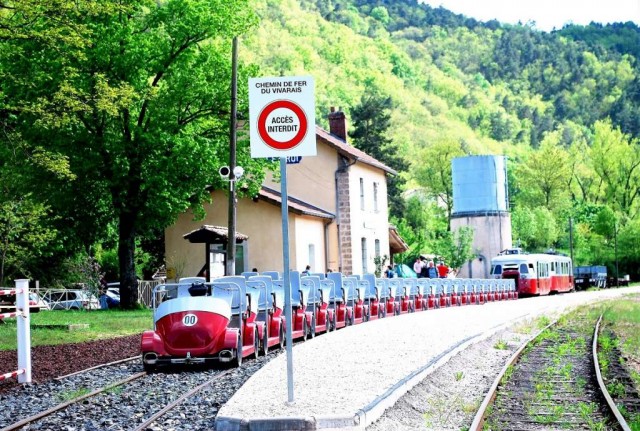
Boucieu-le-Roi is where we caught the fun-filled Velorail, a name that translates to rail bike but they're more like little cars and you pedal them like a child's toy car. There are four routes to choose from ranging from 8 to 20 km distance, two to four hours duration. We travelled through the picturesque, rugged countryside of the Doux Gorges and through a tunnel. Pedalling can become hard work on the inclines, but then you freewheel downhill towards the end. There is a brake to help you keep a safe distance from the car in front (and to stop, eventually!)
Boucieu-le-Roi - Tourism, Holidays & Weekends (france-voyage.com)
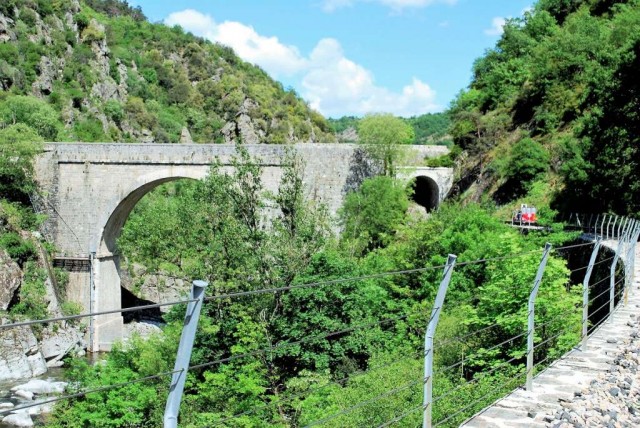
Fear not, you don't have to do it all again on the way back. A railcar or bus takes passengers back to the station. Velorails – some quite old – can be found throughout France, but this one is fairly modern.
The Great Adventure ride - Vélorail des Gorges du Doux (velorailardeche.com)
Another nearby commune is Lamastre, which has an unusual claim to fame as the local film-industry capital. Some 16 movies have been at least partly filmed here in the past 40 years including Total Eclipse, which explores the controversial relationship between the 19th century French poets, Arthur Rimbaud and Paul Verlaine, played by Leonardo DiCaprio and David Thewlis respectively. It was one of DiCaprio's earliest films.
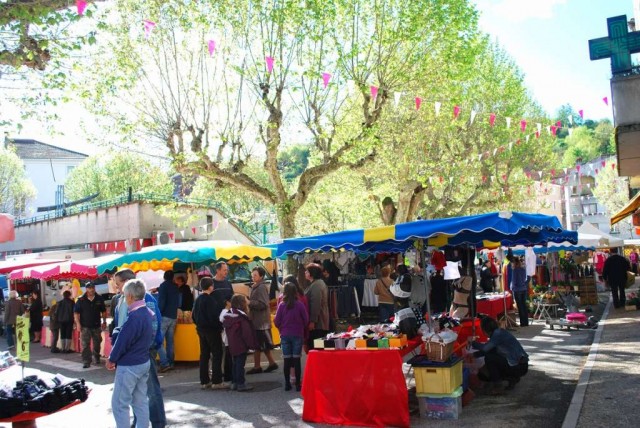
Lamastre also holds a lively twice-weekly market on Tuesdays and Saturdays.
Welcome (pays-lamastre-tourisme.com)
The nearest larger town is Tournon-sur-Rhône, about 20 km from our accommodation and with a population of around 10,000.
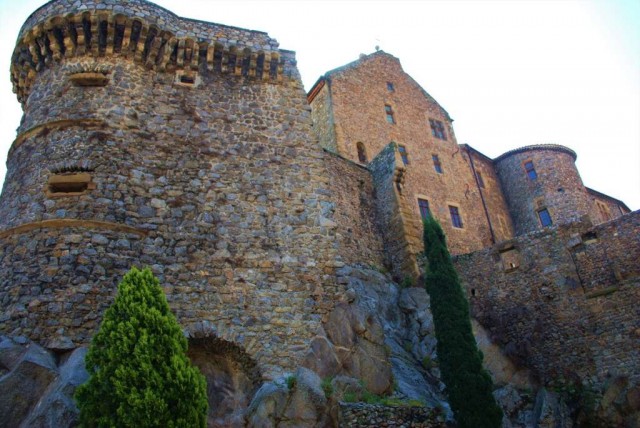
The town's most prominent landmark is its castle, which sits on a rock overlooking the town and the river. The north-west wing was built in the 14th century and has been used as Tournon's magistrates court since the beginning of the 19th century. On the right-hand side of its courtyard is the 10th century old castle, Saint-Just.
The sturdy old Marc Seguin suspension bridge enables pedestrians and, of course, cyclists to get across the river to Tain l'Hermitage, where excellent Hermitage wine and Valrhona chocolate can be sampled.
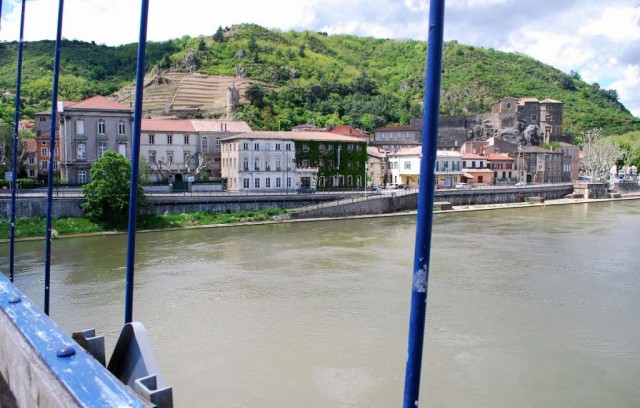
There are magnificent views of Tournon from the bridge. A second crossing, the Gustave Toursier bridge, is available for vehicular traffic. Once on the other side you have left Ardèche and are in the Drôme department.
Tournon-sur-Rhône is a port of call on the itinerary of many European river cruises. While river cruising is certainly a pleasant way of seeing multiple European destinations fleetingly, nothing can beat getting out into the countryside and immersing yourself in the local culture.
Photos © Judy Barford
Useful links
Location (Map)
About the author

Contact info

ISSN 2634-7032
London, United Kingdom
+44 0 7764 198 286