AllWays Traveller Features
Warsaw is soaring upwards and onwards

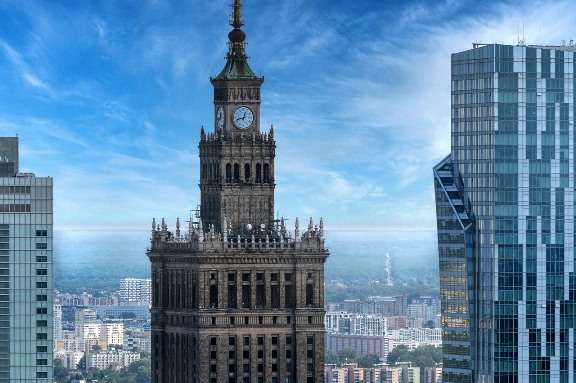
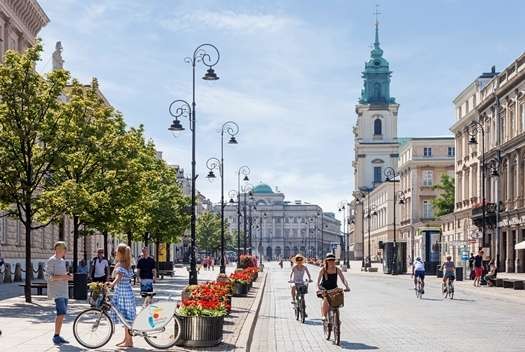
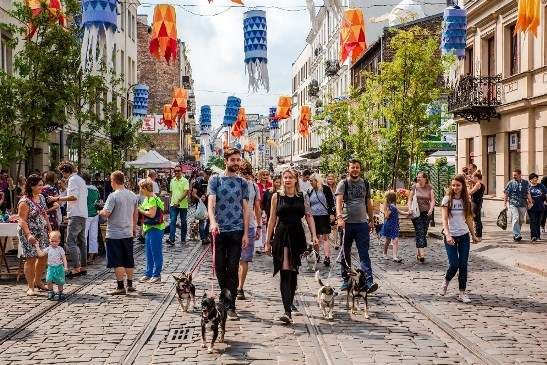
Warsaw, the Polish capital, is a vibrant, confident and outward looking city that welcomes visitors with genuine warmth.
This is very much in contrast to the city's relatively recent history.
Warsaw was ravaged during World War II with Poland itself repressed, as a Soviet bloc country, for forty plus years afterwards.
Eagerly embracing democratic change in the early 1990s, Warsaw has embraced its new lease of life and has come truly into its own.
Discovering Warsaw, today, it is easy to understand why the city was voted European Best Destination of the Year 2023.
www.europeanbestdestinations.com
Warsaw is a city of great historic and cultural heritage, with splendid parks and gardens, fine dining opportunities and an excellent transport network.
The old town is a designated UNESCO World Heritage Site, and the city wholeheartedly embraces Frederick Chopin as its favourite son.
Time to reflect and rejoice at a city reborn
Although Ann and I have been fortunate in visiting destinations, resorts and cities across the world, Warsaw was different writes Ashley Gibbins
On one level, the Polish capital offers all one would expect from a modern, vibrant city, and it comes as no surprise that Warsaw was voted European Best Destination of the Year 2023, by an organisation of European tourism organisations.
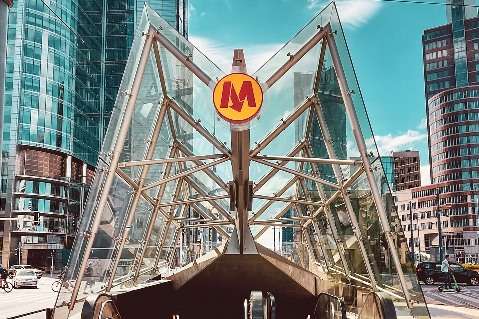
This is a modern, energetic, and high-spirited city with a walkable centre and an excellent transport network of Metro, bus and tram where needed.
Warsaw also has many parks, gardens and green open space and any number of excellent 'wining and dining' options, with many of these al fresco on warmer days.
While learning the Polish language is a slightly daunting prospect, being prepared to say a few basic words, as Ann did, is very much appreciated.
That said, English is widely spoken everywhere by citizens who are both warm and welcoming.
A European capital that compares on merit
So, all in all, and as a short break destination, Warsaw can compare on merit with any other European capital.
But to truly appreciate what Warsaw offers the visitor in 2023, one should understand just how far the city and the country has come in just over a century, and much of it within living memory.
For Warsaw has had to endure a 20th Century of trauma, turbulence suppression and indeed destruction.
The period since the start of the First World War in 1914, has seen Poland and the Polish people suffer the horrific consequence of two world war wars.
This was then followed by 40 years of national suppression as part of the Soviet Block.
It can be upsetting to understand how Warsaw and its citizens suffered, particularly the Nazi Germany occupation from September 1939 to early 1945.
A country reborn
But this serves to make one truly appreciate Warsaw's remarkable renaissance since1989, at which time Poland broke free from the shackles of post-World War II Communist control.
It is now a democratic, western-European facing country and a proud member of the European Union and NATO.
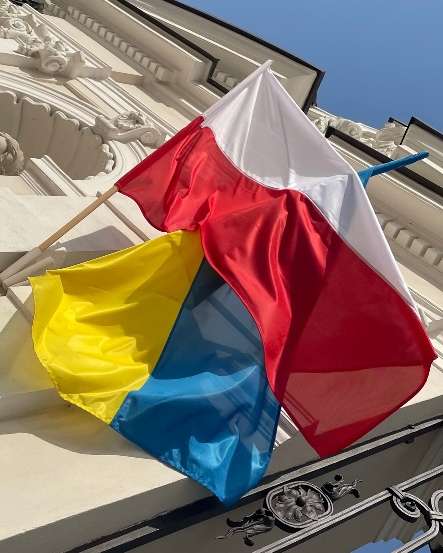
Finally, one cannot visit Warsaw and not have huge admiration for Poland's unwavering support for Ukraine, particularly given the two countries historically have not always seen eye to eye.
When Ann and I first decided to take a four-night city break in Warsaw, we knew relatively little about the Polish capital or indeed the country itself.
An all too short trip was an emotional and hugely enjoyable experience for us.
We left sure we would return and to continue highlighting this charismatic city and its resilient citizens.
And also determined to explore other parts of Poland.
Piotr leads us on a true trip of discovery
Those of you who have read our previous features will know Ann and I always look to arrange a guided walking tour of each destination we visit, and early in the trip.
Tour guides welcome our flow of questions and walking around itself around gets us acquainted with the town or city layout, making it easier to plan the rest of our stay.
Of all the places we have visited, Warsaw deserves and more rewards a walking tour probably more than any other.
An astonishing timeline
It has an astonishing timeline, particularly from the start of the 20th Century.
And while much of what one learns about the city is harrowing, in the extreme, it does provide the crucial ingredient in making Warsaw the memorable city it is today.
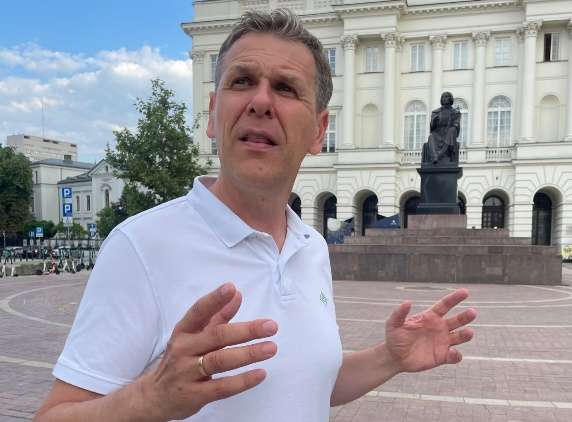
For our visit to the city, we were fortunate enough to find Piotr Karpiński as our tour guide to this fascinating city.
Warsaw born and bred, Piotr (Polish for Peter) is a history scholar who is as passionate about the city and as knowledgeable about its past, present and future as you could possibly hope to find.
Able to remember his city and country under communism, Piotr talks from first-hand experience about life under Soviet control and the emergence of the Solidarność (Solidarity) movement.
Akso fascinating is to hear of the challenges Poland had to overcome once it had become a fully-fledged democracy.
Visitors to Warsaw can arrange a tour with Piotr or one of the other city guides from the tourist office.
As for us, much of this feature is based on what we learnt from our time with him, and to whom we are truly grateful.
www.warsawtour.pl/en/warsaw-tourist-information/
Warsaw rises from the ashes of historic trauma
While it is good to get an historic perspective of a place before visiting, or on arrival, this is particularly important with Warsaw.
Poland, like most of Europe, has a long and fascinating history.
From the mid-16th Century, and for over 200 years, what is now Poland was part of the Polish-Lithuanian Commonwealth, and a major European powerhouse.
The Commonwealth was unusual in having a system that elected its kings, of whom all but three or four would not be of Polish ethnicity.
In the late 18th Century, with the Commonwealth in decline, Poland was partitioned by thirds, into neighbouring Russia, Prussia and Austria.
Poland ceases to exist
Poland therefore ceased to exist as an independent state.
The First World War started in 1914 and the people of the partitioned Poland were forced to fight in the Russia, Prussia and Austrian armies.
Many were killed in the early 'Great War' battles, often in fighting with fellow countrymen on opposing sides.
With the end of hostilities in 1918 a Polish Republic, without Lithuania, was established and it survived as an independent state until Nazi Germany invaded Poland in 1939.
The Nazi occupation, which marked the beginning of World War II, saw the loss of millions of Polish citizens.
A London based Polish government-in-exile, functioned throughout the war and the Poles contributed to the Allied victory.
In 1944 and 1945, the advancing Soviet Red Army ending Nazi occupation of Poland, but this then led to the country being 'allocated' to Stalin's sphere of control.
The Polish People's Republic was established in and from then until 1989 was a Communist run Soviet bloc country until the late 1980s, when the Solidarność (Solidarity) reform movement, with Lech Wałęsa its figurehead.
Solidarność drove the civil and industrial unrest that saw the largely peaceful transition to democracy.
The democratic Third Polish Republic, modern Poland, was formed in 1989 with Lech Wałęsa the first popularly elected president of Poland in 1990.
The country's progression as a democratic European country, which was fraught with challenges, saw it joining the NATO Alliance in 1999 and the European Union in 2004.
The country has flourished and is one that can be enjoyed by visitors today.
The history of the Polish Jews and the Warsaw Uprising
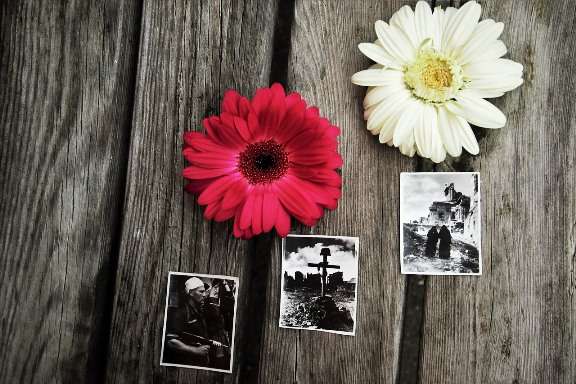
Start your trip to Warsaw with visits to both The POLIN Museum of the History of Polish Jews and The Warsaw Rising Museum.
These two museums will put everything else you see and do in the city into perspective and will bring home the true horror for the citizens of Warsaw under Nazi rule.
Nazi Germany invaded Poland on 1 September 1939 and in a radio interview by Mayor of Warsaw Stefan Starzyński he said :
"I wanted Warsaw to be great. I believed that it would be. We drafted plans, drew outlines of the great Warsaw of the future".
In August 1944, the Nazi Governor of Warsaw, General Hans Frank wrote after the Warsaw Uprising :
"After this insurrection and its suppression, Warsaw will meet a deserved fate. – total destruction."
The POLIN Museum of the History of Polish Jews
The POLIN Museum of the History of Polish Jews, gets its name from the Hebrew word Polin, meaning either "Poland" or rest here.
It is found on the site of the former Warsaw Ghetto, provides a real insight into one thousand years of Jewish life in 'the Polish lands', from the Middle Ages.
Passing through the eight galleries, one better understands the heritage and culture of Polish Jews who, at one time, formed the largest Jewish community in the world.
The Museum offs a rich and varied collection of images, artifacts and personal items related to Jewish heritage.
However, it is the horrifying final section of the museum and its focus on the Holocaust and the Warsaw Ghetto that is a particularly harrowing experience.
In October 1940, Ludwig Fischer, Governor of the Warsaw District in the Nazil occupied part of Poland, first signed the order to officially create a Jewish district (ghetto) in the city.
This was the designated area where the Jews from throughout Nazi occupied Poland were taken to, with increasingly inhumane conditions the result.
Almost 30% of Warsaw's population were eventually living in 2.4% of the city, with the overcrowding, lack of food, and poor sanitation leading to the widespread disease and many deaths.
The ghetto reached its highest number of inhabitants in April 1941, with around 460,000 inhabitants, including 85,000 children up to the age of 14.
In July 1942, the Nazis began the mass-deportation of Jews from the Warsaw ghetto to the death camps in Treblinka and Majdanek.
In total, some 400,000 Jews were sent from Warsaw to their deaths in the camps.
In April 1943, and with nothing left to lose, the remaining Jewish inhabitants of the Warsaw Ghetto began what would be a futile uprising against the Nazis, who were brutal in their response.
Those who were not killed during the uprising were executed in its aftermath or send to the death camps.
The Nazis then had the Ghetto destroyed, building by building, until nothing remained.
Warsaw Rising
The Warsaw Rising Museum is dedicated to the uprising by the Polish underground resistance in what was an unsuccessful 63-day attempt, in the summer of 1944, to liberate Warsaw from Nazi occupation.
At this time the Russian army was pushing the German forces from Poland and approaching Warsaw.
The assumption by the resistance was that it's uprising would be supported by the Russians and Warsaw would be liberated.
The Polish resistance fighters fought with great heroism but very limited weapons and supplies1, against the ruthless German army.
With the Russians camped and inactive on the other bank of the Vistula River, the outcome was never in doubt.
It is estimated that up to 200,000 resistance fighters and Warsaw citizens were killed in the uprising.
And yet again, the Nazis resorted to destroying much of the city centre in retribution.
The Warsaw Rising Museum takes us through both the fighting and fighting everyday life during the uprising, with hundreds of exhibition items and some 1500 photographs, films and sound recordings.
Particularly poignant is the news footage from inside the besieged part of the city, which is shown on a large screen.
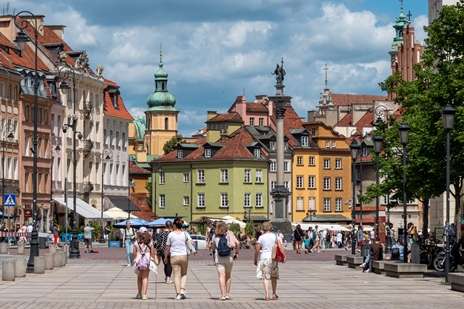

While the POLIN Museum and Warsaw Rising are 'musts', there is a great deal more to enjoy in the Polish capital.
The Palace of Science and Culture
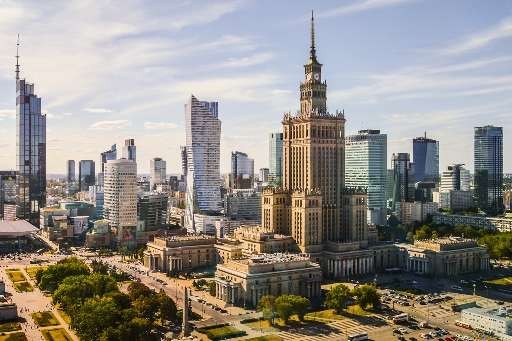
The Palace of Culture and Science, the 'beacon' feature in central Warsaw, was opened in 1955 following Joseph Stalin's wish to offer a 'gift' from the Soviet people to the Poles.
As such, there was much debate as to whether it should be 'taken down' when Poland separated from the Soviet bloc and its repression could be discussed.
The city decided to keep it and, today, there is the chance to take the lift to its observatory on level 30, with panoramic views across the city.
www.warsawtour.pl/en/project/palace-of-culture-and-science
The Old Town
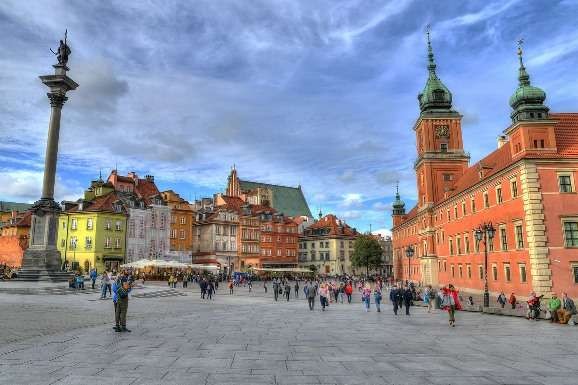
This is the 'historic' centre of Poland and a magnet for visitors to the city with its many bars and restaurants.
Some 90% of the original old town was destroyed during World War II, and the area was reconstructed as an exact replica during the Soviet era.
Recognising the scale of this achievement, the old town was granted UNESCO World Heritage status in 1980.
www.warsawtour.pl/en/project/old-town
The Royal Route
The Royal Route, which follows the streets of Nowy Świat and Krakowskie Przedmieście, connects the Royal Castle, the Royal Łazienki and the Wilanów Palace, the three former residences of Polish rulers.
The route is some 11km (7 miles) in length but, on flat ground and with any number of opportunities to stop on the way, it provides an excellent way to explore the city.
The Royal Castle
The Royal Castle, at the entrance to the old town, is a state museum that served as the official royal residence of several Polish monarchs from the 16th century until the final partition of Poland in 1795.
www.warsawtour.pl/en/royal-castle-in-warsaw/
The Royal Łazienki
The Royal Łazienki, is historic gardens dating back to the 17th Century and, in the 18th Century, was transformed royal summer residence by Poland's last monarch, Stanisław August Poniatowski.
The palace itself has sumptuous interiors and original art collection and the old orangery also serves as a gallery and exhibition space.
These sit in by a formal boating lake amid grand gardens parkland in the city centre.
Piano concerts on the Frédéric Chopin Monument delight visitors during the season.
www.warsawtour.pl/en/project/lazienki-krolewskie-museum-2/
Wilanów Palace
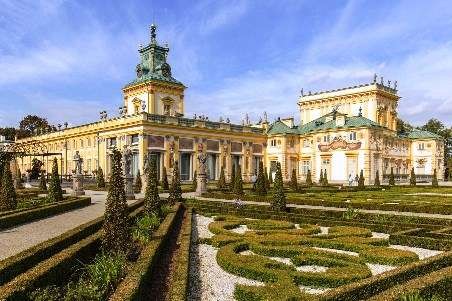
Wilanów Palace was built between 1677–1696 for King of Poland John III Sobieski and managed to survive Poland's partitions and both World Wars.
Visitors today can see a remarkable examples of 17th century Baroque architecture.
The palace's museum, first opened in 1805, has a collection of the palace's works of art.
Wilanów hosts a range of cultural events and concerts, including Summer Royal Concerts in the Rose Garden and the International Summer Early Music Academy.
www.warsawtour.pl/project/muzeum-palacu-krola-jana-iii-w-wilanowie/
The Vistula Boulevards
This is Warsaw's riverside promenade where one also finds the Warsaw University Library Roof Gardens, which are a delight on warm days.
There is also the chance to take a relaxing trip along the Vistula River itself.
The Praga District
Cross the Vistula and one is in the Praga district, which avoided the scale of destruction that took place in the city centre.
As such Praga has much of its original architecture and is a genuine and authentic part of the city.
Visiting Praga, one can take in the Neon and Vodka museums.
www.warsawtour.pl/en/the-praga-district/
The Neon Museum
This Neon Museum, which is found in the old 'Pocisk' ammunition factory and later the 'Osa' scooter factory, has some 200 Polish and Eastern Bloc neon signs from the post war period.
The Polish Vodka Museum
The Polish Vodka Museum is located in a former vodka factory where vodkas such as Wyborowa and Luksusowa were created.
For vodka lovers, its interactive galleries reveal the 500-year history of Poland's favourite alcohol along with, of course, the chance to sample the product.
Fryderyk Chopin Museum
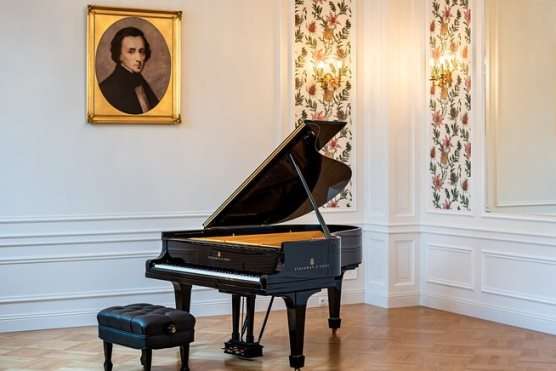
The Fryderyk Chopin Museum in Ostrogski Castle is one of the most modern biographical museums in Europe.
It houses original manuscripts, documents, photographs, sculptures, and letters related to the musician along with staging piano recitals and music competitions featuring his works.
Żelazowa Wola
The Fryderyk Chopin Museum is also found in Żelazowa Wola, some 60 km from Warsaw.
This is the birthplace of Chopin and has particular interest for those who appreciate his music.
The complex has two modern pavilions, the chance to see the musician's birthplace and stroll the stunning parkland.
There are also regular recitals of his works by the world's top pianists.
Fryderyk Concert Hall
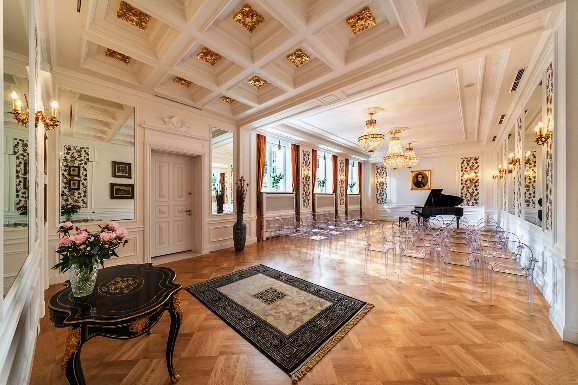
The Fryderyk Concert Hall is a neoclassical concert hall in the Old Town, with original plaster stucco walls, crystal mirrors, and an intimate feel reminiscent of 19th-century salons.
There are daily recitals of Chopin's music.
The Warsaw Pass
The Warsaw Pass provides free and 'fast-track' entrance to 20 top attractions in the city along with free travel on the city's public transport network.
The pass also offers discounts at local restaurants and for tours and other attractions.
The 24, 48 or 72-hour options can be purchased online in advance or from the Warsaw Tourist Information Point in the Palace of Culture and Science.
www.warsawtour.pl/en/plan-your-stay/warsaw-pass-about/
A place to stay in Warsaw
The Nyx Hotel Warsaw : Swish, sleek and chic
By Ann Mealor
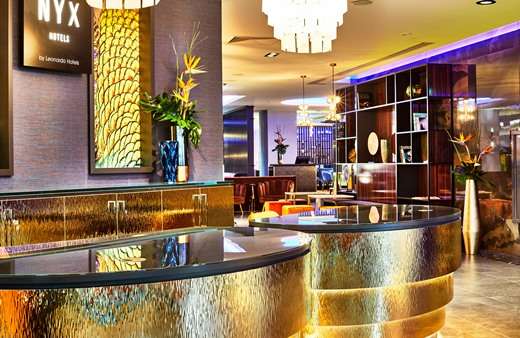
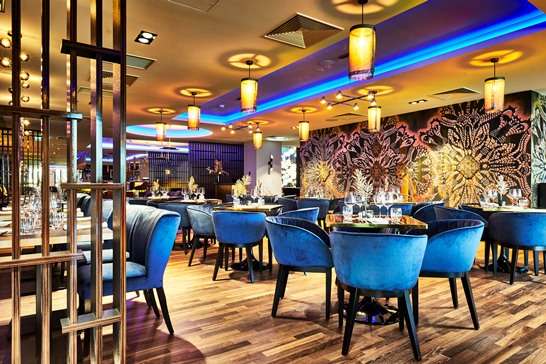
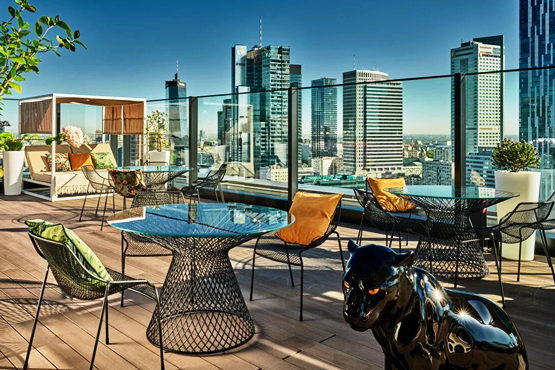
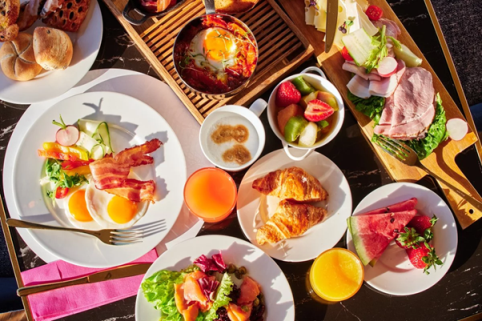
The Nyx Hotel Warsaw is swish, sleek and chic in a glistening tower complex and an ideal base to make the most of the Warsaw.
Its central location is ideal for the shops, transport and the Varso Tower (the EU's tallest building).
Its within easy reach of popular visitor sites including the Palace of Culture and Science and the essential POLIN Museum of History of Polish Jews.
The hotel reception area is cool and modern, and the complimentary cordial and juicy apples a welcome bonus after a busy day sightseeing.
The Nyx Hotel Warsaw has some enjoyable, retro touches like the photo booth in reception, and the vintage arcade games in the Bar's chillout zones.
Our room
Our room was towards the top of the building with an expansive view of the cityscape from the floor to ceiling windows.
The décor was bold and stylish with zebra print rugs and other African wild animal patterns on the walls.
It had a comfortable lounge area and a huge bed, and there was even a pillow menu so you could choose your perfect head rest the to get the best night's sleep.
There was plenty of complimentary tea, coffee and biscuits; soft drinks were in the fridge along with a small bottle of prosecco and a jar of chocolate covered peanuts.
It is always a nice surprise to find complimentary treats.
I always like a robe and slippers, and these were available on request.
Cocktails
We enjoyed some delicious cocktails in the sophisticated Clash bar and made the most of the 2-for-1 Happy Hour.
There are live DJ sessions five times a week and on sunny evenings the roof top bar Ether, the highest in Warsaw, is the ideal place for a pre-dinner drink.
Breakfast
The breakfast buffet was huge and fabulous.
There was a great choice of pastries, fruit, cereals, juices, cheese, cold meats, salads as well as hot dishes including bacon, sausages and tomatoes.
Stand out for me though were the bowls of plump, red cherries, local honeycomb and the omelette station where the chef freshly prepared your egg dish of choice to order.
After breakfast here, there was no need for any lunch.
Places to dine in Warsaw
By Ann Mealor
I wasn't prepared for so many charming, bustling cafes, fine dining restaurants, quaint coffee shops and stylish bistros.
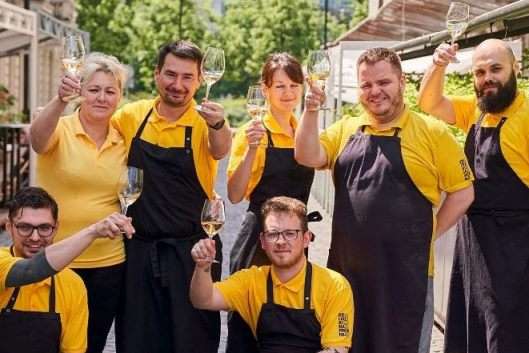
The city is also home to a wide and growing number of exceptionally talented chefs, who are leading the city's growing reputation as a great food destination.
There is a wide choice of dining that takes in traditional Polish, Mediterranean, Italian, Turkish, American, French cuisine and vegans and vegetarians are also well catered for.
During our four nights in Warsaw took in seven of the city's finest restaurants, and which all come highly recommended.
While I have featured these below, there are many others that looked just as enticing, so something to lure us back to Warsaw.
Syrena Irena : traditional Polish dishes
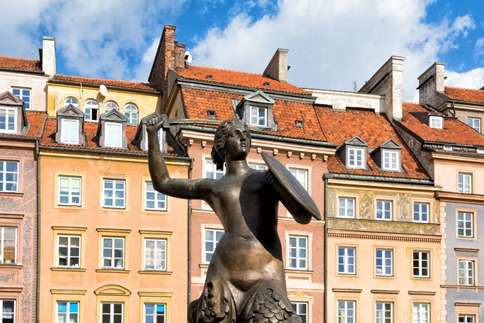
Our first stop dining experience was a late lunch at Syrena Irena, a funky café, with a cute robot waiter (he can't do steps, so you will only see him inside).
It serves a selection of Polish dishes close to the Royal Route.
The weather was warm and sunny, so we sat outside and surveyed our surroundings.
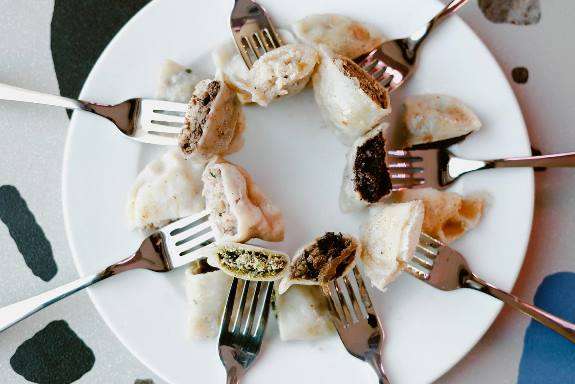
Syrena Irena specialised in pierogi, delicious savoury and sweet filled dumplings that are served with a variety of toppings.
They were great for sharing and we chose a selection filled with cheese, potatoes, pumpkin, herbs and tomato.
Topped with sour cream and caramelised onion they were addictive – you can't stop at just one plate!
We also tried another local favourite, red beetroot soup.
It was surprisingly tasty, and I loved it so much, that from then on, I had it whenever I saw it on a menu.
Wuzetka
Finally, before starting our walking tour we tried Wuzetka, a light chocolate sponge cake, filled and topped with cream.
This dessert won a 'New Cake for Warsaw' competition in 1949 and was a symbol of the city's rebirth and people's hopes.
The cake is now officially recognised as a traditional local product, with the recipe protected by law.
Ashley and I shared a slice, but I could have eaten a whole piece to myself!
We drank Compote, a refreshing cordial made with whatever fruit is in season, which, at the time, was cherries and strawberries.
This juice tastes different wherever you drink it as the recipe is never the same.
Syrena Irena offers a great introduction to some traditional polish food, which left me very impressed and wanting to try more.
Bursztynowa Bistro : cheese with everything
This is the place for cheese lovers, so it suited me down to the ground writes Ann Mealor.
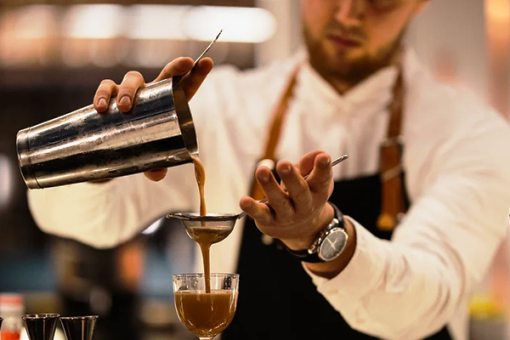
Cheese is in everything including the ice cream and cocktails – experimental and risky combinations, but they really worked.
My Raspberry Bush cocktail, containing Rubin cheese and white chocolate was a pretty pink, concoction with a powerful kick.
The restaurant makes its own cocktail liqueurs using fresh Polish herbs and fruits.
The Bistro focuses on three types of Polish cheeses: a fruity Szafir, a soft, creamy Rubin and Bursztyn (in the ice cream).
Specialising in long aged cheese, the Spomlek Dairy Cooperative, who created the restaurant, are experts in pairing cheese in different ways.
They pay great attention to the aging process and know what cheese goes with wine, jam, honey and chocolate as well as being combined for sauces, dips and spreads.
The young beetroot soup sprinkled with Bursztyn cheese was delicious here, as were the shrimps in butter.
I also tried the tagliatelle pasta with black truffle and Bursztyn cheese, cooked at the table in cheese wheel - entertaining and tasty.
Ashley went for the halibut with Szafir cheese balls - needless to say, he cleared his plate.
For dessert, I made room for the salted caramel ice cream with cheese which was rich yet light – a very moorish mix.
The staff here were very knowledgeable about the cheeses and could answer all our questions about aging and maturing.
We ate outside and enjoyed the streetscape, but inside was charming with a farmhouse kitchen feel.
Cheese, chutneys, jams and other products were available for sale to enjoy at home.
Unfortunately, our suitcases were just not large enough!
Dock 19 : fine dining in a former power station
As soon as we stepped onto Dock 19's airy, bright terrace I knew I was going to really like the place writes Ann Mealor.
With views of the Vistula River and the Copernicus Science Centre, Dock 19 is a stylish and atmospheric restaurant situated in part of the former D5 Power Station.
It occupies the old pump house, which for over 100 years cooled the energy generating turbines with water from the river.
Water and electricity are themes that flow through the restaurant's décor, with the shape of the building is loosely based on a ship.
Once working cranes, industrial hooks etc have been incorporated into the design reflecting Dock 19's industrial past.
As we made our way upstairs to our table, we passed a large, glamourous cocktail bar and a very inviting conservatory style Winter Garden, decorated with palms and other tropical green foliage.
On a sunny day, however, the relaxing terrace is the best place to be.
For lunch, we chose the Atlantic salmon and citrus salad, which was light, refreshing, perfectly cooked and carefully presented.
The fresh lemon rind in the salad really gave the dish a zesty boost.
The artisan bread was standout and the best we tasted in Warsaw, which was rustic, warm and crusty with two smooth boules of butter herb and chorizo.
I would have devoured it all if I wasn't eating that evening.
Ashley tried the Warsaw style herring, which also got a big 'thumbs up'.
It was here I had my only glass of Polish wine, a delicate and crisp white Solaris Winnica Turnau.
It was so delicious, I made it two!In my defence, wine is sold in 125ml measures, not the usual 175ml we are used to in the UK.
Sadly, I had no room for dessert, which included a seasonal Strawberry tart, maybe next time.
Kieliszki na Próżnej : one of the city's most popular
It was a Tuesday evening and at Kieliszki na Próżnej every table, inside and out, was taken - a sure indication of its popularity writes Ann Mealor.
Fortunately, we had a reservation and as it was a balmy evening, we chose to sit outside on the veranda.
Inside was pleasant too – a modern bistro style setting with wooden floors, a polished bar showcasing rows of sparkling wine glasses, a huge black and white wildlife mural and a buzzy vibe.
All 'lovers of the grape' will find something to please their palate here.
The restaurant has an impressive portfolio of 250 wines, many coming from small and medium sized producers in Europe, especially Italy.
We went for a bottle of the organic Spanish white, which went perfectly with our meal.
If needed, the knowledgeable sommeliers will help you choose a wine to best compliment your food.
The cuisine here is traditional Polish with a creative, modern twist. Chef, Sebastian Welpa, uses fresh, high-quality ingredients from local suppliers and his menu reflects what's in season.
I chose a colourful chilled beet soup, rose pink with splashes of green cucumber, radish, smoked cream, lots of feathery dill and black, herring caviar.
Ashley decided on the refreshing sea trout with a medley of cucumber, buttermilk and sorrel topped with a thin, crisp slice of toast.
For mains we both went for the fish, a flaky turbot in a light butter sauce with crunchy asparagus and mangetout and a soft avocado mousse, with an exciting dash of wasabi.
We shared a dessert of delicately poached rhubarb, tangy rhubarb sorbet, creamy yogurt, crumbled white chocolate and a sprinkling of fresh basil leaves.
A tasty end to a gourmet evening.
Kieliszki na Próżnej caters for all dietary requirements and includes vegan and organic dishes.
Ćma : diners drawn here 24/7
Ćma (moth in English) is a stylish bistro in Hala Koszyki, an historic market and food hall that opened in 1909 writes Ann Mealor.
Now beautifully redesigned, it's a mix of elegant bars, interesting bookshops and good quality restaurants.
Ćma, open 24/7, has a warehouse/urban feel, with bare brick walls, black, metal pipework work and grey stone floors.
On a warm, balmy day, the pretty garden and decking area is a great spot for a leisurely lunch.
There is also seating at a 50-metre bar, where you can watch the skilled chefs at work in the open kitchen.
For eats, I chose Zurek, a traditional consommé style, sour rye soup and the sirloin steak open sandwich with glossy, fried onions.
The beef was tender, well cooked, and the perfect portion size for lunch.
Ashley opted for a very hearty fish soup starter, packed with chunks of salmon, aubergine and prawns and a main of grilled salmon and ratatouille.
No room for dessert of course, but we did manage to walk off most of our meal and build up an appetite for dinner, by spending the afternoon exploring the Royal Palace and Gardens.
www.mateuszgessler.com.pl/en/restaurants/cma.html
Soul Kitchen : dining to lift your spirits
This is a gem of a restaurant that will lift your spirits and warm your heart!
I had the most delicious steak here and all that came out of the kitchen looked fantastic.
It was a Thursday evening and every seat in the house was taken.
Jazz music played in the background, accompanied by the gentle chit chat of diners and the mouthwatering sizzle of food hitting frying pans.
Inside, the decor was an eclectic mix of crisp white tablecloths, silver cutlery, candelabras, fresh flowers, urban style lighting, cascading green plants and bottles of wine against the graffiti covered, white plastered walls.
For starters we had plump garlic prawns in a deliciously light brandy sauce with crusty garlic bread.
For mains, I chose the aged sirloin steak, served on a wooden board with a side salad of crisp, parmesan topped greens and a dish of buttery, rosemary roasted new potatoes.
My sirloin was cooked to perfection, and I enjoyed every succulent mouthful.
Ashley went for the pan-fried salmon with a salty, crisped skin in a light, creamy sauce served on a bed of crunchy asparagus and whipped mashed potato.
The desserts were tempting and looked a picture– a fluffy, white meringue, a colourful fruit topped, crunchy based cheesecake and a crème brulee that was caramelised with a blow torch at the table.
But disappointingly we were too full to take advantage.
I had to console myself by watching the couple at the next table tuck-in to the contents of the sweet trolley.
Prodiż Warszawski: dining with charm and character
Tucked away down a side street, close to The Palace of Culture and Science, Prodiż Warszawski is filled with charm and character.
Open brickwork, subtle lighting, wooden and tiled floors, colourful artwork, pendulum clocks, mirrors, greenery and fresh flowers on the tables all make for a cosy and quaint place to eat.
The menu is a mix of traditional and modern Polish fare, and the portion sizes are very hearty.
First came warm bread, butter and some potato salad – all great to nibble on whilst looking through the menu.
I chose a hot and crunchy potato cake topped with lashings of soured cream and piled high with silky, smoked salmon.
Ashley ordered three types of pickled herring with chopped beetroot and a cheesy dip.
Both were prettily decorated with edible flowers and the herring particularly good.
For my main dish I went for the aged sirloin steak with salad and a crispy baked potato.
Ashley had the Zander, a chunky, local fish, white and flaky with a slightly buttery flavour.
This was served with roasted cauliflower, a cherry tomato sauce and roasted new potatoes.
We ate all in front of us and decided to share a dessert of warm pierogi in a vanilla custard dotted with raspberries and blueberries.
It was a fitting end to fine Polish dining.
Useful links
Location (Map)
About the author

Contact info

ISSN 2634-7032
London, United Kingdom
+44 0 7764 198 286