AllWays Traveller Features
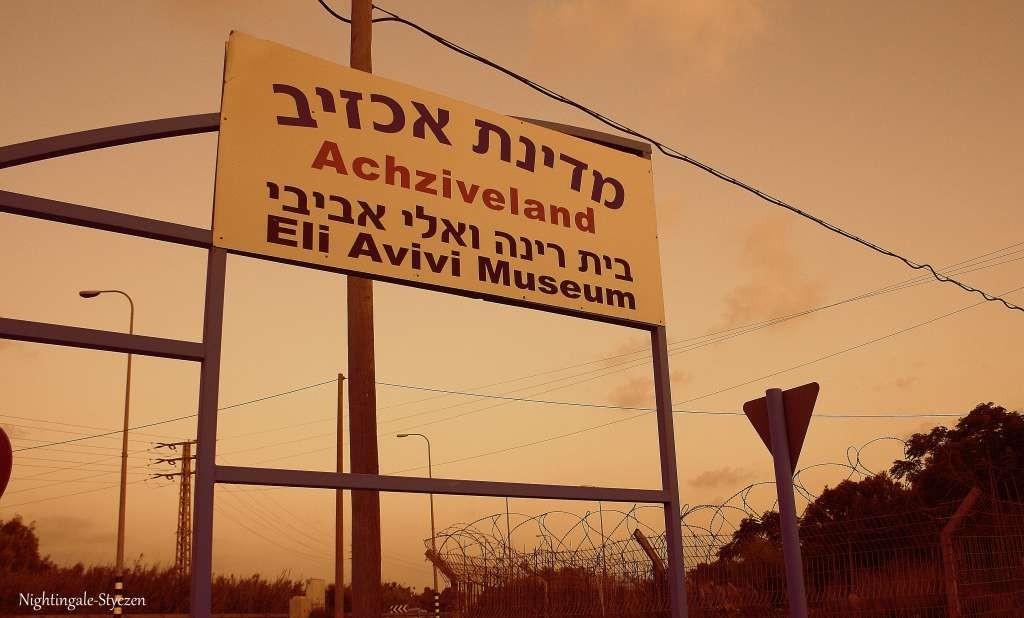
Israel: What happened with Akhzivland? A tribute to Rina

Wired for the hippy welcome
Our first attempt to enter the legendary paradise, the only independent micro-territory in Israel, was dismissed rather abruptly. An undoubtedly older lady — yet of an even approximate age masked behind the sallow complexion — with unexpectedly Aryan features, as well as a large dog and an oversized cat by her feet, told us the lights had been already off, and she was too tired to switch them on herself. "We're having a lot of problems now, there is too much work, and we don't have enough employees. Come back tomorrow." Having said that, all in an aloof manner worthy of a queen, our would-be host went back to her paperwork. I must say, she looked exhausted indeed. And so were we after a full-day of dragging our eight-kilo backpacks and whipped by 40 degrees Celsius at least. I felt my nerves vibrate at the premature relief of reaching the destination, but after weighing possible gains and losses resulting from any form of objection, persuasion or begging, we decided to wave a warm goodbye and smiley see-you-tomorrow-then.
The peaceful rebel
With the first dispiriting impression, I realised that "travel-talked claims" deep down got me wired for a heartily, flower-power welcome we didn't receive. The unexpected, however, only added up to Akhzivland's intrigue, even though we could likely forget a dip into the heart-warming hippy spirit of the place while sipping a refreshing glass of lemonade to the gripping stories of Eli and his boldly realised dream of freedom. It was 1970 when Israeli bulldozers wiped off Az-Zeeb, a fishing village where Eli had been living since 1952. His own country, the ground with a hostel and a museum of eccentricities — collected from all over the world during his life as a sailor — became his non-violent rebellion against the government. Although initially arrested and charged with a crime of 'Creation of a Country Without Permission', Eli was granted a 99 years' lease of the area after the judge had to admit that such a charge did not exist.
A bunch of bites, not only from flies and mosquitos
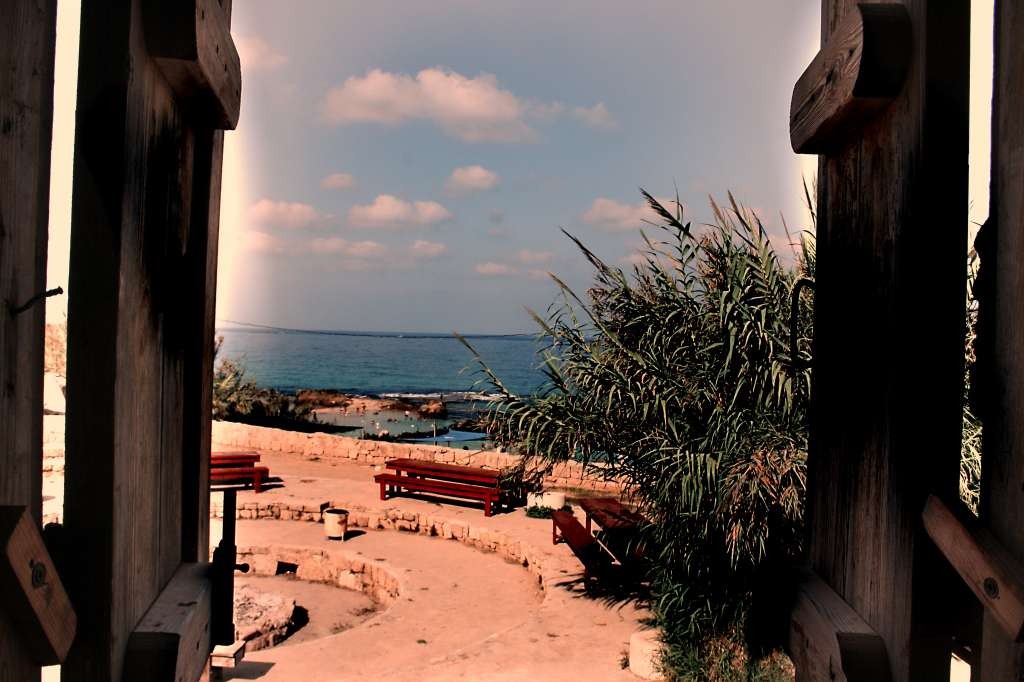
We shuffled past Akzhivland's shredded flag with a barely recognisable mermaid on it, and headed towards the beach to spend one more gross night on the wild beach, surrounded by litter, unbeatable insects and other campers, who unlike us, had legit tents with all due sides. The next morning, chased away by a joint attack of countless flies and mosquitos, we turned up at the blue iron gate at 8:30 AM, half an hour before the official opening time. Rina, sitting at the same table in the same oversized company, waved at us to go away. A spark of frustration rippled through my worn body. But, after all, she was the First Lady, and with the open-door life they were living, she deserved some undisturbed morning privacy.
The real Rina
Half an hour later, at 9:00 sharp, Rina welcomed us with a faint smile and 2€ entrance fee. Nevertheless, she looked revitalised, with an aura of fresh energy and friendliness. Her somewhat bipolar ways immediately won my heart: they were only a proof she acted naturally, the way she felt at a given moment. She got up briskly and showed us to the museum located in their first house. Switching on the lights in different rooms, she explained that one of their guides had broken his leg and the new one "didn't know anything yet," so we'd have to enjoy the museum on our own.
For a brief, awkward moment, she appeared insulted when we refused to leave our bags outside at the yard: "Nobody has ever stolen anything from me; I leave my house open, I trust everyone." A pang of guilt came over, yet having totally opposite experience and laptops in our backpacks, we decided to keep our luggage close. The fact she let us take them inside and wander among her husband's collection on our own was yet another proof of her sincere nature: she did mean it when she said: "I trust everyone."
Magical rooms in the Museum of Eccentricities
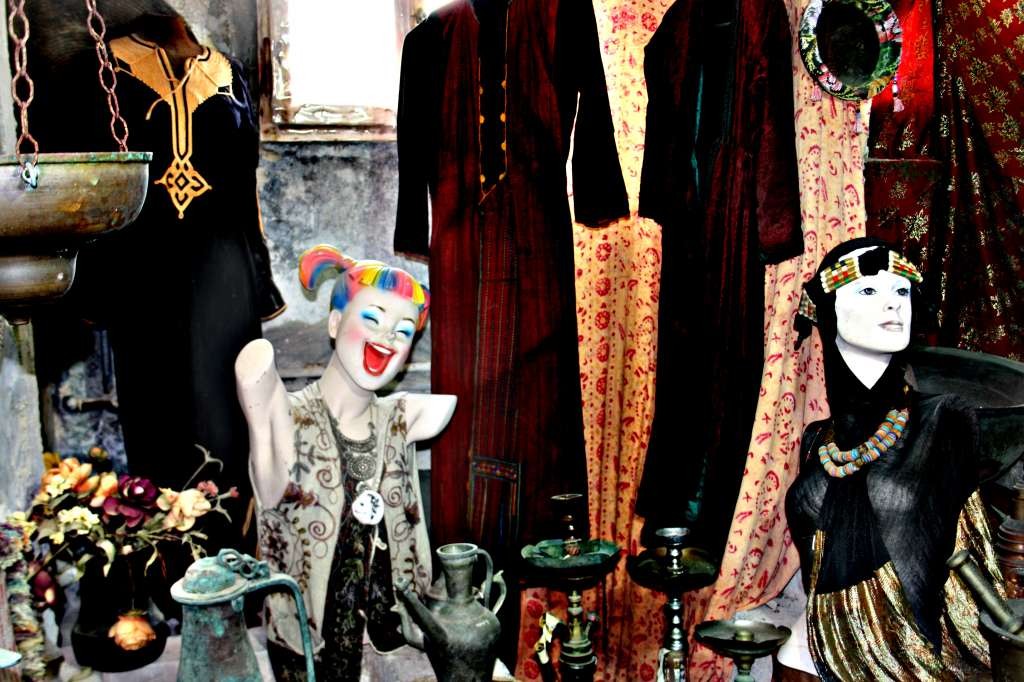
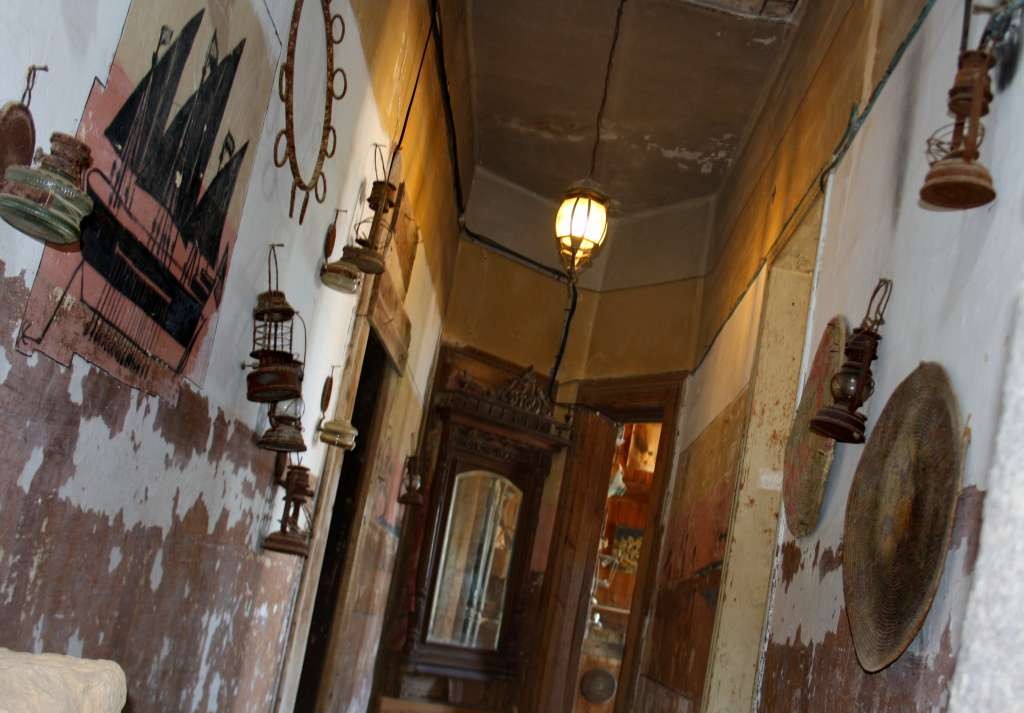
After examining the objects in the first two rooms, the word 'eccentricities' in the museum's name seemed a seriously commercial exaggeration. A hotchpotch of mementoes, I'd rather say. However, the deeper we dived into the gloomy, musty labyrinth of immortalised adventures, the more peculiar the objects became: grotesque harlequins, ship anchors, garments, bird cages and other swashbuckler props were all murmuring the head-spinning stories. The tales we could hear in our heads only because the guide had broken his leg or, more importantly, there was no trace of Eli himself. Following him around those magical rooms that would evoke his memories would be almost like sailing with him. Asking Rina about her husband seemed too tactless — what if he'd just passed away, and the loss was too fresh, too painful? Although she mentioned him a few times, it was all about the past, not a single present-tense clue, not even a slit to cut in with an unintrusive follow-up question.
In one of the rooms, we found a wall pinned with photographs capturing different moods and events from Rina and Eli's life. capturing different moods from Rina and Eli's life. A couple of pictures featured a few international celebrities. What captivated me for a bit longer, though, was a black-and-white sketch with Rina holding a gun, and a man lurking behind her. Later, in the couple's living room, I asked Rina if the drawing was hers, and she nodded a humble "Yes."
The gun and a boat
"Once, a group of terrorists landed at our beach. I was scared but brave. Fortunately, they left. If you asked me if I did it again… I don't think so. Terrorists… they're not what they used to be. Before they talked to you at least, and then they shot or not. Now they just shoot." As much as the subject itself couldn't be less amusing, the way she fitted terrorism into the nostalgic expression made me crack a half-smile.
Eli, Rina and their Akhzivland
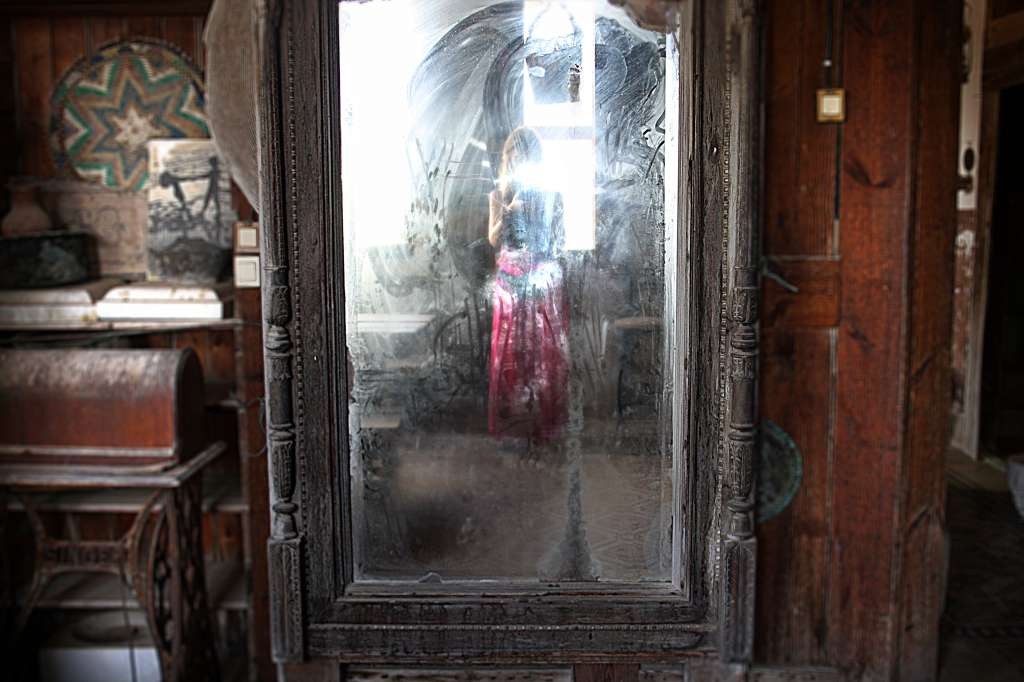
The last room was particularly atmospheric, even though there were almost no exhibits. Instead, the space was filled up with a sillage of bygone dailiness. A vintage wardrobe with a tarnished mirror tucked in a dark corner, a plain sink by the window overlooking the Akhziv Beach, and a massive wooden table with two raw benches in the middle made up a perfect nook for the long-awaited pause. The air was chiming, relaxing and got me dreamy. How was it to be a hippy sailor's wife? How "unconventional" were they as a couple?
"We liked it that way, living our simple life, kerosene lamps, no electricity. We kept struggling with the Israeli government for our independence," Rina recalled the days with a sentimental smile, adding with a flare of pragmatism: "But it's over now, we're not fighting anymore. We just pay the taxes and the bills. I need two phones to keep it all working, the cameras, a TV. It's not possible to live the same life and run Akhzivland these days. Now it's more of a story to tell our visitors; we run guided tours when I show the people around and explain everything in detail."
Done with the museum, Rina took us to a smaller building where we could chat for a bit. Crossing the threshold of their second house, I immediately noticed a pile of papers on a low, old-fashioned table, a wireless phone, and the CCTV on the wall. Only while she was taking her umpteenth call to the ring of "Your mommas calling back" and leafing through her day planner did I notice she had her very own collection of souvenirs, mostly colourful figurines. When the first batch of calls ended, Rina took out an old photo of their first house and started drawing on the back. In the meantime, and out of the blue, she mentioned that her family fled from Germany when she was five years old. She understood German, but never spoke it. "I don't like to talk about it," she cut short her sudden confession — likely incited by our appearance — and handed me over the sketch.
A Phoenician city and a tricky stamp
And Eli?
Eli and Rina have been living and sharing their utopian life intensely, now Akhzivland seems to have taken on the aura of a resort — though with a worth-a-pause backup story. Rina, an astounding fusion of romance and pragmatism, keeps alive the spirit of their bygone anarchy. She created Akhzivland by Eli's side, without shouting for attention or acknowledgement, just making sure it continues as long as they're there. However, the lease for the land is about to terminate. "And after that?" I asked her concerned, but Rina replied with a smile and an I-don't-care shrug. The country consisted of the two of them, and it seems to be passing along.
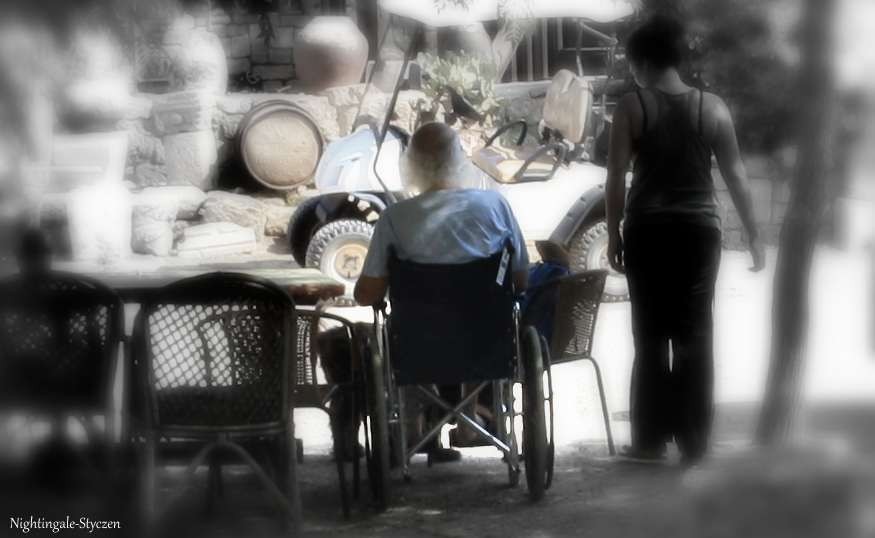
Lingering around the premises, we spotted a Philippine girl pushing a wheelchair in front of her. She stopped by the table where Rina welcomed us in the morning and topped over a little plastic bottle. A man in the wheelchair, staring ahead fixedly, opened his mouth to take a pill that turned up near his lips. When the girl left, we plucked up and came closer, from the side. "Good morning..." Squinting from the sun, Eli turned his head and mouthed a reply. Then his eyes travelled back to the fixed point ahead.
Useful links
Location (Map)
When you subscribe to the AllWays Traveller, we will send you an e-mail when there are new updates on the site so you wouldn't miss them.
About the author

Contact info

ISSN 2634-7032
London, United Kingdom
+44 0 7764 198 286