AllWays Traveller Features
Croatia declares new nature park

In good news for lovers of the great outdoors, Croatia has gained one more area of protected parkland with Mount Dinara declared a nature park, the 12th park of its kind in the country and the second largest after Velebit.
The nature park will encompass Croatia's section of Mount Dinara as well as Mt Troglav and Mt Kamešnica – part of the Dinaric Alps or Dinarides – the Cetina River's upper course and the Hrvatačko, Paško and Vrličko karst fields. It will extend over two counties - Split-Dalmatia and Šibenik-Knin -- with an area of almost 63,000 hectares.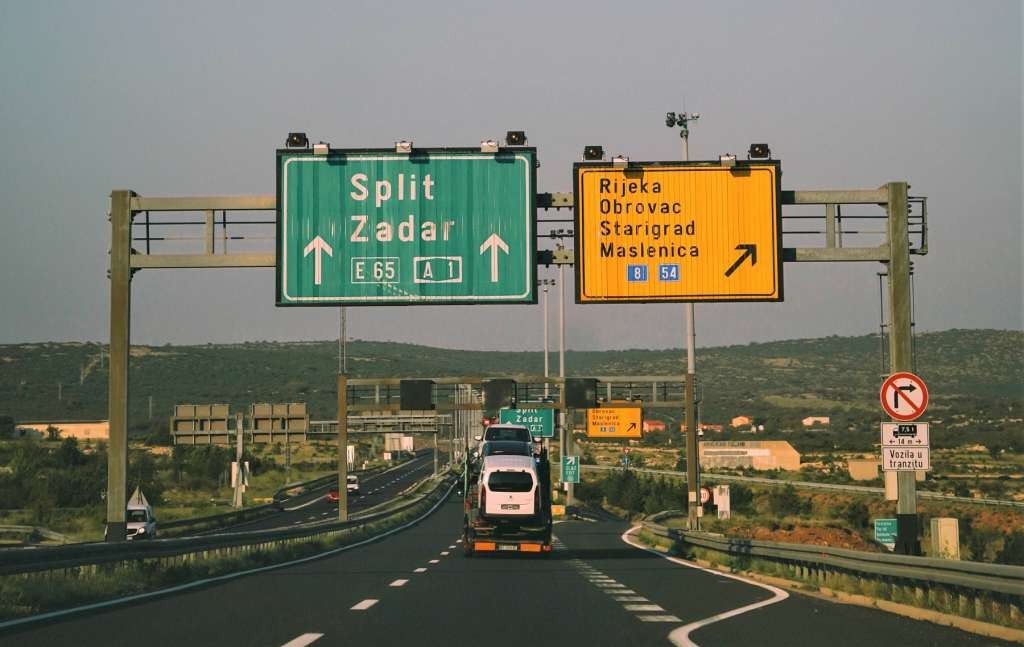
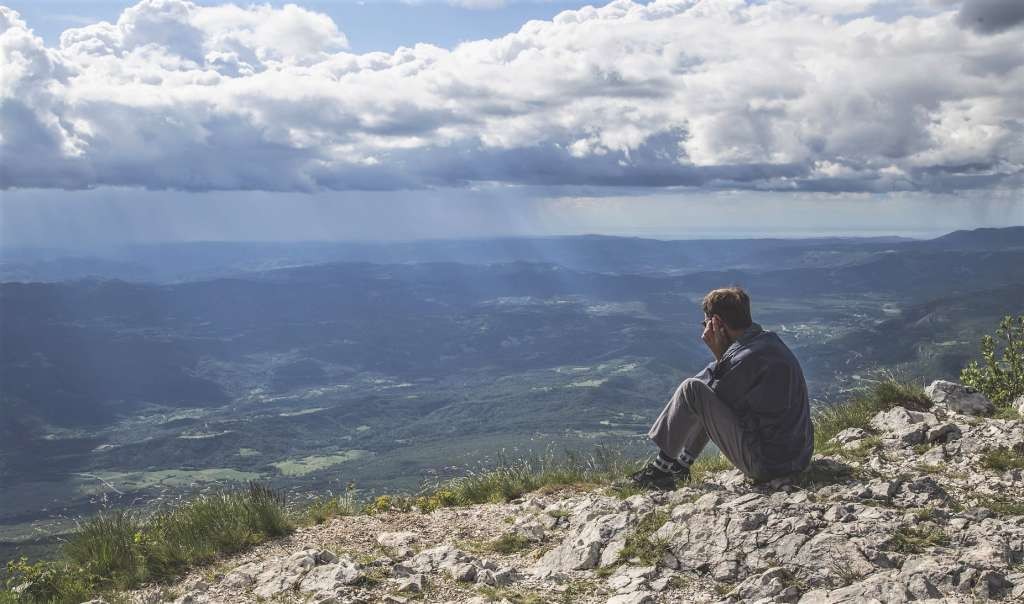
Croatia is an independent state, once part of the former Yugoslavia, located on the Balkan Peninsula in South-Eastern Europe. Many travellers are familiar with its stunning coastline and walled cities, but may not have ventured inland where Mount Dinara is located, close to the border with Bosnia and Herzegovina. Mount Dinara harbours many endemic and endangered species and is a habitat to more than a thousand plant varieties. The vast untouched forests and grasslands of the area are home to lynx, bears and wolves.
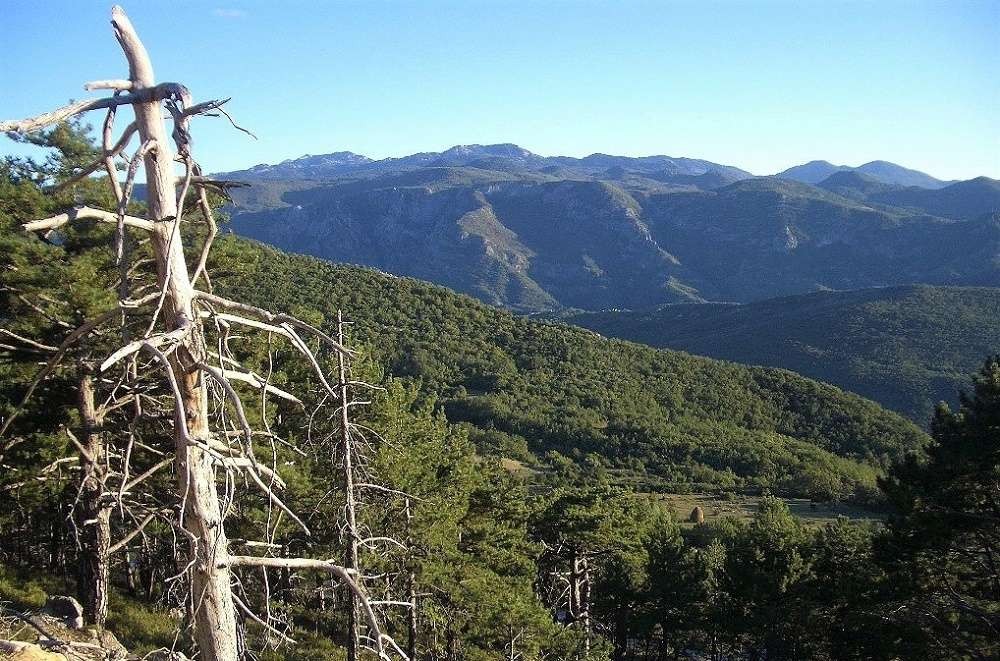
With the proclamation of Mount Dinara Nature Park, 39 percent of Croatia's land area is now protected. There are 11 areas of the EU's Natura 2000 ecological network in the Park area – two conservation areas important for birds and nine conservation areas important for species and habitat types. The Croatian Government believes the protection of this area will have positive effects on nature conservation, but also on the population and the economy of the wider region. The revitalisation of extensive livestock is expected, as well as other traditional activities and new opportunities for sustainable use of space.
Climbing the mountain
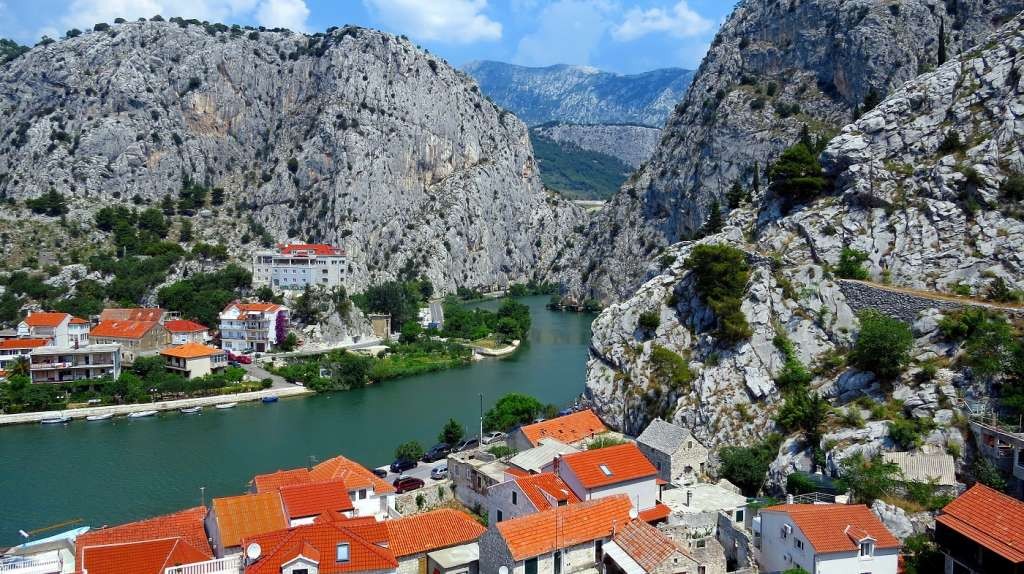
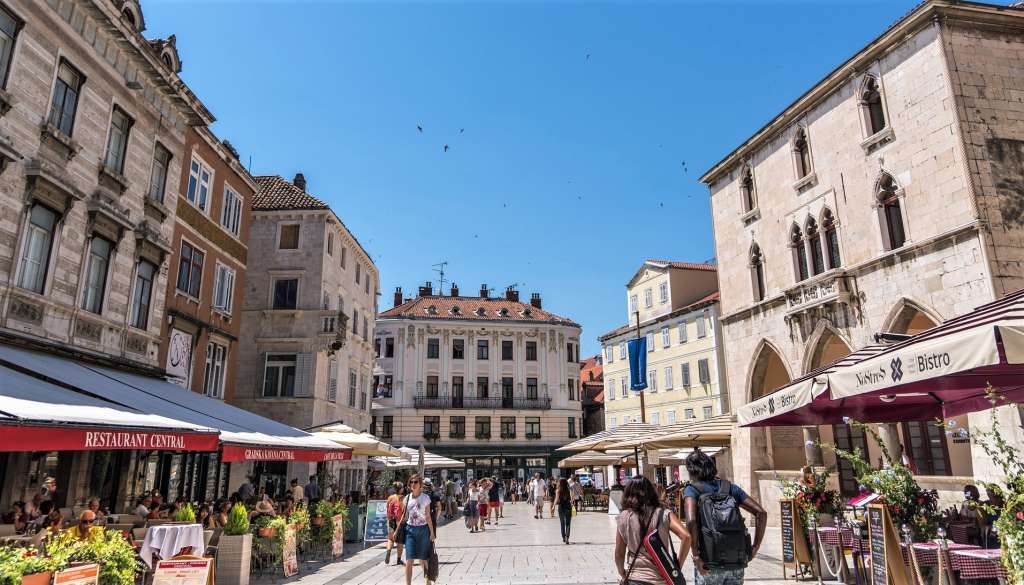
Mount Dinara is a one-and-a-half hour drive from the Dalmatian city of Split (pictured above) through picturesque countryside. The town of Knin is the largest settlement at the foot of Dinara and is also the main starting point for the climb towards the summit. However, this is for adventure travellers only and you'll need to be reasonably fit. The only road ascending high towards the bosom of the mountain starts at Guge, a suburban area of Knin. The road is winding, dusty and steep at some points. The road from the Suvo field continues, but can only be taken by off-road vehicles or if Nordic walking.
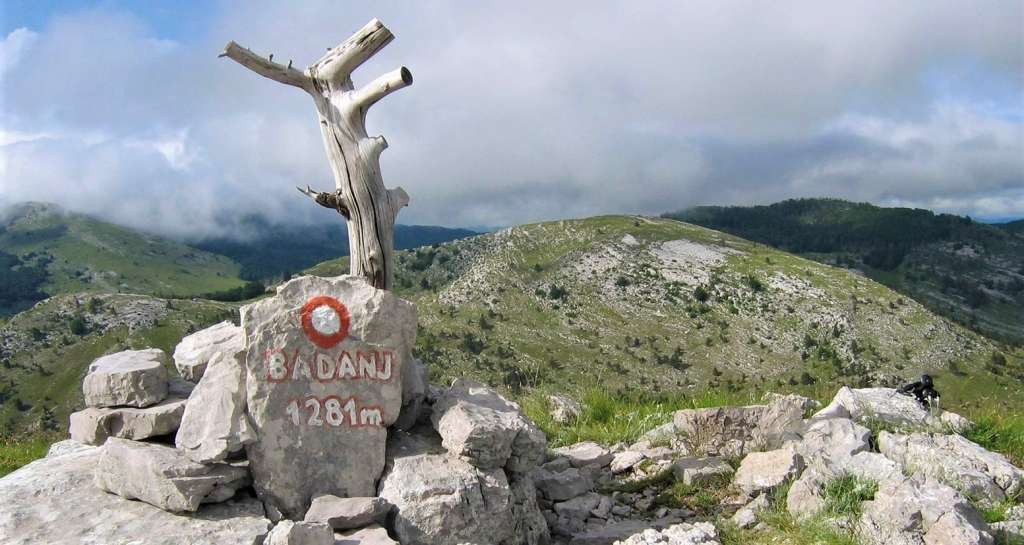
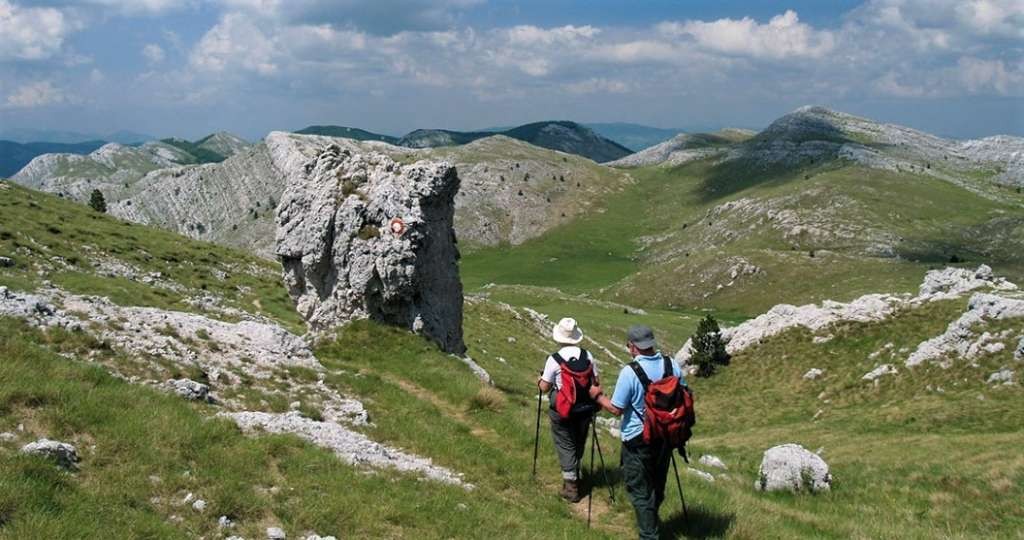
To reach the summit of Dinara, climbers can go to the mountain lodge Brezovac and then climb for a further two-and-a-half hours to get to the top. Badanj (above) is the peak between Suvo polje and Brezovac, visible and recognisable from afar. It is steep on all sides, and since it is bare, it offers a wide view of Knin and the surroundings.
The ascent can also be started from the village of Glavaš, close to Kijevo, but it takes about five hours. Those who reach the top will have conquered Croatia's highest peak at 1,831 metres.
Croatia then and now
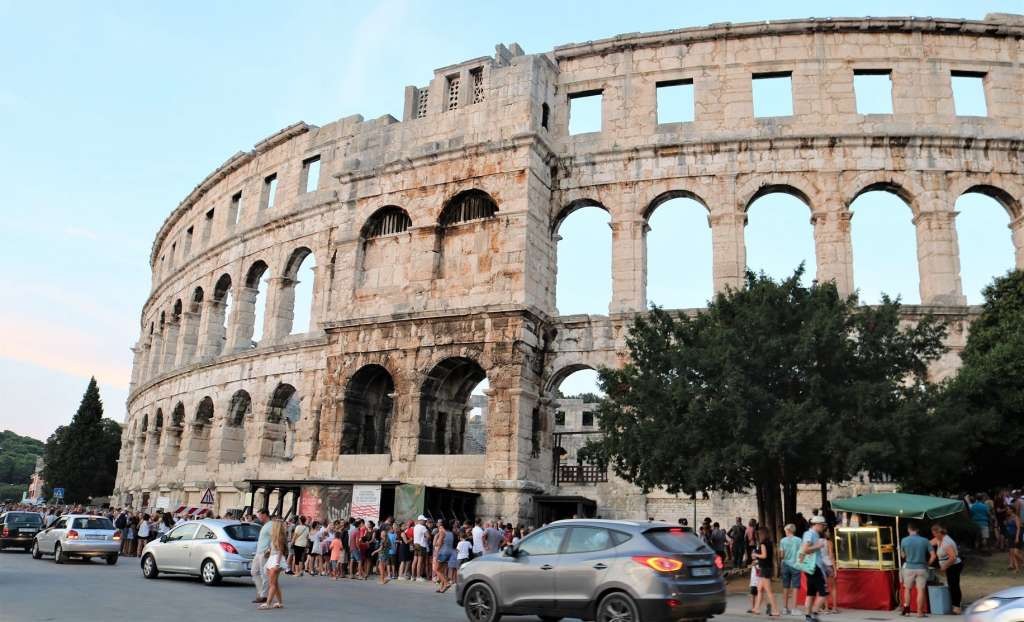
My first visit to this fascinating country was a trip to the commercial city of Pula decades ago, before Croatia gained independence. At that time it had a small-town feel, but today it boasts a thriving tourism industry, film festivals and concerts, many held at the historic Roman Amphitheatre (pictured below). Pula enjoys spectacular sunsets, is dotted with magnificent pine trees and offers a tempting Mediterranean food vibe. The Irish writer, James Joyce, once lived there. It is well worth including on any Croatian itinerary.
The conditions for entering Croatia during the pandemic are complex and a detailed explanation is beyond the scope of this article. However, current restrictions and exemptions can be checked at mup.gov.hr/uzgcovid/english/286212#:~:text=persons%20travelling%20for%20urgent%20personal,48%20hours%20or%20by%20PCR or you may find it easier to follow the World Nomads site worldnomads.com/travel-safety/europe/croatia/latest-croatia-travel-alerts-and-warnings
Acknowledgements: Croatian National Tourist Board for supplementary information and Dinara photos.
Useful links
Location (Map)
About the author

Contact info

ISSN 2634-7032
London, United Kingdom
+44 0 7764 198 286