AllWays Traveller Features
Iconic bridge a perfect start and end

North Queensferry, what a place to start a walk, parking your car in the shadow of the Forth Rail Bridge which has supported the main London to Aberdeen railway line for well over 100 years and even featured in the 1935 film by Alfred Hitchcock, the 39 Steps.
The cantilever arches reach high into the sky and they dwarf the the picturesque village of North Queensferry situated between the rail bridge and the first Forth Road Bridge opened by The Queen in 1964.
The Forth Rail Bridge (www.theforthbridges.org), opened in 1890, is a Scottish icon that is recognised the world over as the most famous of cantilever designs.
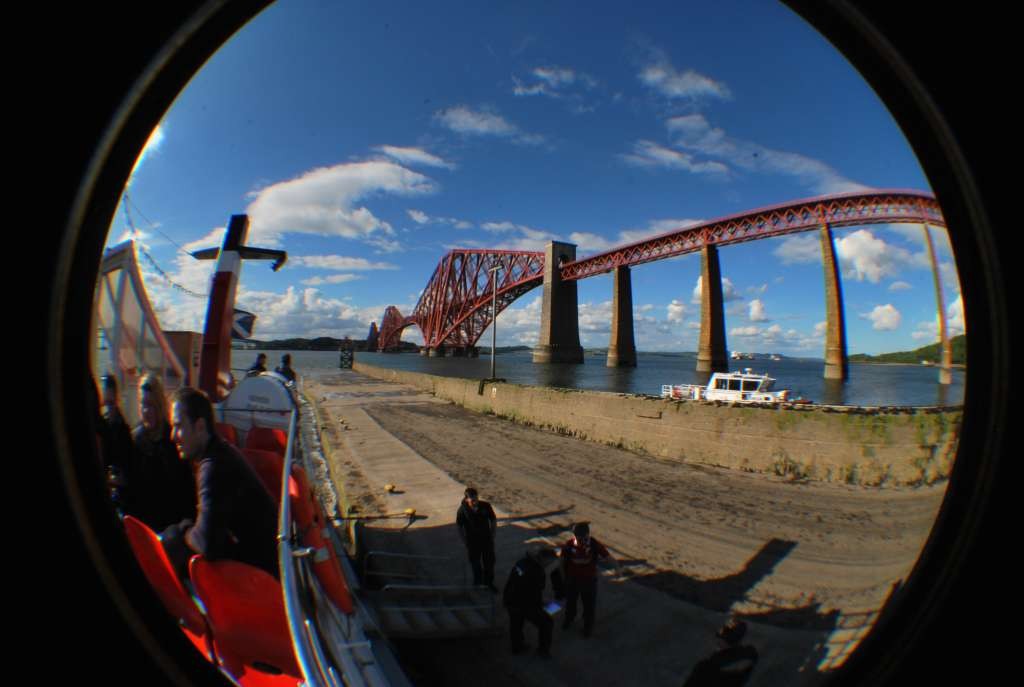
Also, head to the pier find out about its history as, until the opening of the Forth Road Bridge, the pier was the main port for ferries crossing the Forth. Sometimes, there were long queues of cars waiting to cross the channel and it could be rough and it is now safe to look up. At one time train passengers used to throw coins out of the window as they crossed for some reason, but not now.
North Queensferry is also home to an aquarium. Deep Sea World is Scotland's National Aquarium and visitors see tropical fish and strange sea-dwelling creatures, from local crabs and seals to exotic piranhas.
The facility (www.deepseaworld.com) aims to educate people of all ages and guests walk through the longest underwater tunnel in the UK, it has a moving walkway, and you get close to one of the largest collections of sharks in Europe.
All of the marine life is kept in conditions as close to their natural habitat as possible and the facility has conservation as a key element.
It has breeding projects and research, houses endangered species, as well as those rescued from owners around the UK and they use natural Scottish seawater from the Firth of Forth which helps save energy and provides essential minerals to all of the animals. If you are feeling brave, you can come face-to-face with the sand tiger sharks on a shark dive. We stayed dry.
You make a short climb and follow the path to the east side of the village to reach the nature reserve at Carlingnose Point. There you can watch wildlife and enjoy wonderful views of the Fife coastline and down the Firth of Forth towards Edinburgh.
Dating back to the Romans
The town probably features on few "must visit" lists of visitors to Scotland. It is a bustling town with a long history. Inverkeithing was first established as a port, on the Inner Bay of Inverkeithing Bay.
Some claim the town dates back to Agricola's Roman adventure into Northern Scotland in AD83. It certainly seems that the area was well settled by the AD400s when a church was founded by St Erat, a follower of St Ninian.
In medieval times Inverkeithing (www.undiscoveredscotland.co.uk) was a walled town, with four ports or gates. The walls were removed in the 1500s, but a number of structures still stand.
The nave of the Parish Church, also known as St Peter's, only dates back to 1827, but the tower was originally built in the 1300s.
The Mercat Cross, pillars dating back to around 1400, is at the top end and near the south end of the High Street is a building variously known as the Friary or Greyfriars Convent.
This once formed the guesthouse of the Franciscan convent established in about 1350. After the Reformation of 1560, the convent was sold to a local merchant who converted the guesthouse for use as a house.
The sea had a big influence and Inverkeithing harbour benefitted from the export of coal from the Fife Coalfield. In the late 1800s shipbuilding briefly flourished but from the 1920s it was for shipbreaking that the town became chiefly known. My first recollection of Inverleithing was seeing the rusting hulks of ships awaiting the hammer.
Aircraft carriers, battleships, and vessels of every other shape and size were also cut down. The coastal path takes you out of Inverleithing through some small, industrial units, and towards the new town of Dalgety Bay, named after the original village of Dalgety.
The ruins of the 12th-century St Bridget's Kirk (church) are all that now mark the site. Building started on the town in the mid-1960s.
Silver Sands (www.fifecoastandcountrysidetrust) beach is one of the finest in Scotland and overlooks the Firth of Forth towards Edinburgh and The Lothians. This popular beach attracts water sports enthusiasts, walkers and families looking to relax on a sunny day.
It is backed by woodland and the beach is normally a relaxing place but not if the sun shines. It is extremely popular and during a long spell of sunshine the council make temporary car parks in the local fields.
You can even sunbathe and do some train spotting as the main line to Kirkcaldy and the north passes along the coast here. The other beach, Aberdour Black Sands, is nearer the main town and beside the harbour and, once again, has great views across the river.
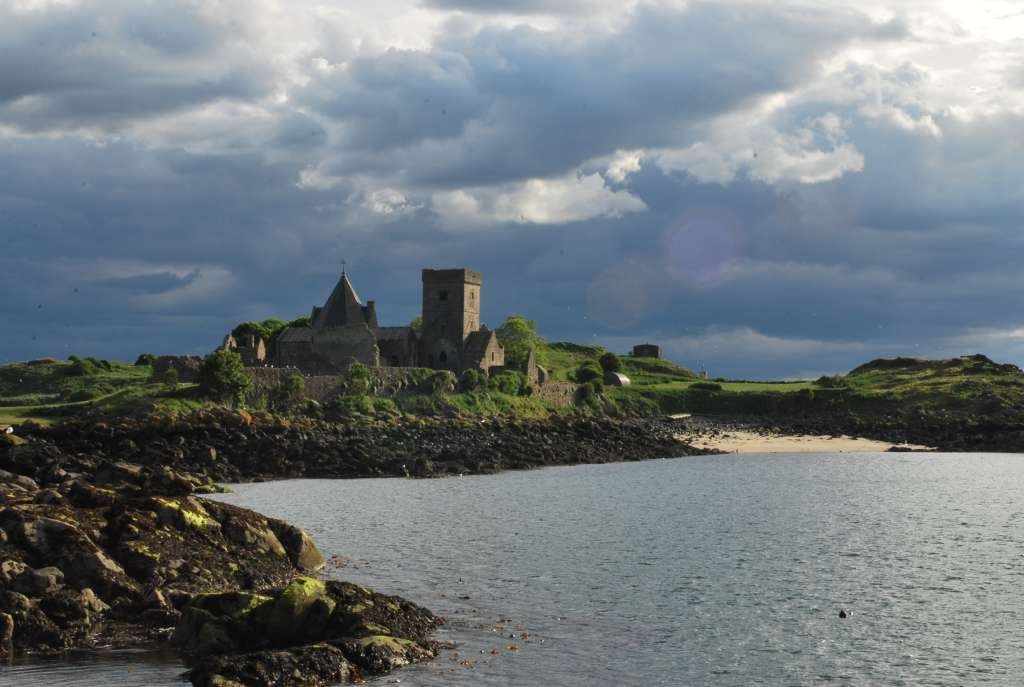
Aberdour Golf Club (www.aberdourgolfclub.co.uk), a testing, 5,106 yards (2,308 out and 2,798 back), 18-hole, par 68 (33 out and 35 back) parkland course boasts stunning coastal views, including one over to Inchcolm Abbey, established originally as a priory by David I in 1235. It is the best-preserved group of monastic buildings in Scotland. and is open with safety precautions in place. Maid of the Forth (www.maidoftheforth.co.uk) and Forth Boat Tours (www.forthtours.co.uk) run trips.
It was the dream of Alexander I to establish a monastery on the island after he sheltered on it during a storm. But following his death, it was his brother David I who invited Augustinian canons to establish a priory, which was later given full abbey status.
The abbey has a dramatic location and the medieval stone screens inside the belltower are survivals of medieval church fixtures and the 13th century well-painting is a rare medieval fresco. The island is also famed for its seals, wildlife and coastal defences from the two world wars.
Aberdour's main attraction is its castle (www.historicenvironment.scot). Built by the Douglas family, the 13th-century, fortified residence was extended in the 16th and 17th centuries.
Then it was back to the starting point in North Queensferry. You can walk or take the bus (No 7, regular services, 41 minutes) or train (ScotRail, regular services, 13 minutes).
.
Useful links
Location (Map)
About the author

Contact info

ISSN 2634-7032
London, United Kingdom
+44 0 7764 198 286