AllWays Traveller Features
Musselburgh, known by a football nickname

Musselburgh's name derives from the extensive mussel beds which lined the coast and it was first settled by the Romans after they invaded Scotland in AD80.
They built a fort on an island at the mouth of the River Esk and bridged the river. That crossing is still key to Musselburgh today as the town provides one of the main approaches from the east to Scotland's Capital city of Edinburgh which is around five miles away.
The Roman bridge lasted many centuries and has been rebuilt on several occasions. The Old Bridge is known as the Roman Bridge and remains in use by pedestrians. We, however, didn't start our walk there.
They built a fort on an island at the mouth of the River Esk and bridged the river. That crossing is still key to Musselburgh today as the town provides one of the main approaches from the east to Scotland's Capital city of Edinburgh which is around five miles away.
The Roman bridge lasted many centuries and has been rebuilt on several occasions. The Old Bridge is known as the Roman Bridge and remains in use by pedestrians. We, however, didn't start our walk there.
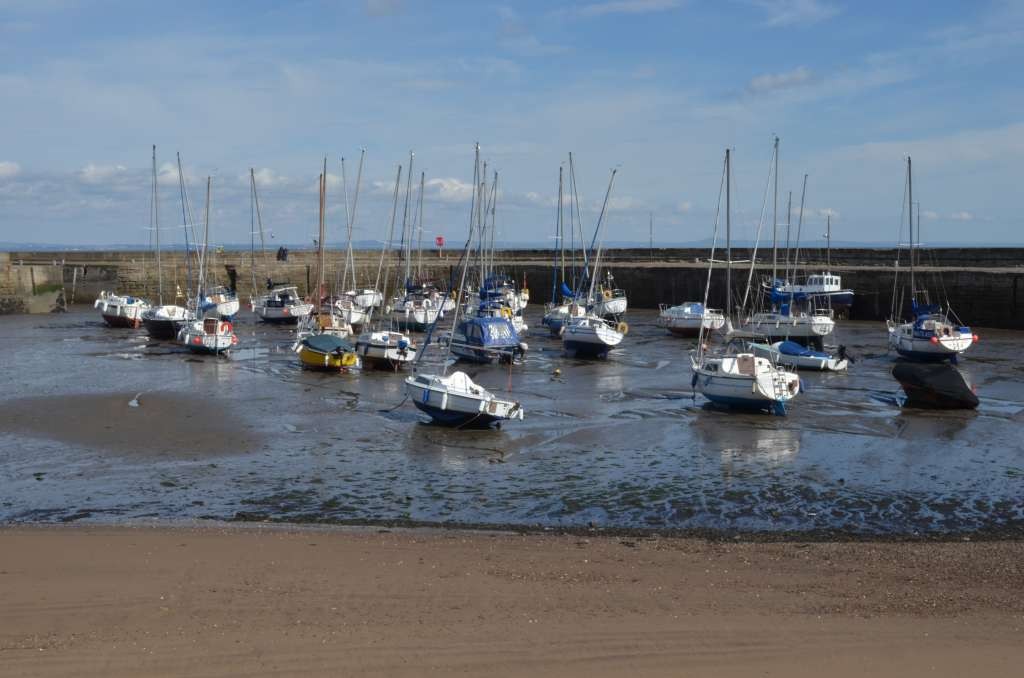
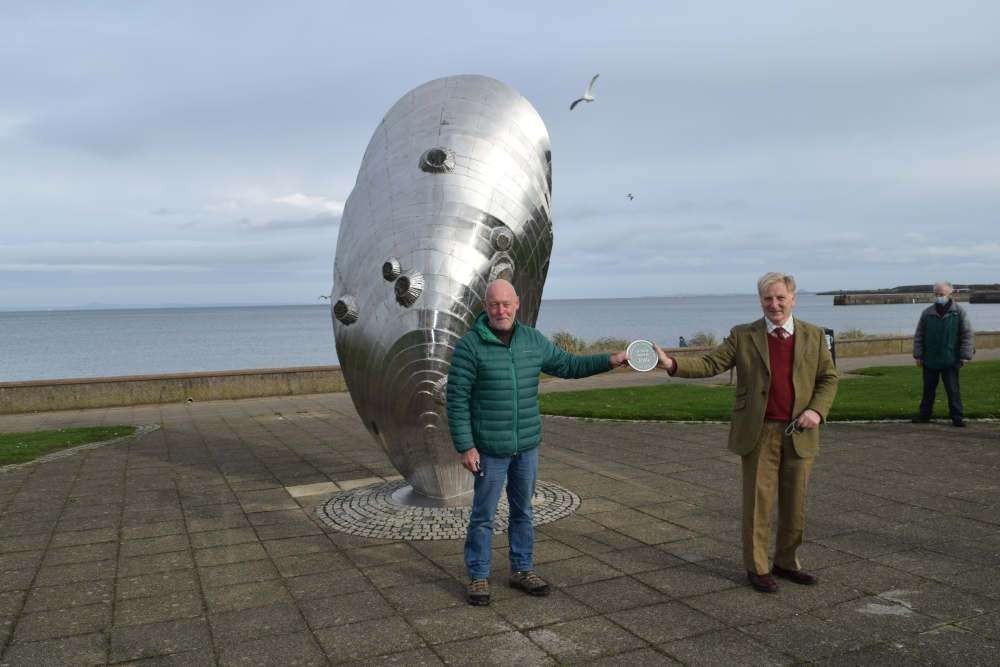
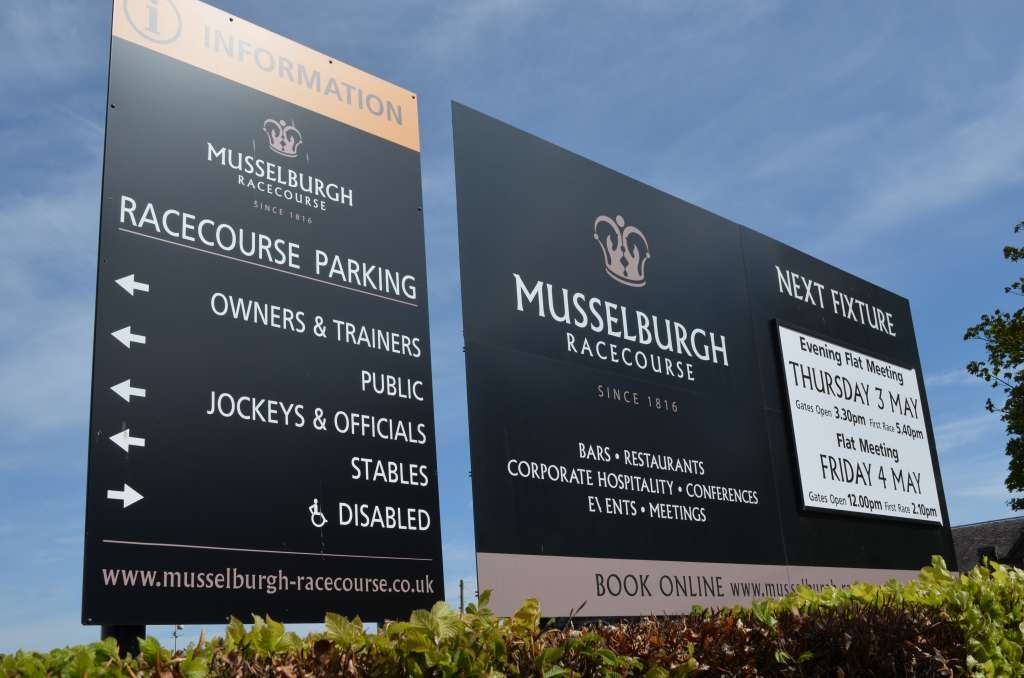
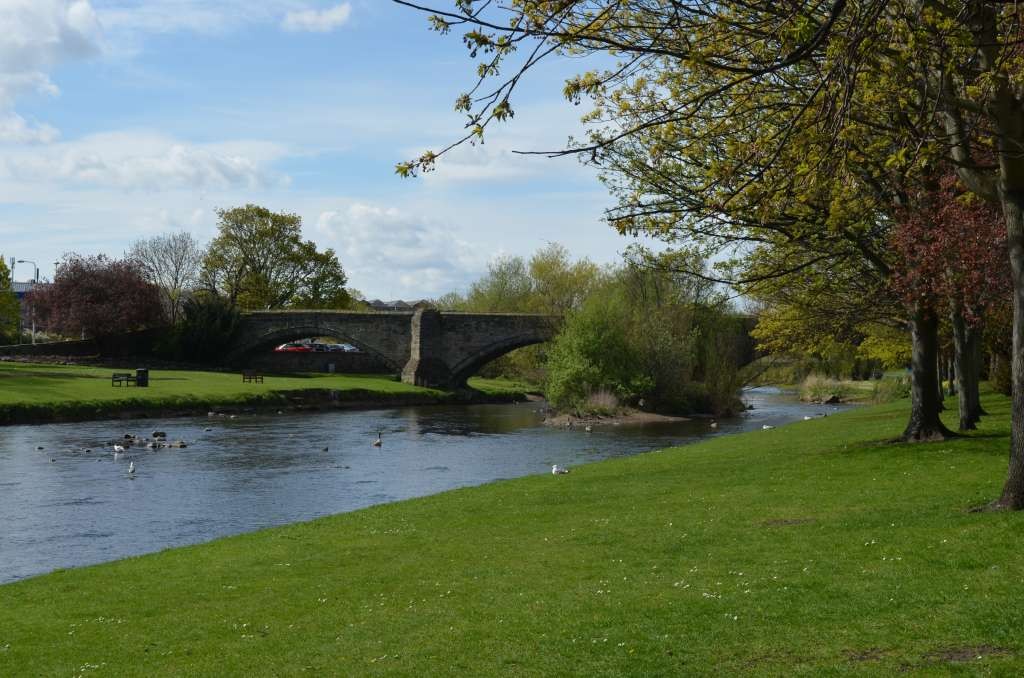
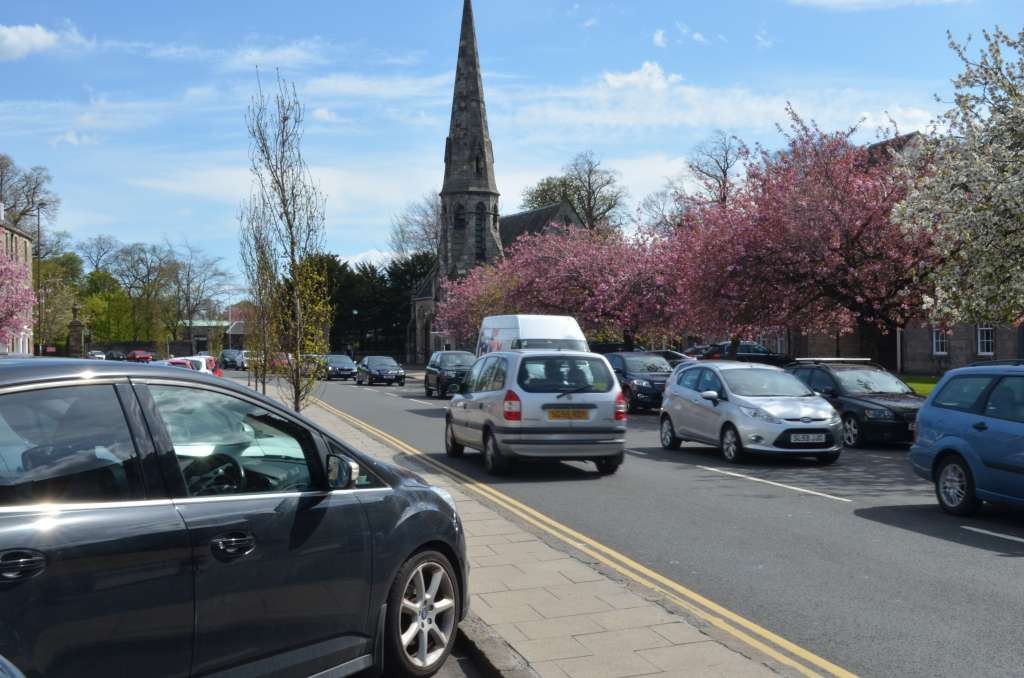
Rather, we parked near the town's picturesque Fisherrow harbour and strolled along the seashore on a well-defined path. It is flat, ideal for those of older years and for new mums with prams, and it takes you past terraced houses and some interesting works of art before a large playing field.
To the right there are some grand homes and they back onto Loretto School's playing fields, Scotland's oldest boarding school, set in 85 acres in a leafy campus, which is home to boarders and day pupils and also has a sporting academy with golf prominent.
As you cross the river you see other bridges. The so-called "Electric Bridge" was to allow the transport of turbines to the now demolished power station then being built at nearby Cockenzie. More of Cockenzie later.
The bridge was offered for a nominal sum to the Town Council who turned it down. Access to it is therefore barred by gates that are only opened on race days to allow more direct access to popular Musselburgh Racecourse (www.musselburgh-racecourse.co.uk) where racing began in 1817.
Musselburgh Links (musselburgholdlink.co.uk), The Old Golf Course, an original Open Championship venue, hosting the competition six times between 1874 and 1889, is adjacent.
Visitors can hire traditional balls and hickory golf clubs to get a feel for the early days of golf. Local historians say a golf course was in use to the east of the town at least as early as 1672 and this has been recognised as the oldest in the world. Local historians say it may date back further as it is said that Mary Queen of Scots played here in 1567.
We were there for other reasons and could have gone into the town to see the Tolbooth which dominates the High Street. It first appeared in 1590 and was one of the few buildings to survive a sacking by Henry VIII's English army.
Musselburgh once employed many locals in woollen mills and coal mines but the town also had attractions for those living nearby and increasing links led to its rapid growth as an upmarket dormitory and resort.
We marched on along the John Muir Way intent on making the most of a beautifully sunny autumnal day.
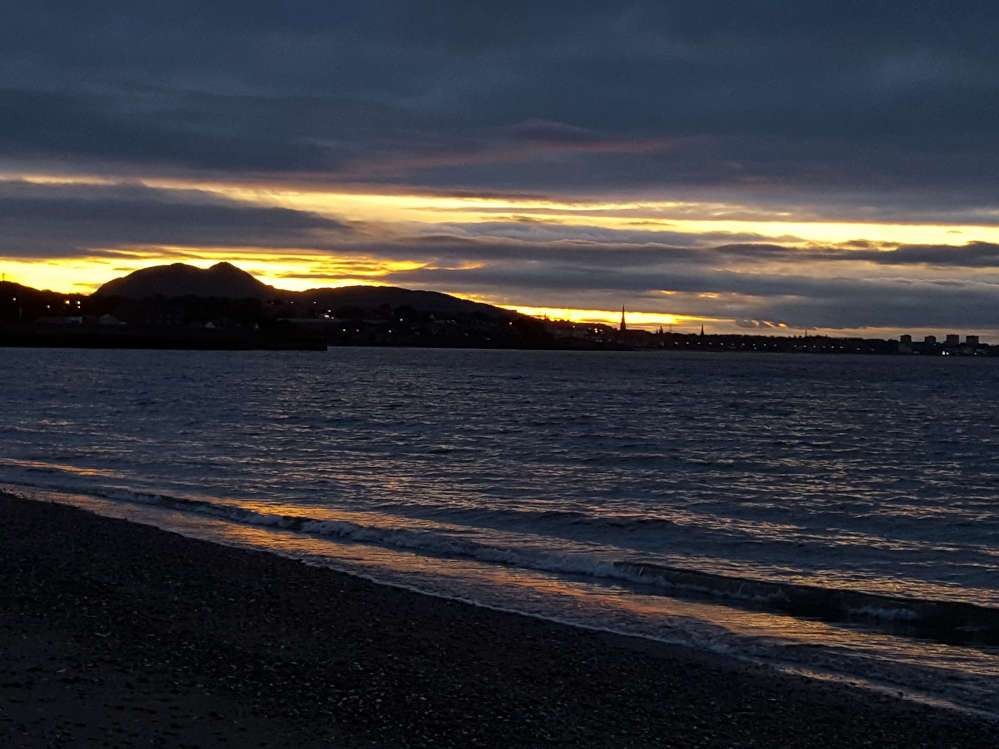
The Musselburgh Lagoons came up next and they are another throwback to the now demolished power station. The landscape here is not particularly pleasing on the shore side but we enjoyed the views over the River Forth to Fife and the terrain remained flat. A seal popped its head above water to the delighted of fellow travellers.
A wee beach near the Prestongrange Mining Museum (www.eastlothian.gov.uk) seemed an ideal stopping point. Prestongrange, incidentally, is a free, family-friendly, open-air museum on the site of a former colliery.
That was not the only industry at one time. Prestongrange also boasted a harbour, glass works, pottery, colliery and brickworks and the landscape still bears the scars with items relating including winding gear, a brick kiln and a Cornish beam engine still visible.
Nearby Morison's Haven, where we sat, was formed by monks for exporting coal from their lands of Prestongrange.
It once employed upwards of 400 men. Now there is a signboard to pin point this once bustling area. Sign of the times.
A few steps further on you reach Prestonpans which once relied heavily on coal mining. Other industries included a salt works, soap-making, brewing, brick-making and pottery.
Many visit Prestonpans because in 1745 Bonnie Prince Charlie, claimant to the throne of Scotland, came with his Jacobite army and soundly defeated the government troops in a battle (www.historic-uk.com) on 21 September, As an aside, in 1777, Sir Walter Scott, aged six, stayed in Prestonpans for a holiday and to indulge in sea bathing.
Cockenzie and Port Seton have merged into one another but Cockenzie was the first to be established. There had probably been a village around its natural harbour long before it was chartered as a burgh by James VI in 1591.
It then grew to export coal from the surrounding area, and, like Prestonpans, it also became a centre for the extraction of salt from sea water in metal pans heated over coal fires and for fishing.
The York Building Company took over management of the estate's mining interests and a horse-drawn railway to carry coal from the pits around Tranent to the harbour at Cockenzie was established.
During the 1745 Jacobite uprising, the waggonway was used to transport troops to the battle, marking the railway's first use in warfare. There is a museum (The Waggonway Project, see Facebook) near the harbour.
Cockenzie was home to boatyards producing fishing vessels and yachts. The sheds and slipways remain, but the last vessel was produced in the mid 1990s.
Fishing remains important from the continuing presence of traditional fish merchants and curers in the village. Do try John Dickson, fish curer since 1921, at West Harbour Road (EH32 OHX) next to Cockenzie House. Their smoked fish is delicious.
To the right there are some grand homes and they back onto Loretto School's playing fields, Scotland's oldest boarding school, set in 85 acres in a leafy campus, which is home to boarders and day pupils and also has a sporting academy with golf prominent.
As you cross the river you see other bridges. The so-called "Electric Bridge" was to allow the transport of turbines to the now demolished power station then being built at nearby Cockenzie. More of Cockenzie later.
Home of the original Open Championship
The bridge was offered for a nominal sum to the Town Council who turned it down. Access to it is therefore barred by gates that are only opened on race days to allow more direct access to popular Musselburgh Racecourse (www.musselburgh-racecourse.co.uk) where racing began in 1817.
Musselburgh Links (musselburgholdlink.co.uk), The Old Golf Course, an original Open Championship venue, hosting the competition six times between 1874 and 1889, is adjacent.
Visitors can hire traditional balls and hickory golf clubs to get a feel for the early days of golf. Local historians say a golf course was in use to the east of the town at least as early as 1672 and this has been recognised as the oldest in the world. Local historians say it may date back further as it is said that Mary Queen of Scots played here in 1567.
We were there for other reasons and could have gone into the town to see the Tolbooth which dominates the High Street. It first appeared in 1590 and was one of the few buildings to survive a sacking by Henry VIII's English army.
Musselburgh once employed many locals in woollen mills and coal mines but the town also had attractions for those living nearby and increasing links led to its rapid growth as an upmarket dormitory and resort.
We marched on along the John Muir Way intent on making the most of a beautifully sunny autumnal day.
Once busy with trade
The Musselburgh Lagoons came up next and they are another throwback to the now demolished power station. The landscape here is not particularly pleasing on the shore side but we enjoyed the views over the River Forth to Fife and the terrain remained flat. A seal popped its head above water to the delighted of fellow travellers.
A wee beach near the Prestongrange Mining Museum (www.eastlothian.gov.uk) seemed an ideal stopping point. Prestongrange, incidentally, is a free, family-friendly, open-air museum on the site of a former colliery.
That was not the only industry at one time. Prestongrange also boasted a harbour, glass works, pottery, colliery and brickworks and the landscape still bears the scars with items relating including winding gear, a brick kiln and a Cornish beam engine still visible.
Nearby Morison's Haven, where we sat, was formed by monks for exporting coal from their lands of Prestongrange.
It once employed upwards of 400 men. Now there is a signboard to pin point this once bustling area. Sign of the times.
A few steps further on you reach Prestonpans which once relied heavily on coal mining. Other industries included a salt works, soap-making, brewing, brick-making and pottery.
Many visit Prestonpans because in 1745 Bonnie Prince Charlie, claimant to the throne of Scotland, came with his Jacobite army and soundly defeated the government troops in a battle (www.historic-uk.com) on 21 September, As an aside, in 1777, Sir Walter Scott, aged six, stayed in Prestonpans for a holiday and to indulge in sea bathing.
World champion boxer
The town hosts Preston Tower. the one-time seat of the Hamiltons of Preston. The gardens of this 15th century tower house and doocot have been restored with elements of 17th and 18th century Scottish Gardens.
The Mercat Cross is the only one of its kind in Scotland which remains in its original form and location. The memorial to the Battle of Prestonpans is a modest cairn and is positioned close to the battle site near Meadowmill.
The town's most recent claim to fame is Josh Taylor, a Scottish boxer who is a unified light-welterweight champion who held the Commonwealth light-welterweight title from 2016 to 2017.
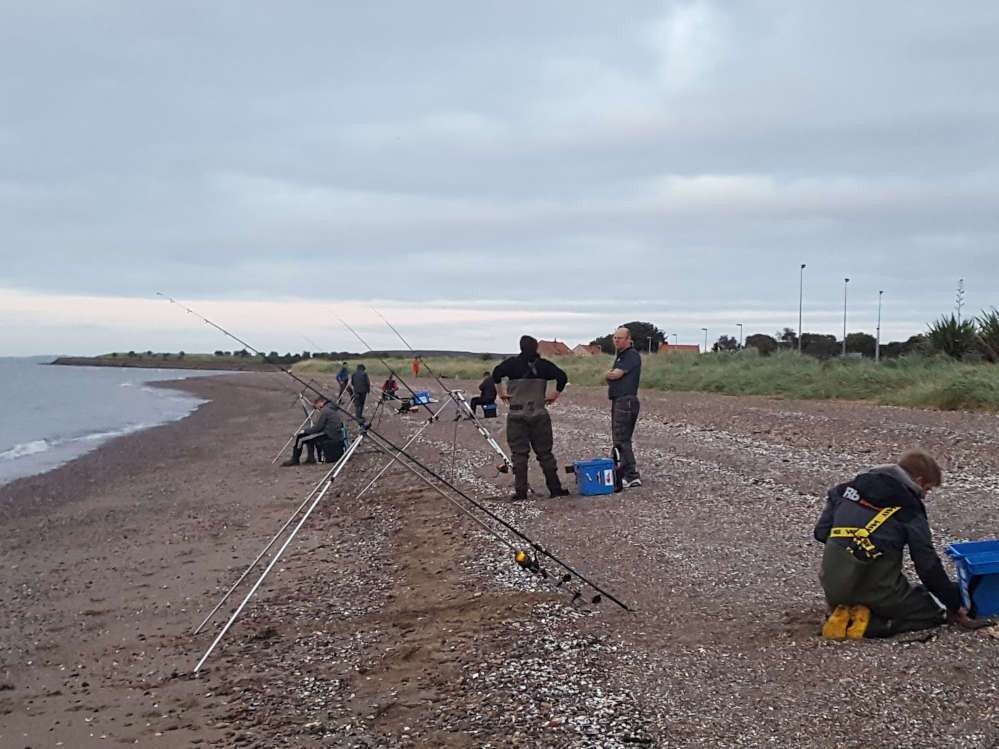
Cockenzie is our next port of call. The remnants of the power station remain and are well-used by local sea anglers. The adjacent small harbour has a handful of fishing and pleasure craft and the path continues near Cockenzie House (Facebook: Cockenzie house and gardens), an attractive mansion with extensive garden, dating from the 17th century and long held by the Cadell family. It has a cafe, bakery and gift shops and that was to be the end of our journey.
The Mercat Cross is the only one of its kind in Scotland which remains in its original form and location. The memorial to the Battle of Prestonpans is a modest cairn and is positioned close to the battle site near Meadowmill.
The town's most recent claim to fame is Josh Taylor, a Scottish boxer who is a unified light-welterweight champion who held the Commonwealth light-welterweight title from 2016 to 2017.
Cockenzie is our next port of call. The remnants of the power station remain and are well-used by local sea anglers. The adjacent small harbour has a handful of fishing and pleasure craft and the path continues near Cockenzie House (Facebook: Cockenzie house and gardens), an attractive mansion with extensive garden, dating from the 17th century and long held by the Cadell family. It has a cafe, bakery and gift shops and that was to be the end of our journey.
First wartime railway
Cockenzie and Port Seton have merged into one another but Cockenzie was the first to be established. There had probably been a village around its natural harbour long before it was chartered as a burgh by James VI in 1591.
It then grew to export coal from the surrounding area, and, like Prestonpans, it also became a centre for the extraction of salt from sea water in metal pans heated over coal fires and for fishing.
The York Building Company took over management of the estate's mining interests and a horse-drawn railway to carry coal from the pits around Tranent to the harbour at Cockenzie was established.
During the 1745 Jacobite uprising, the waggonway was used to transport troops to the battle, marking the railway's first use in warfare. There is a museum (The Waggonway Project, see Facebook) near the harbour.
Cockenzie was home to boatyards producing fishing vessels and yachts. The sheds and slipways remain, but the last vessel was produced in the mid 1990s.
Fishing remains important from the continuing presence of traditional fish merchants and curers in the village. Do try John Dickson, fish curer since 1921, at West Harbour Road (EH32 OHX) next to Cockenzie House. Their smoked fish is delicious.
Oh, and that nickname. Well Justin Edinburgh is the man and he is listed in the 13 best football nicknames of all-time. Many fans were left scratching their heads as his nickname of Musselburgh but the town is just in Edinburgh.
.
Useful links
Location (Map)
About the author

Contact info

ISSN 2634-7032
London, United Kingdom
+44 0 7764 198 286