AllWays Traveller Features
At the End of the Earth, Patagonia's Harshest Trek Comes With Warm Beds and Hot Meals

Taking Refuge in Patagonia
I lie on my bed. There is still some commotion outside my door. Inside the four-bunk room, it is mostly quiet. The others are asleep, though an occasional snore punctuates the silence. It is not too bad, and I have earplugs just in case. The refugios are hostel-like accommodations scattered across Torres del Paine National Park in Chile's Aysén Region.
Patagonia Refugios
Fantástico Sur operates several of the refugios along the trail:
Refugio Torre Central
Refugio Torre Norte
Refugio El Chileno
Refugio Los Cuernos
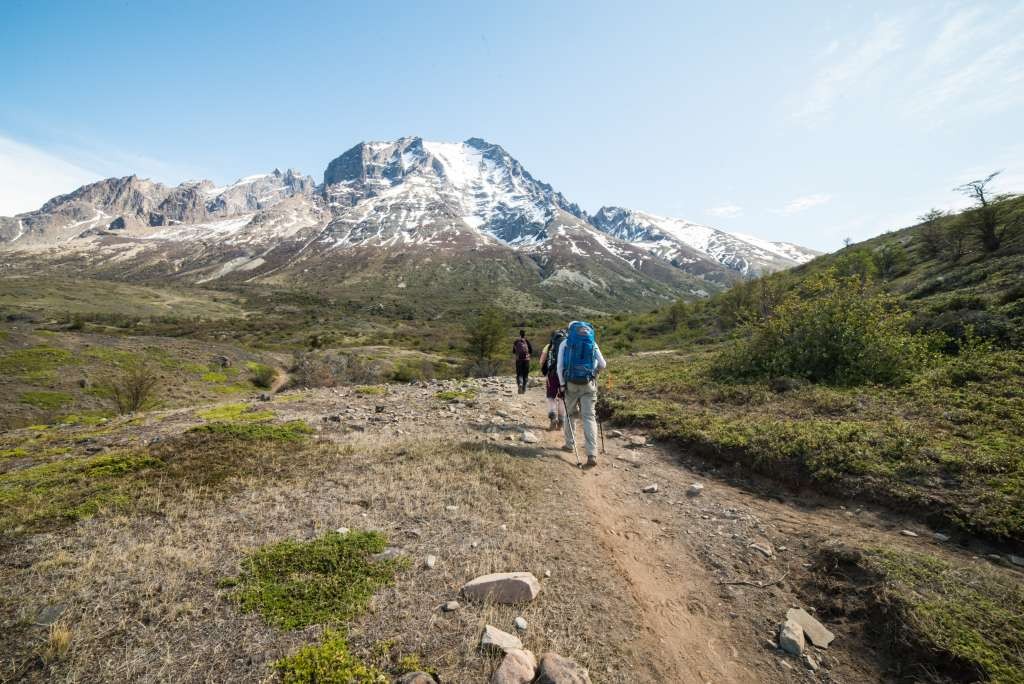
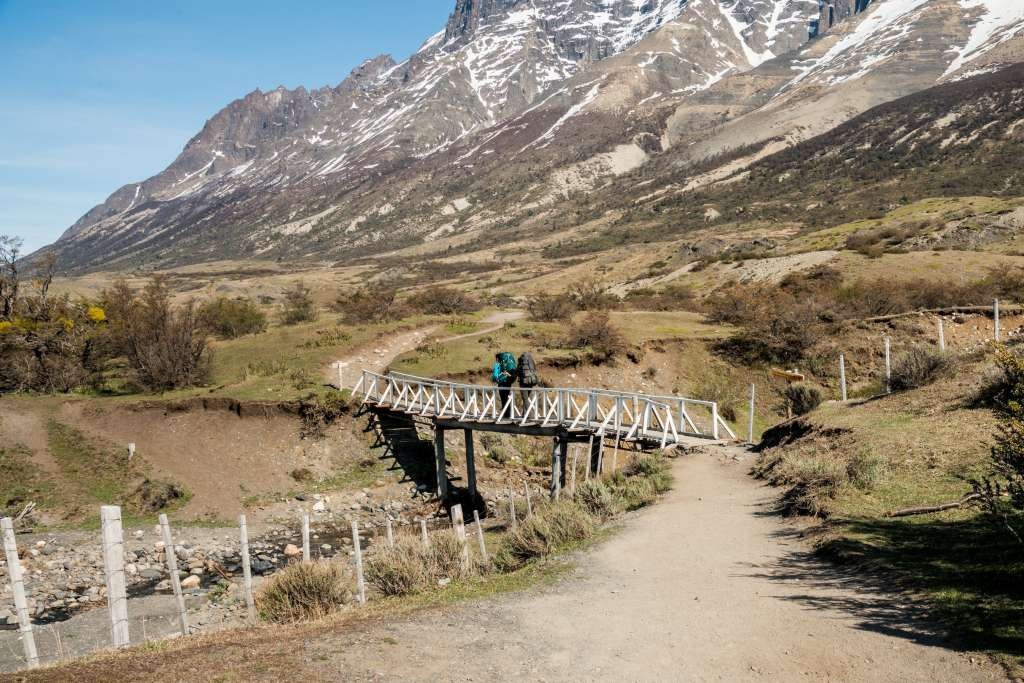
The rustic lodgings are connected by a serpentine trail known as the W-Circuit. While each refugio has its own personality, they serve a common purpose: offering shelter for travelers on the long trek across the park. The W-Circuit, named for the distinctive shape it traces around the Paine Massif, leads hikers through this region dominated by granite peaks.
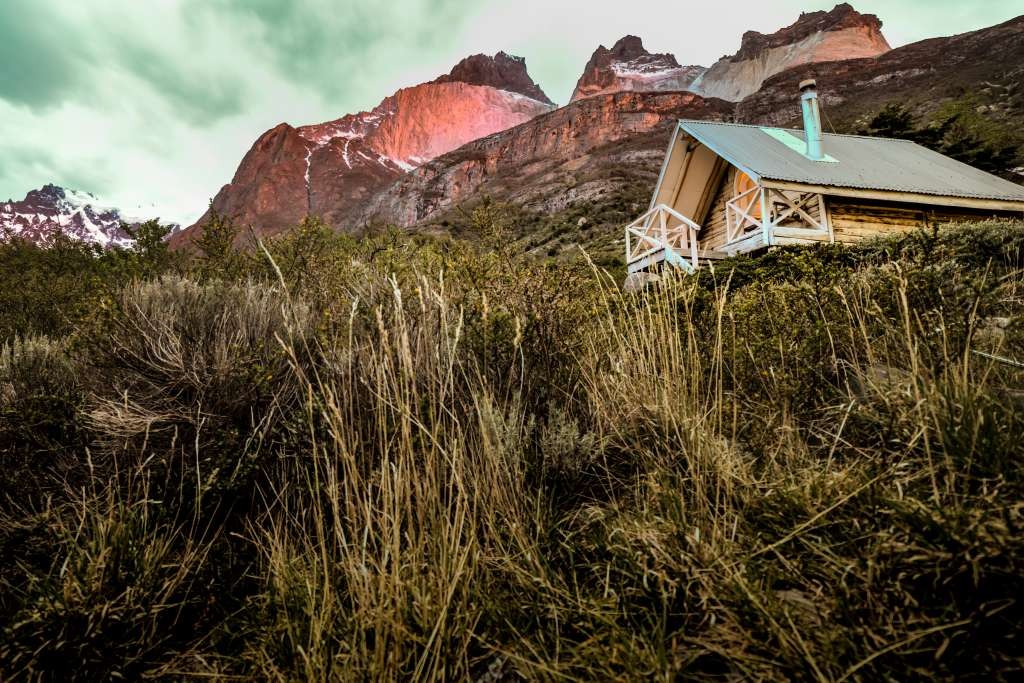
On leaving Hotel Las Torres, my journey brings me to the shadow of Los Cuernos, "The Horns," for my first night. Here, a pair of multicolored granite spires rises above the valley. This refugio differs from the previous one, with small cabins scattered along the lower slopes. Each cabin holds two beds and a remarkably efficient wood stove that keeps the room warm and comfortable.
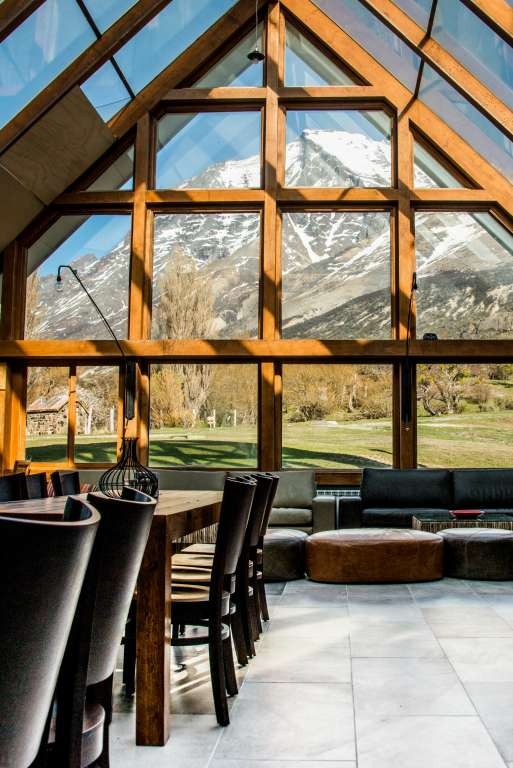
Dinner in the common area gives me a chance to exchange details of the day's hike with other trekkers. The meal begins with crudités, salami, cheese, and the mandatory Pisco Sours. Pisco, a colorless or amber brandy distilled from grape wine, is considered Chile's national drink.
Hot soup, hearty meats, and potatoes fill my belly. After dinner, the gathering shifts toward a blazing fireplace where the conversation continues with newfound friends. As I grow drowsy, I remember one last stop I want to make.
The unique feature here, besides the cabins, is a wood-heated open-air hot tub. An after-dinner soak eases my sore muscles. I gaze at the stars through rising mist while the hot water steams in the cold night air. Later, I return to my cabin and fall asleep beside the quiet glow of the stove. The fire burns through the night without additional tending. Its soft orange light gives the remote room an unexpected feeling of home.
I wake before dawn to photograph the brief alpenglow on the peaks of Los Cuernos. The refugio staff prepares my brown bag lunch. The sandwich choices are salmon, chicken, or vegetarian, cucumbers, tomatoes, and dressing. A piece of fruit and a bag of chips round out the meal, bringing back memories of elementary school lunches.
Paine Massif
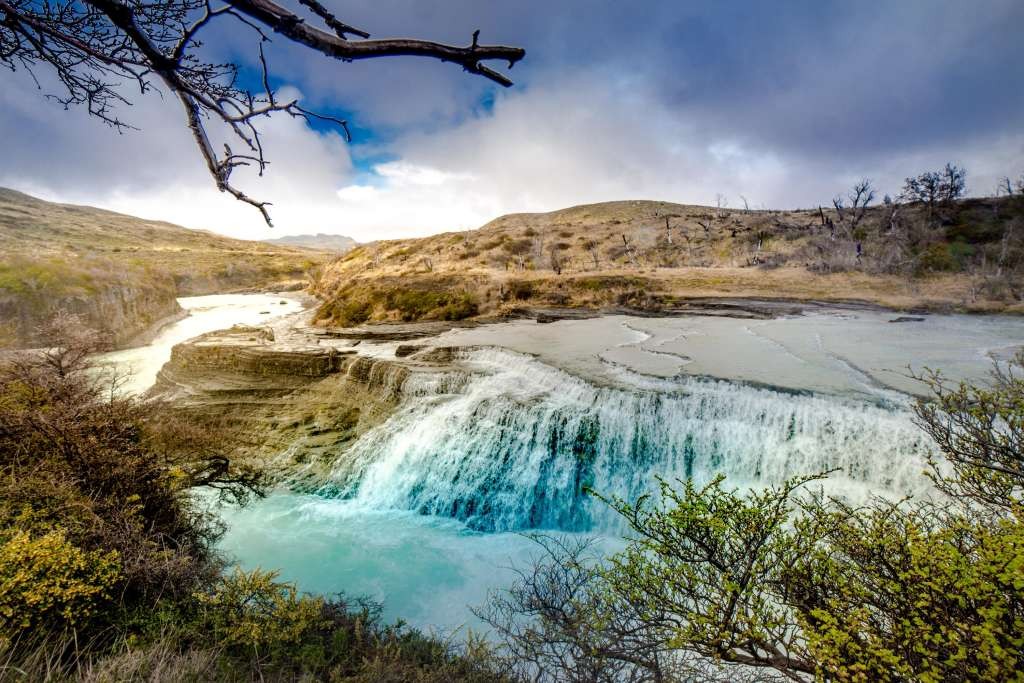
The trail winds around the base of the Paine Massif. Along the way, I pass lakes, glaciers, and countless waterfalls. Streams pouring from the glacial slopes provide abundant, cold, perfectly clear drinking water. But more than that, I find myself drinking in the landscape itself.
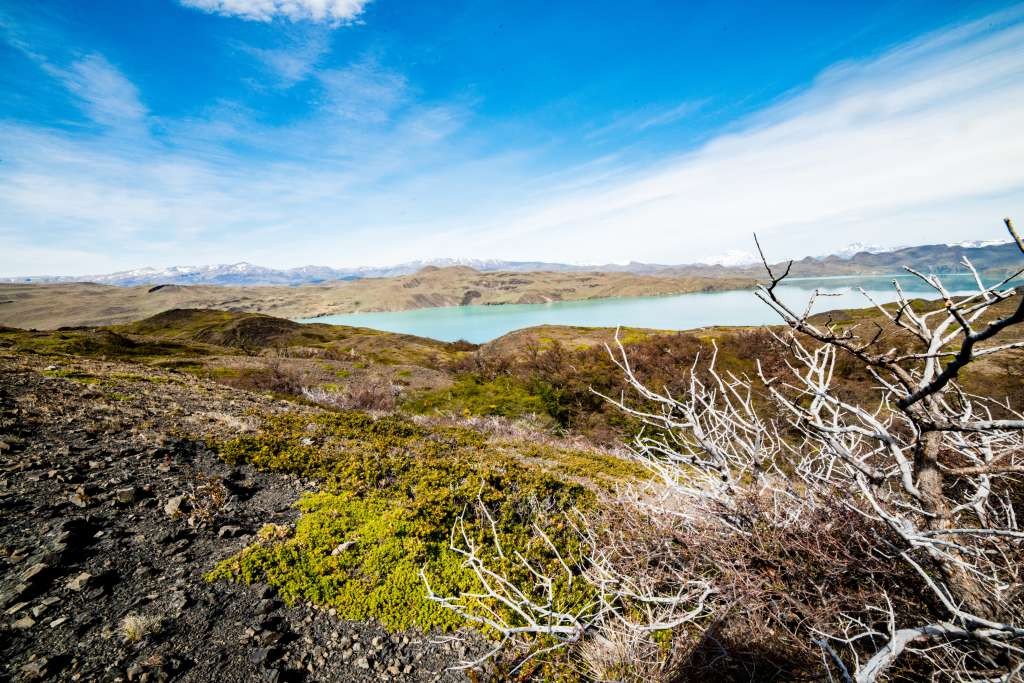
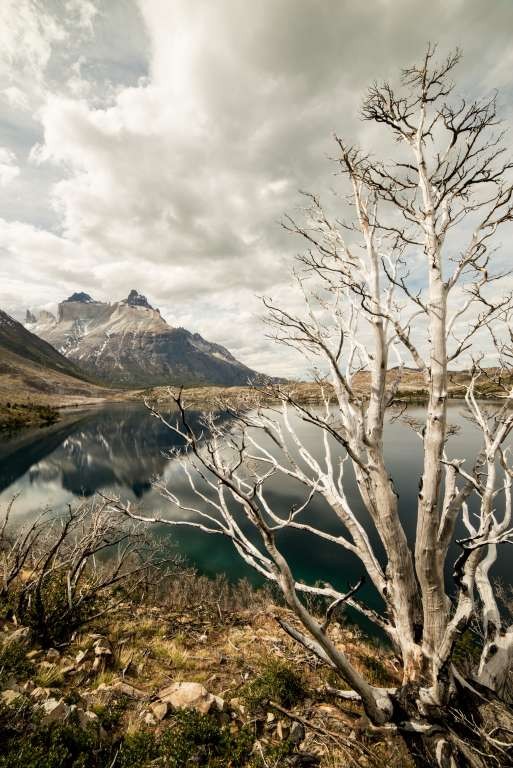
As I travel onward, the region is dotted with iridescent blue-green lakes filled with glacier milk—a suspension of fine silt ground from the rock by ancient ice. In contrast, much of the forest here was devastated by a massive wildfire in 2012. Now, an eerie landscape remains, with pale trunks and thin saplings struggling to reclaim the ground.
Eventually, after ten or eleven miles of hiking, the next refugio appears like a welcome outpost between long stretches of wilderness.
Like most others, this refugio does not offer private cabins, only bunkrooms with fresh linens and thick quilts. This comfort provides a welcome relief from carrying a sleeping bag. On one particularly cold evening, I ask for an extra quilt, which arrives without hesitation. By morning, I kick the extra blanket to the floor. Each refugio also maintains camping areas for hikers who prefer to sleep outdoors.
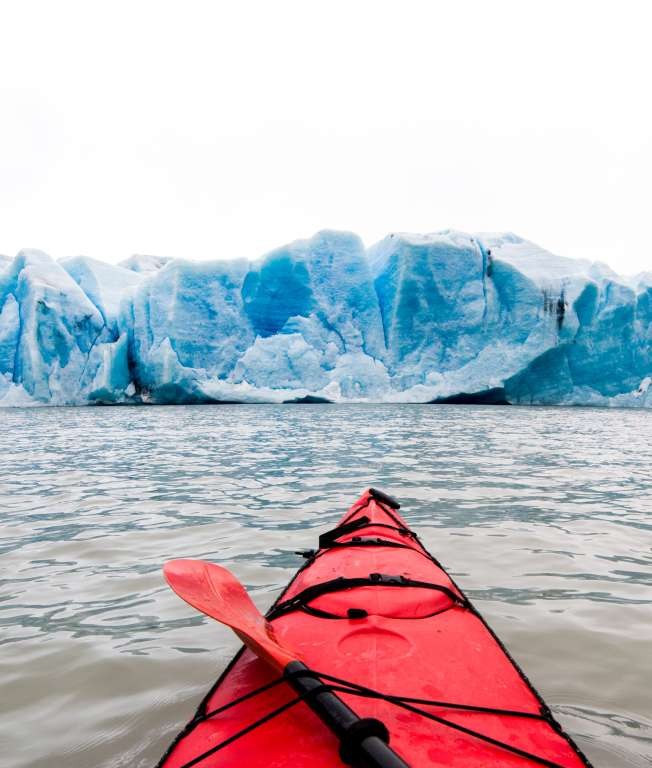
Over the next several days, I complete the nearly fifty-mile W-Circuit, stopping at each refugio in turn. My journey concludes as I return toward the starting point aboard the Grey II, a ferry that crosses Lake Grey. We drift among icebergs while Captain Arturo maneuvers the vessel with remarkable precision. A fitting end to the trek is serving Pisco Sours again, this time chilled with glacier ice scooped directly from the lake.
Throughout the trek, the region's ferocious winds are a constant topic among hikers, who joke that you can lean into the gusts without falling over. During my visit, however, there is an unusual lull in the wind, something locals quietly attribute to shifting climate patterns.
Side Hikes to Higher Elevations
Interspersed with the main trail, several side hikes climb toward higher elevations. Short excursions lead to miradors overlooking the Valle del Francés near Italian Camp, while others approach the base of the Torres del Paine—three towering granite spires rising nearly 2,500 meters above sea level.
Getting here requires patience. My trip begins with a long international flight from New York to Santiago, Chile's capital. From Santiago, I take a domestic flight south to Puerto Natales, the main gateway to Torres del Paine National Park. Once in Puerto Natales, a five-hour van ride north brings me into one of the most remote landscapes on Earth. Another hour and a half by air from Puerto Natales would bring me to Antarctica, emphasizing the park's southern location.
From the airplane window, the Southern Patagonian Ice Field stretches across the horizon. I see no roads and no towns, only endless gray rock and the white sweep of glaciers. Dickson, Grey, and Tyndall spill down from the ice field beneath a startlingly blue sky.
Patagonia feels like another world, yet the refugios make the journey across it feel unexpectedly familiar.
Later that night, I lie again in a quiet bunkroom, listening to the soft breathing of other trekkers who have crossed the same wild terrain. Outside, the wind moves through the mountains. Inside, the room is warm, the quilts are thick, and for the moment, at the far end of the Earth, I am perfectly at rest.
When you subscribe to the AllWays Traveller, we will send you an e-mail when there are new updates on the site so you wouldn't miss them.
About the author
Contact info

ISSN 2634-7032
London, United Kingdom
+44 0 7764 198 286