AllWays Traveller Features
Mallorca: Stone Paths, Sea Views, and the Quiet Between Crowds

As our plane banked toward the runway in Palma de Mallorca, the island's contrasts came into focus. I took in the deep blue sea, compact city built of stone, and rugged mountains rising sharply in the distance. Our October visit to Mallorca kicked off a month-long journey through southern Spain and Morocco, with several days set aside to explore both the historic streets of Palma and sections of the island's centuries-old Dry Stone hiking trail through the Serra de Tramuntana.
Palma
We stayed at Petit Monti-sion, a boutique hotel on the edge of Palma's old town, surrounded by Gothic churches, Baroque façades, and elegant Art Nouveau buildings. From the street, many buildings appeared modest, but behind unassuming doors were hidden patios with fountains, arches, and citrus trees. Bougainvillea and jasmine spilled from balconies, and Moorish details hinted at Mallorca's layered past.
That first evening, we wandered through the neighborhood in the soft light of dusk, passing locals heading home and families lingering at playgrounds. I was instantly charmed and eager to explore more, including a visit to the Gaudí-designed Cathedral of Santa Maria of Palma.
Deià: Mountain Beauty and Evening Calm
My primary goal on Mallorca was to hike sections of the Dry Stone Route (also known as the GR221), so we rented a car and followed narrow, winding roads along the northwest coast to Deià. The views of sheer cliffs plunging to the sea were spectacular.
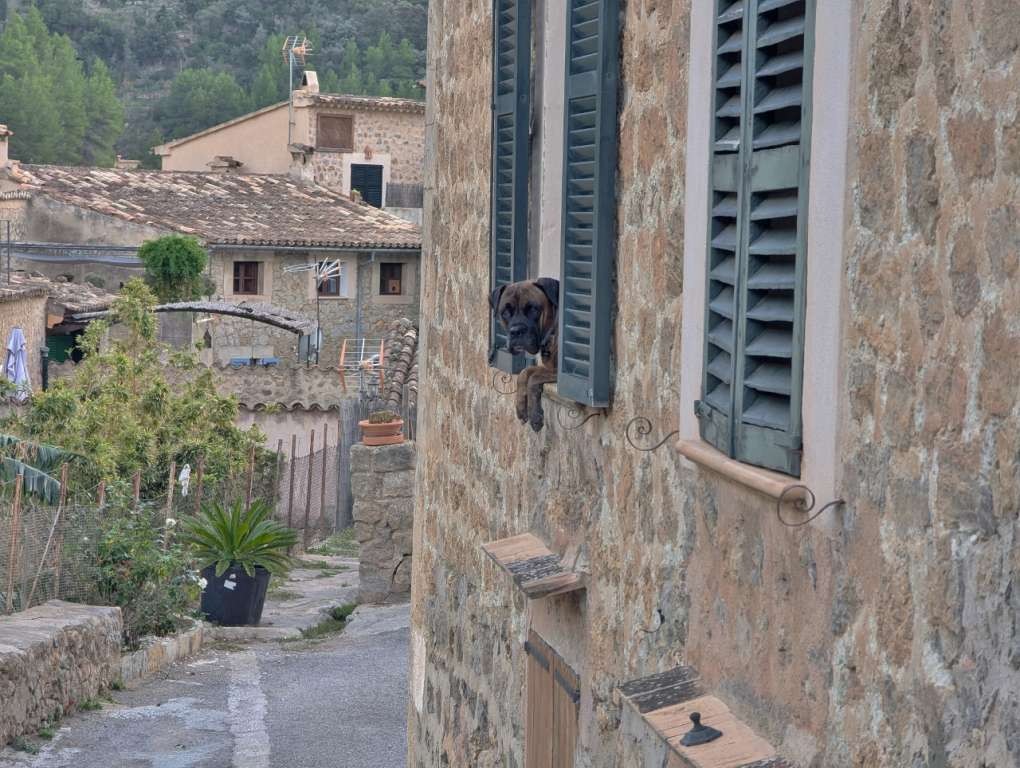
Deià itself was busy with day-trippers, but by late afternoon the crowds thinned, restoring the town's quiet charm. We stayed at Hotel des Puig, a small boutique property tucked into a maze of cobblestone lanes. Parking, scarce throughout town, felt like a small victory once secured. Our room was comfortable and spacious, with views toward the surrounding hills.
Later, we walked down to Cala Deià, a rocky cove below town. A narrow strip of beach attracted swimmers and sunbathers, while a rustic café offered refreshments for those less inclined to brave the water. Dinner that evening was outdoors at Ca na Marca, where fresh seafood and mild temperatures made for an unhurried, atmospheric meal beneath the looming mountains.
Hiking the Dry Stone RouteThe Dry Stone Route (GR221), known in Spanish as the Ruta de la Pedra en Sec, is a 150-kilometer (93-mile) long-distance trail that traverses the Serra de Tramuntana from Port d'Andratx to Pollença. Built around centuries-old stonework—terraces, walls, and paths—it is both a cultural and natural landmark.
While we've completed multi-week hikes elsewhere, we didn't have eight days to complete the entire route. We opted to sample the trail over several days. Summer temperatures can be oppressive, and even in October daytime highs reached around 26°C (80°F). Spring and fall offer the best conditions for walking.
Valldemossa Loop: Sea Views and a Hermit's Cave
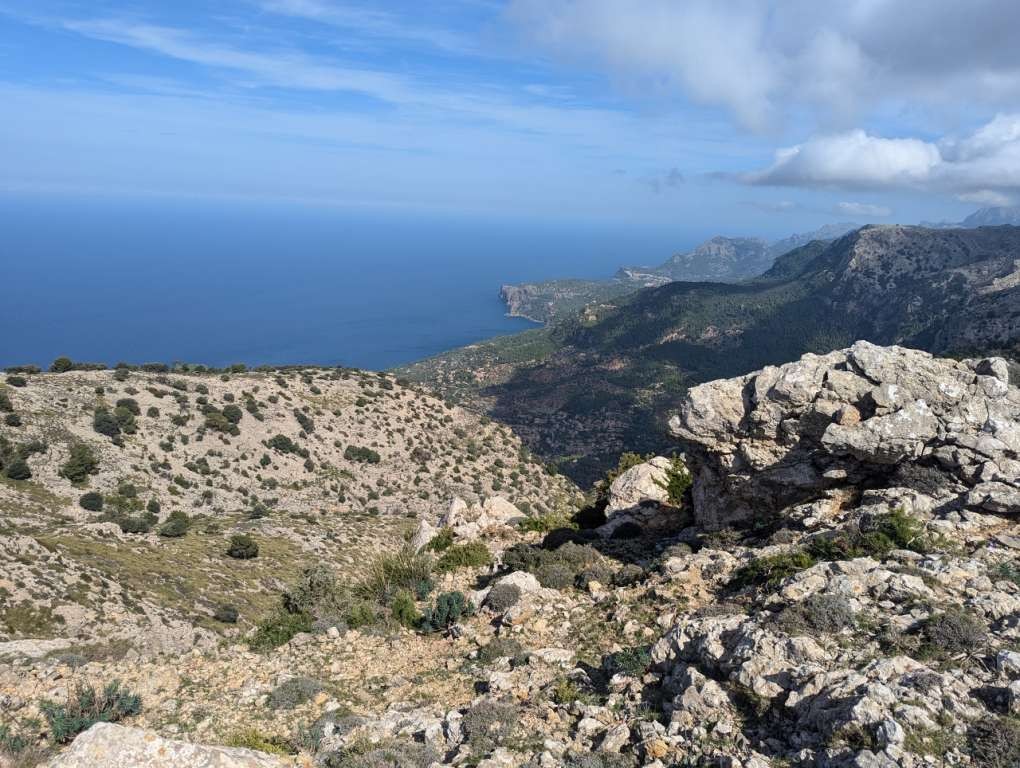
Our first hike was a moderate 5.5-mile loop beginning in Valldemossa, briefly overlapping with the GR221. The trail climbed steadily through olive groves, accompanied by the occasional goat, before reaching an exposed ridge with sweeping sea views. Far below, we could see Deià clinging to the coastline.
Several sections were steep and narrow but never technical. One highlight was a stone-enclosed hermit's cave, remarkably intact, with carved seats, window openings, and everyday artifacts that suggested recent use. It was easy to imagine a solitary life lived here, suspended between mountain and sea.
The loop itself was lightly trafficked, though the GR221 segment was noticeably busier—a recurring theme throughout our hikes.
Trail details:
Valldemossa–Es Caragolí–Cova s'Ermita Guillem
5.5 miles (8.9 km), 1,863 feet (568 m) elevation gain
Trailhead parking available near the start
A head cold forced us to abandon our planned hike from Deià to Sóller, so we drove instead, enjoying a leisurely approach through the mountains before dropping into a lush valley filled with citrus trees and olive groves.
Sóller's historic center invited exploration, with stone stairways, shaded plazas, and colorful plantings softening the architecture. That and the nearby port area was fed by a steady stream of day visitors arriving by train from Palma. The contrast became clear that evening, when the bustling daytime streets emptied and shops closed early, leaving the town center unexpectedly quiet.
We stayed at the Alcázar Hotel, a contemporary property with a welcoming pool—an ideal place to recover and reset.
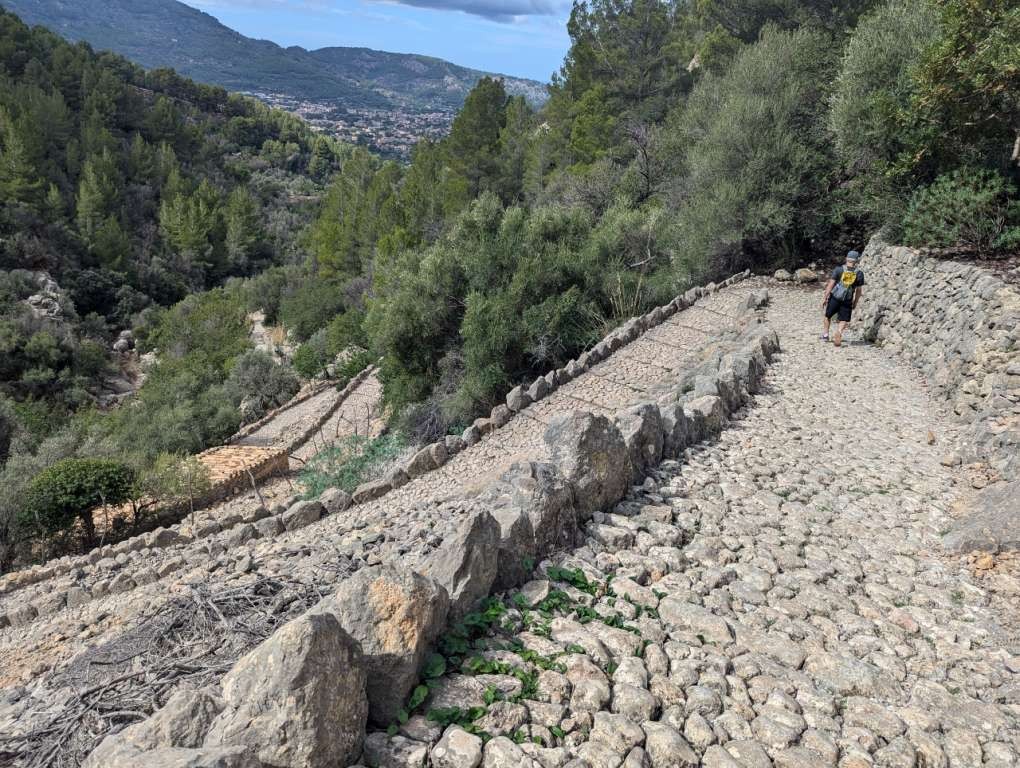
Barranc de Biniaraix Hike: Stonework and Steep WallsFeeling better the next day, we tackled another hiking loop incorporating the GR221: the Barranc de Biniaraix–Camí Vell trail. Unlike the open, panoramic Valldemossa hike, this route followed meticulously constructed stone paths ascending the dramatic Barranc de Biniaraix. Towering ravine walls rose overhead as the trail threaded through terraced olive groves and past houses accessible only by foot.
The craftsmanship of the stonework was extraordinary, a reminder that these paths were once vital infrastructure. As before, the quieter early sections gave way to heavier foot traffic on the GR221 overlap, but the setting easily absorbed the crowds.
Trail details:
Barranc de Biniaraix–Camí Vell–GR221
5 miles (8 km), 1,551 feet (473 m) elevation gain
Parking recommended near Institut d'Educació Secundària Guillem Colom Casasnoves
A Long Way Back to Palma
Mallorca exceeded expectations. From the intimate streets of Palma to the dramatic Serra With hiking complete, we took a scenic two-hour loop back to Palma rather than the direct route. The drive wound through Fornalutx and Escorca, then on to Pollença, offering glimpses of rugged peaks and flashes of sea. Beyond Pollença, the landscape softened into flatter farmland dotted with towns showing how varied the island is.
Final ThoughtsMallorca exceeded expectations. From the intimate streets of Palma to the dramatic Serra de Tramuntana, the island rewards travelers willing to balance highlights with quieter moments. The GR221, even in short sections, offered a deep connection to the landscape and its history. A return visit—perhaps to complete the full route in cooler weather, or to explore Mallorca's beaches in summer—already feels inevitable.
Location (Map)
When you subscribe to the AllWays Traveller, we will send you an e-mail when there are new updates on the site so you wouldn't miss them.
About the author

Contact info

ISSN 2634-7032
London, United Kingdom
+44 0 7764 198 286