AllWays Traveller Features
Bullish Behaviour - Mole National Park

He slid down from the vehicle with the silent cunning of a snake, threw his head over his shoulder one last time before disappearing into the undergrowth. Turning from a serpent into a bloodhound in a tenacious pursuance as if he really were on the heels of a nearby fox. Only faintly betrayed by the wakened shudders of bush and shrub as a lithe figure in safari-green glided on through. One believed the feeling this man could adopt the stalking trait of any being, the soft padding of a lioness, an unhurried gaze of an owl, weaving like a viper or marching like an ant and fading into the landscape much like mist at sunrise.
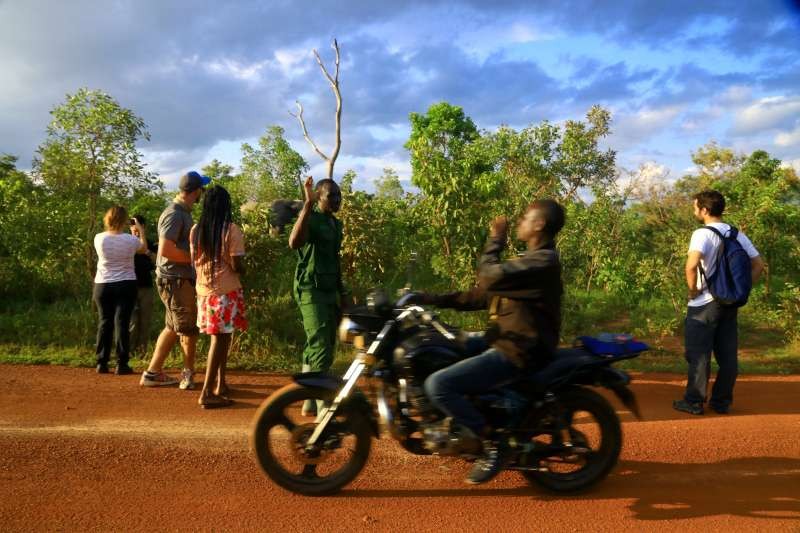
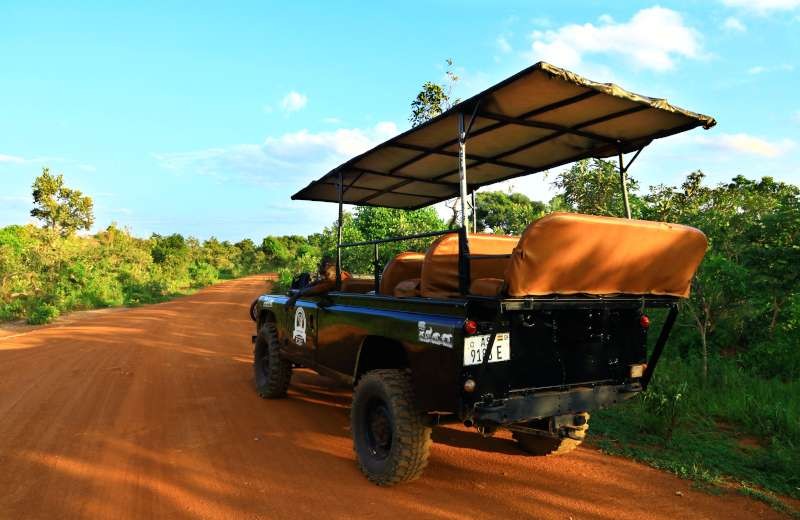
His reappearance moments later elicited a gasp, fit for a magicians trick. I never really understood the two girls in the front seat, all jitters and emotion as if the safari vehicle had ended up in Jurassic Park. An eager hand attached to a perspiring body gestured us to leave the vehicle.
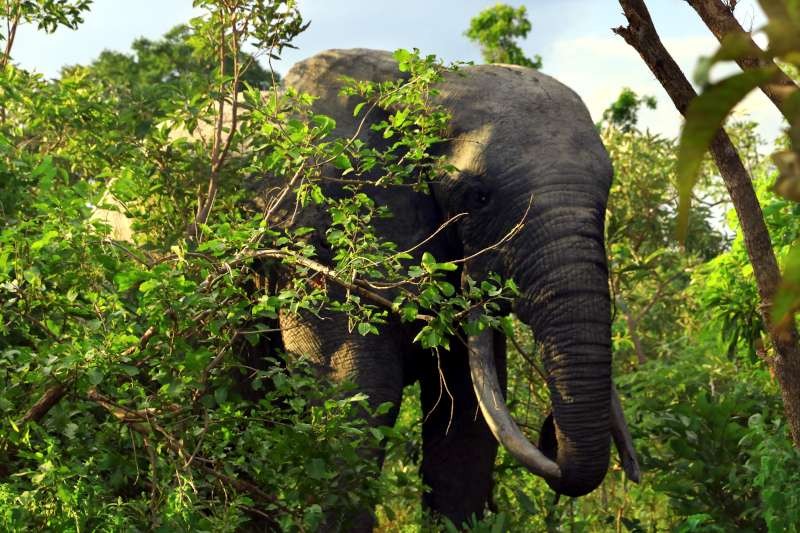
Electricity pulsed through the gathering, overloading those final few seconds of unbearable excitement much in tune to a great artist finally appearing on stage. Laying out the subtleties that form an exceptional moment, to be close and on foot without artificial barriers. For no more than five metres from the roadside grazed a single bull elephant, pushed from the herd to stand on his own four feet. For those in the group who had never seen an elephant in the wild, the encounter ordained an immediate, more profound disclosure—encouraged from being up close and personal as you could hope to be.
The presence of a matriarch would have rendered the opportunity inconceivable. Her position naturally protective, and greatly exasperated if nurturing a calf. Stepping down from the vehicle would court disaster, even for the guide who understood a mother's defensive behaviour. Thankfully this great land leviathan roamed alone, casually bull-dozing the foliage as his trunk grappled and raked in another mouthful. Quite at ease with six foreigners, all incongruously dressed without much thought to blending in. Rebelling against sense, which perhaps may have addressed the unthreatening eccentricity of us spectators, for the clowns had come to see the ring-master! The entire spectacle exemplified again by the bathing of the late September light. An unrepeatable occasion of light, colour, and drama that saw the guide wiping his brow with a contented sense of relief.
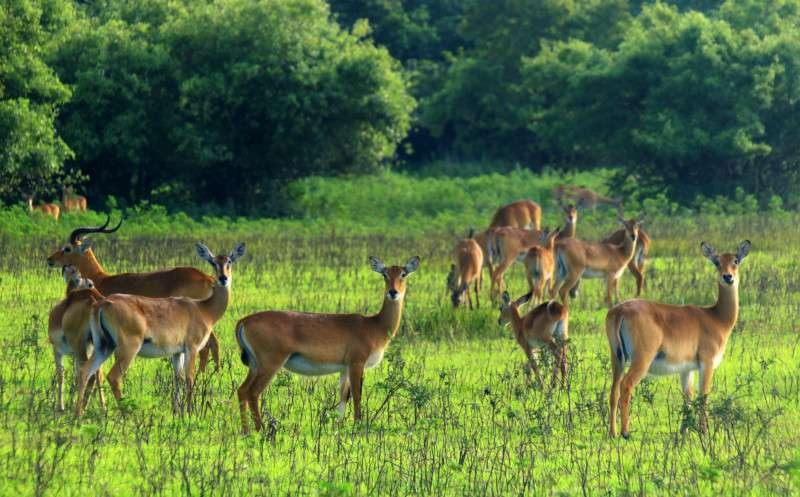
On return, the group showed an effusive manner towards the guides selfless actions, bestowing on him an additional gratuity. There was only one more thing to do to keep the fervid atmosphere on form, popping open an ice-cold 'Club' beer back at the park's motel and slipping back on the observation deck to spy on a herd of kob slinking back into nearby woodland.
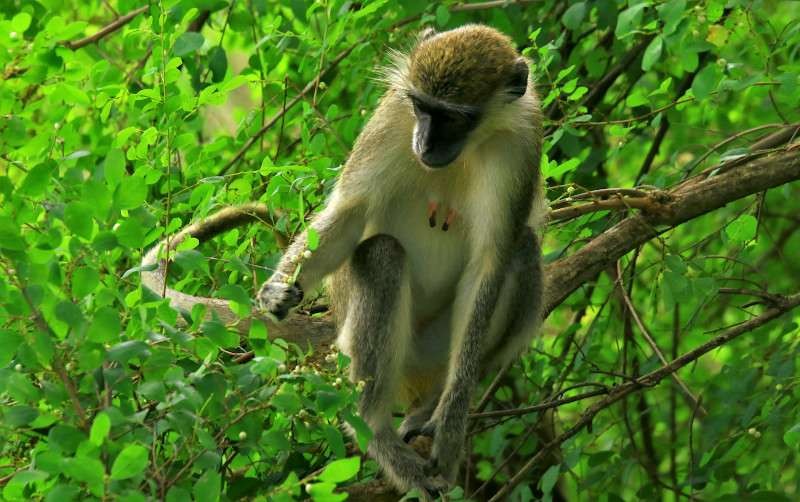
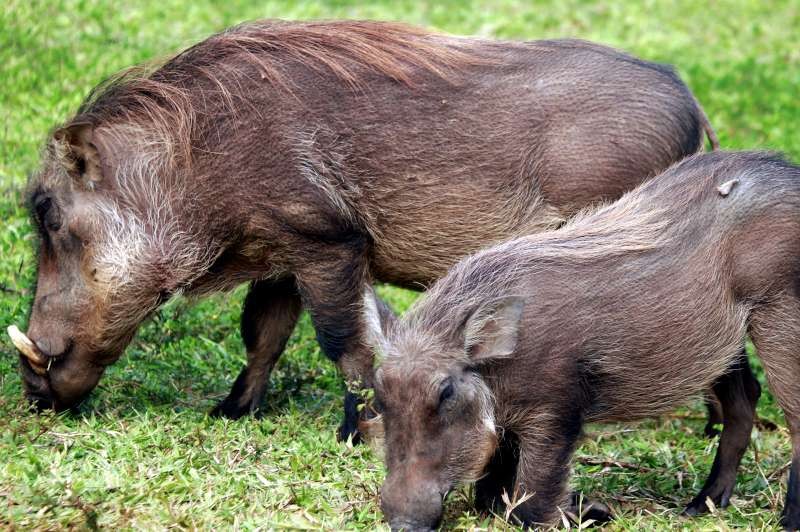
Mole National Park, situated in the woodland & savannah of Ghana's north is a rare gem for wildlife enthusiasts. Not just accessible but highly affordable, offering bush walks and game drives across its 5000 km sq habitat. With around 600 elephants, warthogs, crocodiles, baboons and vervet monkeys, not forgetting five species of antelope: kob, bushbuck, waterbuck, hartebeest, and roan, the chances of sightings are incredibly high.
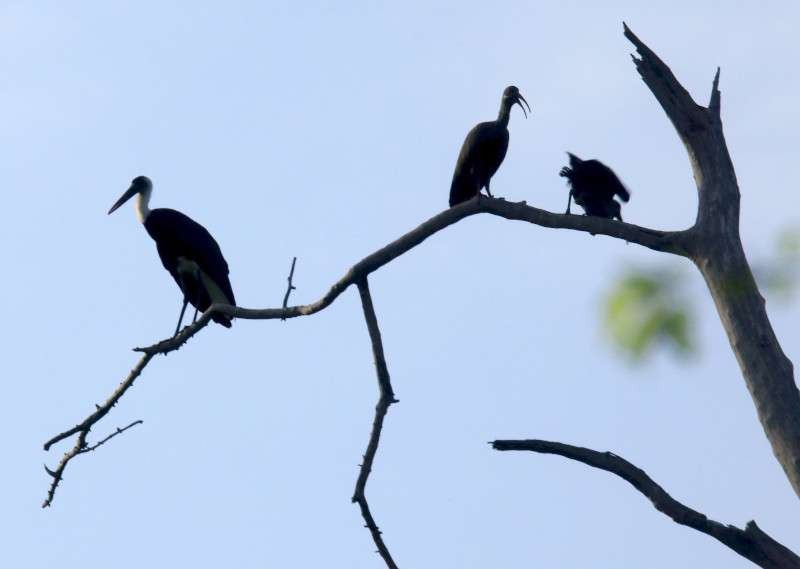
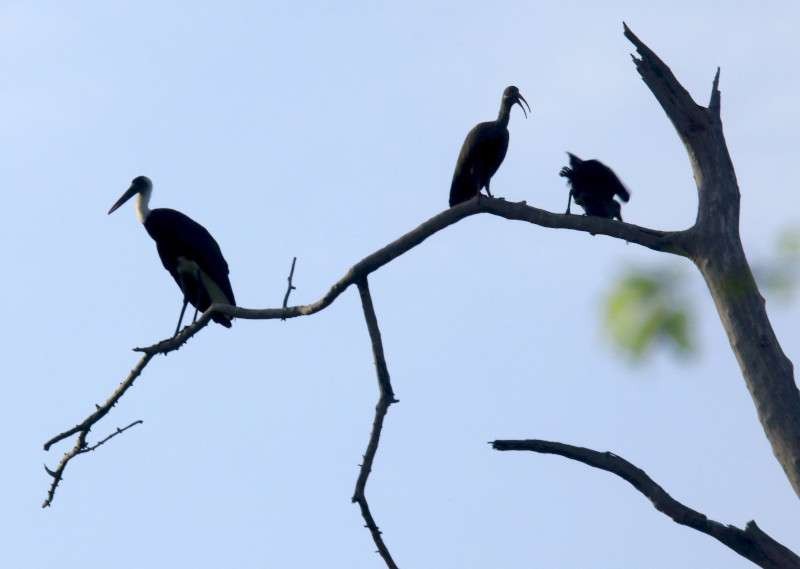
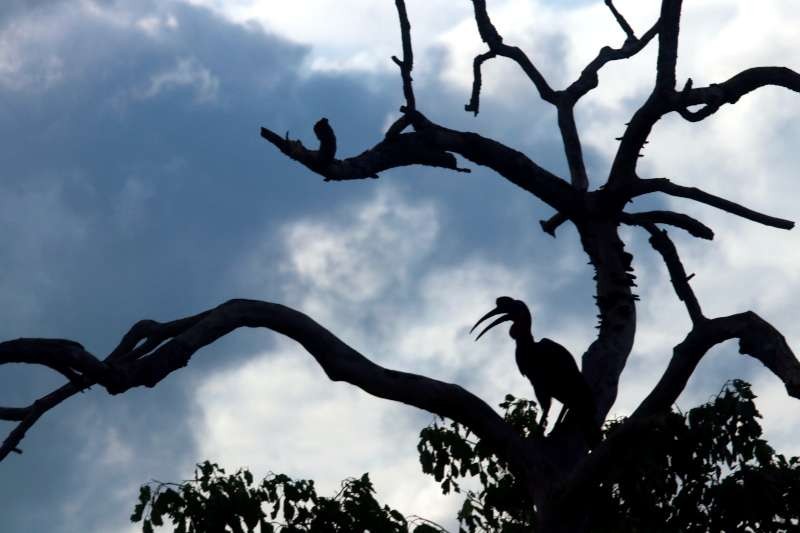
Birds are also prolific at Mole, as much as anywhere found in East Africa. Long tailed-glossy starling, yellow-crowned bishop, woolly necked storks, the murderous screams of the hadada ibis and the incredibly busy red-throated bee-eaters seem to fill in the voids between animal sightings. Most are here on their long migratory routes, but Mole does have its permanent residents.
From the biggest and mightiest to the smallest and adroit come the termites. Easily overlooked by the more prominent species and kaleidoscopic birds darting amongst the trees. Architects and builders of a formidable mud fortress which exercised a few brisk steps for the guide to circumnavigate. On a human scale, it would be the equivalent of New York's Empire State Building for height and girth. The outside disclosed no clue to the activity that hurried inside, like the operations of a fantastic factory. The ranger leaned in and broke a small piece of the drywall away.
"Now watch" he mused while half a dozen pairs of eyes scanned for movement. With the alarm raised, scores of soldier termites came marching out to survey the damage and ascertain the cause of their misery.
The culprit, six-foot-tall in forest green with Wellington boots to match, explained the immediate support of the workers, summoned to administer emergency repairs by sealing off all exposed tunnels. The rapidity and coordination of the team operated to military discipline. Each termite fulfilling its part to a communist pledge of 'hard work for the greater good' within their specified rank. The order had no lenience for idlers and straddlers, certainly not in times of necessity.
I asked the ranger if the queen was already aware of an apparent invasion. 'Surely so', and highly likely delegating orders while being briefed by her advisors, much like a Sovereign nation. The fortress resembled an iceberg, in greater proportions laying beneath excelled those rising above—another wise investment of the termite in its understanding of temperatures. Cooler below, warm up top, which would dictate the location of nurseries and food stores.
The first of the construction termites appeared, smaller to befit their rank. Unlike their soldier comrades, the labourers did not vacate the mound, fermenting repairs instead across the line of damage. Which remarkably resembled a broken Crunchie bar.
Swiftly raising his middle finger to the wall, the ranger signalled the repair process now underway.
"All of you can see the workers, right? They are secreting small mud balls along the edge, side by side, one upon the other, just like bricks. They will continue with this until a new wall is formed, sealing off the tunnel and ultimately sealing off the entire section. Not stopping until morning when the task is finalized."
I did wonder with such a hierarchical order, whether the labourers operated on a shift system—the next batch organized into place, ready on queue to take the baton.
Did the termites ever abandon their fortress?
"Certainly they do," came the rangers quick reply, "as both the wet and dry seasons bring about destructive behaviour too advanced for repair."
The termites built their fortress around the trunk of a tree, a central pillar that solved the crux of stability. Nevertheless, the mud-hive became vulnerable to bush fires during the hot, dry months and prone to flooding in the rainy seasons. On top of the weather, the termites had the bane of ant-eaters who would hoover them up as their claws breached the walls. Such an intrusion went against 'safety in numbers'; it implied the opposite. Of improved odds, if you were singular and easily overlooked. But such a species, millions in their mud metropolis were by natures rule, going to be low on the food chain.
Above & Beyond:
Mole NP entry fee: 40cd paid at the gate. (Current rate of exchange £1=7.55cd. 1$=5.82cd. 1Euro= 6.85cd)
Entry with your vehicle: 20cd.
Tel: +233 027 256 4444, 024 431 6777 www.molemotelgh.com
Mole Motel: Tel: +233 027 756 4444, 024 431 6777 www.molemotelgh.com
Room Rates 2019: Chalet – Queen sized bed with a/c 515cd
Standard twin bedroom with a/c one person 300cd, dbl 400cd.
Family: three bedded room with a/c s 300cd, dbl 400cd, tri 510cd.
Family: three bedded with a fan. s 180cd, dbl 280cd, tri 360cd.
Budget room: 4 bunk-beds. 100cd per person.
An additional (roll-away) bed 100cd.
(NB – The staff and rangers will advise you to keep your room locked at all times. Even when your inside. The baboons in Mole NP have learnt how to use the handles to open doors!?
Mole Motel accepts Visa and MasterCard payments, electronic only. WiFi is available. Restaurant and bar on site. Swimming pool free for guests. Good viewing platform over the two watering holes.
Campsite: 30cd per night. Shower and toilet blocks. Central tap with freshwater, stone bar-b-q points, two wooden pavilions with seating. The guides advise packing up the entire tent whenever leaving camp. The reason: baboons-having destroyed peoples tents to obtain food from inside. Brugbani camp is 9km further in and remains undeveloped. You need to be self-sufficient here: 20cd per night.
Activities:
Game drive: 200cd for 2 hours split by the number of passengers. Plus 10cd per person, per hour.
Guide fee per hour, per person: 10cd. Children between 5-15 yrs: 5cd.
Birding: 50cd for the first two hours, 10cd for each additional hour.
Night Safari: Can only use the park vehicles. 100cd. 30Cd per hour for the guide.
If your commercial filming or into long term research they also have a directory of fees. Standard photography for private use is free.
Times.
Morning drives and bush walks start at 7:00
Midday drives only (too hot to walk) 11:00 – 14:00
Afternoon drives and bushwalking: 15:30
Birdwatching: 06:00
Night Safari: Between 19:00 and 03:00
Drives and walks are two hours in duration but can be lengthened accordingly with the additional fee. Tips are at the guest's discretion.
As the park kindly puts it: Rates and fees are non-negotiable.
All prices are for foreigners. Ghanaians pay a lower rate.
Access:
Can access by special bus from Tamale direct to the park or any public transport (minivans, shared taxis, & coaches) heading to Wa (30cd.) Disembark at Larabanga, 6km from the gate. Take a private taxi from there or negotiate a motorbike (roughly 15cd). Tamale has a domestic airport, so it's possible to fly from Accra or Kumasi then take a bus from there. You can charter a private hire from Tamale as well, though the price will be quite high for the distance involved.
Useful links
www.ghana.travel
When you subscribe to the AllWays Traveller, we will send you an e-mail when there are new updates on the site so you wouldn't miss them.
About the author

Contact info

ISSN 2634-7032
London, United Kingdom
+44 0 7764 198 286